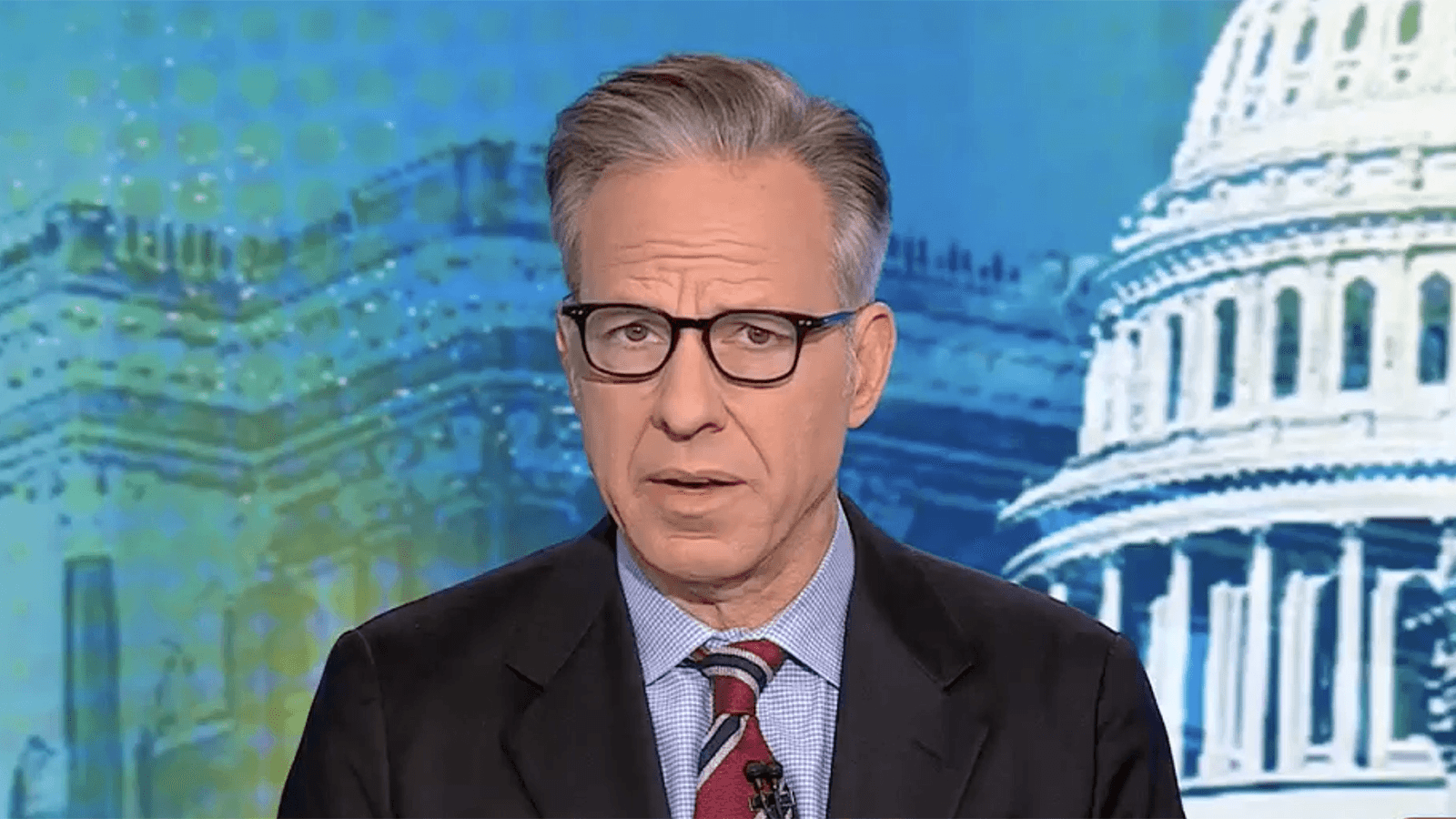
CNN's Jake Tapper (Photo: Screen capture)
On Sunday, CNN host Jake Tapper faced off against Kevin Hassett, director of President Donald Trump's National Economic Council, about how China getting its hands on Nvidia chips wasn't as big a deal.
CEO Jensen Huang was reinstated to the post after intervention by President Donald Trump and Vice President JD Vance, reports revealed. They gave assurances that Huang was safe despite his affair with what intelligence has said is a Chinese spy.
Speaking to CNBC for about an hour last week, Trump said that the Nvidia board "did ask for assurance on the national security threat." He said, "We gave them assurances at least with everything we know, and we know a lot."
The whole thing confused Tapper, who asked how the White House can pursue leading technology while also handing it to China.
Trump administration officials appear to be "disagreeing over what seems to be a nationalsecurity breach and the factthat some of these AI chips,including the ones that youcalled the latest and thegreatest, the fact that they'renow in the hands of China. Again, that seems to completelycontradict the mission thepresident has stated:that the United States needs tobeat China, not secretly helpChina, and not have a CEO who isbeing compromised in some way. I mean, that's the real concernhere."
Tapper went on to say that a number of Republicans also think that the stock market rallied when Juang was reinstated because there is no
"And there are a lot of Republicans who think thatbecause the stock market ralliedwhen Jensen Huang wasreinstated, because there is such faith in his. How muchof a visionary he is, even if hemaybe has other issues, thatthe president is placingthe stock market ahead ofnational security. How do youanswer those concerns?" Tapper asked.
He explained that President Trump has "been asserting, as you just noted, for months, that the white house strategy for AI or superintelligence, as he calls it, is to make sure that the United States wins the AI revolution and that we beat China. And I don't understand how supporting Jensen Huang, who seems to have been running a company that ultimately helped China get these AI chips at all, fits in with that strategy."
Hassett told Tapper he was "sorry you're confused," but he could explain it.
"The bottomline is that the chip advancesare going so quickly that theintent of the policy ever fromfrom the beginning, really wasto let the the, you know,previous generation chips, youknow, generations ago be soldthroughout the world. But to letthe latest, greatest chips," said Hassett. "Not to the extent that thegreatest chips, the latestchips. Did a few of them getover into bad hands or, youknow, through data centers thatthey indirectly got them intobad hands is something thatabsolutely that has to betightened up, if that's true."
But, he claimed, that the U.S. "could still have the race," Hassett continued. "The thing is, we canstill win the race because nowwe recognize that there issomething that could have beendone better. And we're going tomake sure that we do it betterhenceforth.:
Tapper explained that the comments "kind of proved my point."
"My follow-up would be: Treasury Secretary Scott Bessent has been veryvocal about the fact that he'sbeen pushing for months for the Commerce Department to blacklistthis company that's suspectedspy Alice Huang worked for. But Bessent says that the Commerce Department, Howard Lutnick, hasthe pen and he's basicallyblaming Lutnick for slow-walking. The blacklisting ofalice huang's company, Megaspeed,why has that been slow? Walked?"
Hassett went on to disagree it was "slow-walked" and that he was taking advice from the Justice Department.