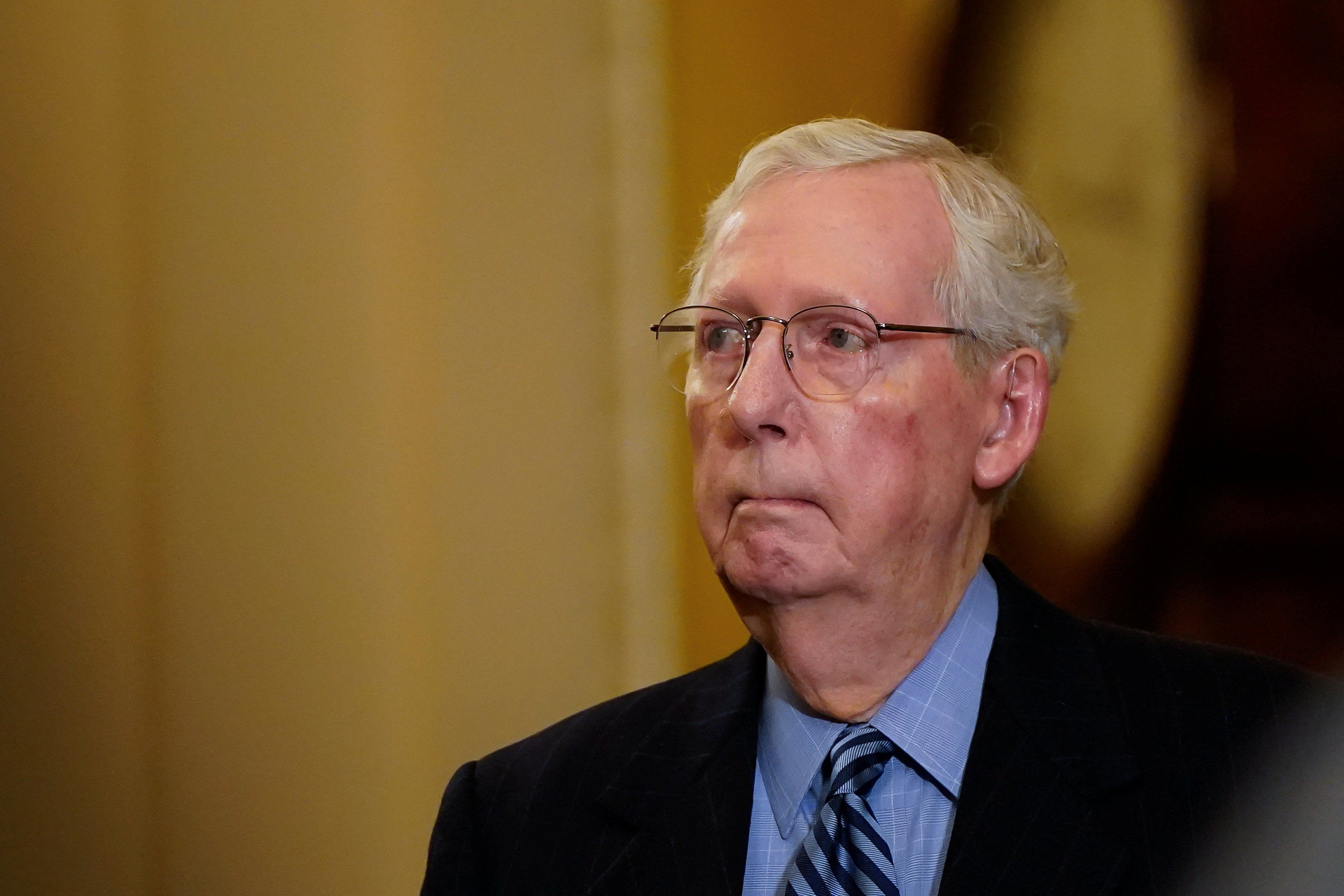
Former U.S. Senate Minority Leader Mitch McConnell (R-KY) holds a press conference following the Senate Republicans weekly policy lunch at the U.S. Capitol in Washington, U.S., November 19, 2024. REUTERS/Elizabeth Frantz
Former Senate Majority Leader Mitch McConnell’s ongoing absence is a mystery, with everyone from other Republican candidates to his own Kentucky neighbors baffled as to his whereabouts.
“The absence of Sen. Mitch McConnell R-KY hit home for Republicans today - as the Senate Agriculture Committee failed to report out a GOP Farm Bill (no Democrats would support the bill),” Capitol Hill correspondent Jamie Dupree posted on X on Thursday. “The panel will try again after Labor Day.”
Trump has been trying to pass a welfare bill for American farmers because the group of voters, who overwhelmingly back him, have suffered immensely as a result of price hikes exacerbated by both his tariffs and the Iran war. In June, an economist broke down the problem for AlterNet.
Economist Ed Gresser — Vice President and Director for Trade and Global Markets at the Progressive Policy Institute — told AlterNet that “tariffs have been quite bad for farmers in two ways. One is that they have led to reactions against American products overseas, sometimes by governments and sometimes by public opinion. In a typical year, American agriculture exports about $180 billion worth of stuff that typically makes up about one-fifth of US farm income. So it's quite a lot: half the exports go to, or at least historically went to, China, Canada, and Mexico.”
He added, “The exports to China have shriveled up because the Chinese retaliated very hard and hit back again directly against American farmers. Mexico has kind of held up. Canada is off, not so much because the government of Canada has taken any particular steps but because Canadians have looked for American goods so as not to buy them.”
Gresser continued, “The tariff program has badly screwed over American farmers,” saying "farmers are definitely in trouble."
"I mean, they've lost a lot of income,” Gresser pointed out. “There's been a big increase in farm bankruptcies. The idea that the US government would respond to that in the abstract is not a terrible one in my opinion.”