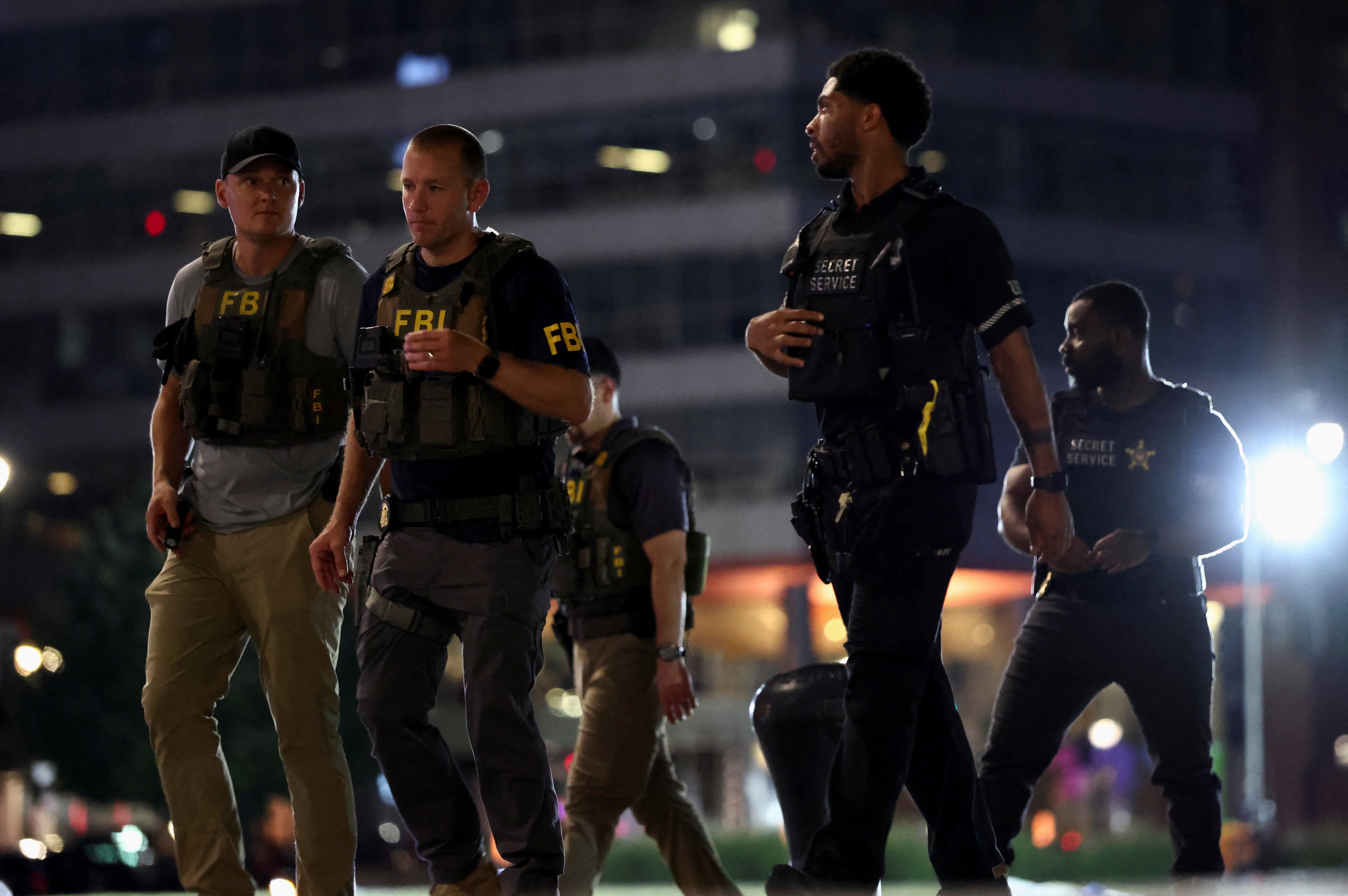
FBI agents and Secret Service Police officers patrol the Navy Yard neighborhood, in Washington, D.C., U.S., August 12, 2025. REUTERS/Evelyn Hockstein
National security expert Marcy Wheeler spotted a detail in a recent court filing that could lead to the impeachment of President Donald Trump's FBI Director.
One of Kash Patel's first actions as director was to fire FBI agents who worked on Jan. 6 cases or anything related to Trump's cases. It led to an absolute bloodbath of smart and capable people eliminated from important jobs, leading to a staffing shortage.
In fact, NPR reported this month that many FBI counterintelligence squads, the units that investigate foreign espionage, now have only 50 percent to 60 percent of their positions filled. In several field offices, the number of counterintelligence squads has been cut in half.
The FBI has reportedly lost more than 1,500 special agents since Trump entered office, sources told NPR.
It appears Patel lied to Congress about it.
Wheeler, known for sifting through court filings to uncover tiny details, looked into the lawsuit from a group of the fired FBI agents that she's kept an eye on for the past several months.
In late September, lawyers including Margaret Donovan, Abbe Lowell, Mark Zaid and others filed a motion with the court. It asked Judge Aileen Cannon to clarify whether her February order barring the release of Vol. II of Jack Smith's report would prevent FBI personnel from answering grand jury questions. Cannon has demanded that the volume stay secret, but if agents testify in a new investigation, they would be violating her order.
That ultimately forces her to choose between protecting her own secrecy order and allowing testimony that could undermine Trump’s claims of persecution. Cannon struck the motion on Oct. 1 for a procedural reason, claiming the lawyers did not include the required certification that they had tried to confer with opposing counsel before submitting the court filing. They were told to refile it.
Wheeler teases that this case from the FBI agents is more than a simple job discrimination filing. It also outlines evidence that could support an impeachment referral against Patel.
According to the suit, Patel accessed the names of the FBI agents when he asked someone below him to access the case files involved in Trump's classified documents investigation.
In less than 48 hours, Patel told Reuters that investigators subpoenaed Trump's phone records. Patel then used that information to justify firing the FBI agents.
On March 19, 2026, Patel told the House Intelligence Committee, “People were terminated for violating their ethical obligations.”
He also claimed that when such terminations happen, “there are internal investigations conducted by the careers at the FBI that highlight unethical or inappropriate conduct,” and that he then makes the decision.
The nine former FBI employees say their firing had nothing to do with misconduct. Their lawsuit alleged they were fired because they worked on the Mar-a-Lago classified-documents investigation, and that the firings were “not for any cause or any legitimate reason.” They also said that there was no internal investigation or disciplinary process. That contradicts Patel's comments to Congress.
A second example, the suit alleged, is that on Sept. 15, when Patel appeared before the U.S. Senate, he suggested most of the agents who had anything to do with the classified-documents case had retired, and they had not been fired.
“There was no purging," Patel swore under oath.
As Wheeler explained it, Patel found out who investigated Trump, leaked a damaging detail about the case, fired the investigators and then gave Congress a different explanation. The lawsuit, in this view, contains the receipts Congress would need to investigate whether Patel abused his power and lied under oath.
Lying to Congress qualifies as a "high crime or misdemeanor."
At least three judges have been accused by Congress of lying under oath: Judge Alcee Hastings, Judge Walter Nixon and Judge G. Thomas Porteous. That charge was added to others other charges, but the Senate did vote to remove them. When former President Bill Clinton was impeached, it was for, in part, lying to Congress about his affair. In that case, the Senate did not convict him.
If Kash Patel knowingly gave false sworn testimony to Congress, that could theoretically support an impeachment investigation or a referral to Congress for one, Wheeler argued.