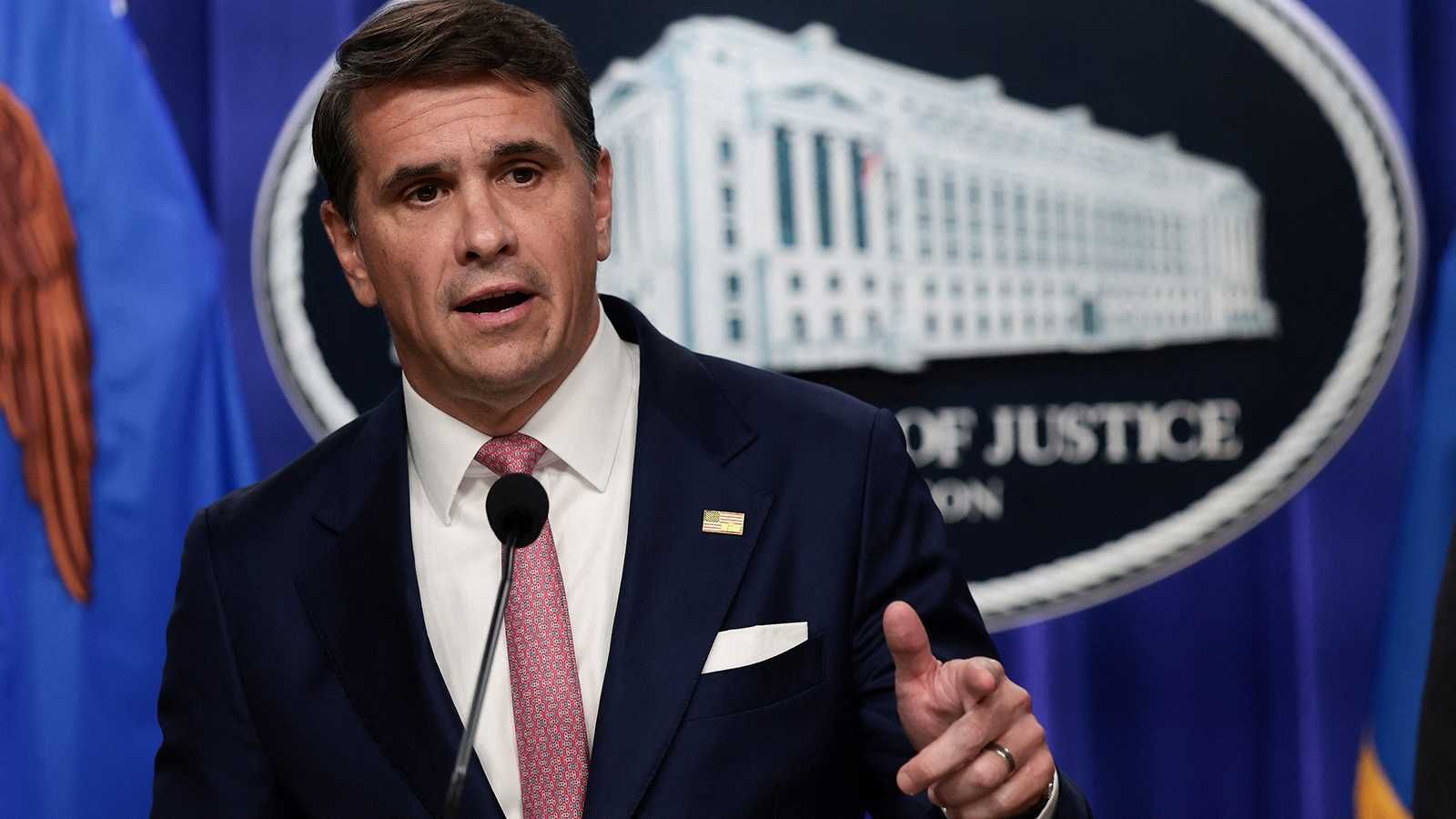
Acting U.S. Attorney General Todd Blanche holds a press conference to discuss Tren de Aragua developments at the Department of Justice in Washington, D.C., U.S., July 1, 2026. REUTERS/Evelyn Hockstein
The Justice Department has promised a New York judge that it will do the investigations necessary to justify subpoenaing reporters and their families after the judge put everything on hold.
It was reported on Monday that the New York Times has been targeted by the FBI and the larger Justice Department as part of the investigation into "leaks" regarding President Donald Trump's new Air Force One. Not only were reporters subpoenaed, but the Times reported on Monday that the DOJ also told their family members to hand over their phones.
Courts and justice reporter Chris Geidner, who runs the "Law Dork" Substack, wrote that the docket was updated Tuesday to show that the Justice Department responded to the New York Times filing, agreeing to put off subpoenas for two weeks so that the government can take "particular investigative steps." The DOJ swears that the information they intend to find will be relevant to the court in assessing whether to quash the case.
The subpoenas have already been blocked by Judge Arun Subramanian until the ruling over the motion to quash, Geidner explained. There's a hearing on the matter this week.
The DOJ uses words like "confidential grand jury investigation" and "classified for otherwise confidential and sensitive information" to claim that it has the information to fight back against the Times' motion. It claims that its evidence will disprove the Times' claim that the DOJ "lacks proper predication and that no investigative steps were taken prior to issuance of the subpoenas."
It also disagreed with the claim "that the Government failed to comply with governing Department of Justice regulations regarding issuance of subpoenas to members of the media."
To Geidner, he said, the letter read as if the DOJ was saying in their document, "We're going to do the work now that we were supposed to do before issuing the subpoenas."
He also called it "true clown car s—— that shows how overreaching this is, which in and of itself is a problem because that is not what you want to put in writing to a judge in response to a challenge to a subpoena unless you really need to do so."
In most criminal matters, an investigation begins before the grand jury gets involved. Prosecutors and law enforcement then present evidence to the grand jury, which decides whether there is enough probable cause to issue indictments.
Thus far, the White House chief of staff, Susie Wiles and FBI Director Kash Patel demanded that administration officials turn over their phones to inspect whether they were responsible for the leaks to reporters about Air Force One not being fully equipped to protect the president.
Some of the subpoenas for the reporters demand records dating back to Jan. 1, 2026, long before the Air Force One was unveiled to the public, and certainly before the report and the NATO trip flub.
Lawyer Jas Easterly commented, "The judge is certainly going to ask, if investigative steps are material to whether the subpoenas can overcome the reporter's privilege, why were the subpoenas issued before those steps were completed?"