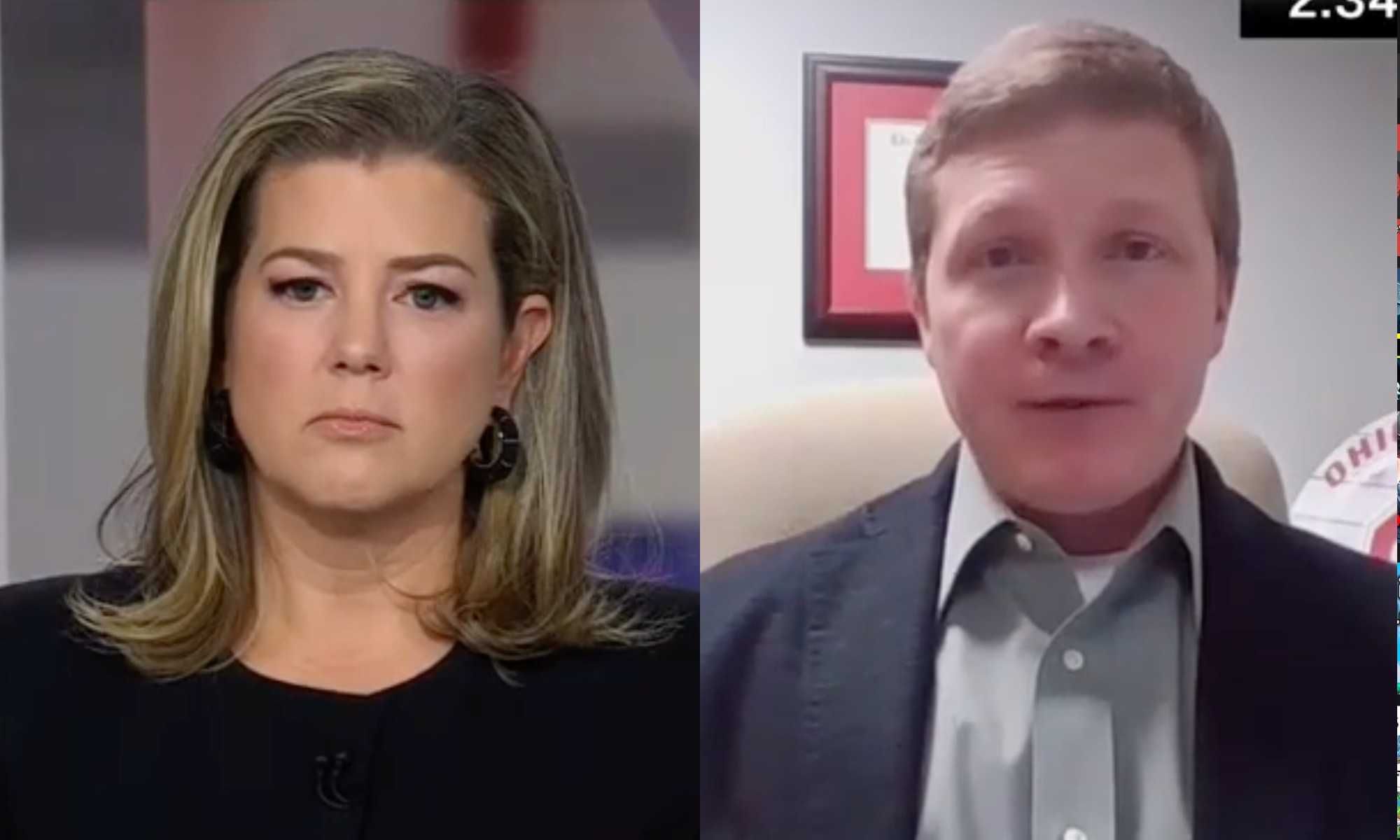
One retired Judge Advocate General Corps (JAG) officer says officials in President Donald Trump's Pentagon may have been aware they were breaking international law when carrying out a controversial strike in September.
During a Thursday interview with CNN, Dan Maurer — a 22-year U.S. Army veteran who served as a military attorney — broke down how legal experts within the Department of Defense regularly advise top commanders of sensitive missions before a strike is carried out. He explained that the process is particularly relevant given the recent closed-door testimony of Admiral Frank M. Bradley, who led the September 2, 2025 operation in which two survivors of a boat strike in the Caribbean Sea were killed in a secondary strike.
During his remarks, Bradley refuted the initial Washington Post report about the "double-tap" strike on the two survivors — who were clinging to wreckage of their vessel after a U.S. missile destroyed it — saying that the allegation that Defense Secretary Pete Hegseth gave orders to "kill everybody" never occurred. He also maintained that he ordered the secondary strike was necessary because the survivors were radioing for help. Maurer said Bradley was not making a "sound legal argument" to justify the second strike.
"It's not factuallyaccurate," he said. "... The bottom line is, ashipwrecked crew member of avessel ... acombatant, a street criminal,whoever it is, is shipwreckedand, communicating back toshore, communicating back totheir organization,communicating to someone theyknow for a rescue, does not makethem a combatant. It does notmake them targetable. It issimply calling for rescue. Theyhave to actually pose a threatto someone else."
President Donald Trump has argued that the U.S. is in a state of armed conflict with drug cartels as a means of justifying his boat strikes in the Caribbean, which have killed more than 80 people to date. Maurer went on to say that even if the U.S. was operating under the rules of an official armed conflict, it still wouldn't justify the September 2 strike.
"The laws of warwould still prohibit targetingshipwrecked crew members, again,no matter how evil they are, nomatter how bad they are, nomatter how high up in the chainof command they are, they are hors de combat, period," Maurer said, referring to the French phrase for "out of the fight" in Rule 47 of International Humanitarian Law (IHL).
Maurer explained that in a situation where commanders are preparing to carry out a lethal strike, there is typically a military lawyer on hand to advise them of the legality of an action. He added, however, that commanders of missions still have the authority to make the final decision regardless of what advice a military lawyer may give.
"In an operationscenter that is commanding andcontrolling a targetingoperation ... that would involvethe commander, various munitionsexperts, targeteers, planners,logisticians and a JAG, a Judge Advocate General Corps officer," he said. "And at the high level of [Joint Special Operations Command]; athree-star command, or [U.S. Southern Command];a four star command, the lawyerin the room — and there may bemore than one — are usually very,very experienced."
"They have a lotof experience. They have a lotof judgment. They've been aroundthe block. They understand thelaws of armed conflict. Theyunderstand how to interpretevidence," he continued. "And again, if you'rein a combat situation, in anarmed conflict, that lawyer isthere to ensure that the targetis a valid, legitimate target inaccordance with the rules ofengagement ... [T]he law of war andthe rules of engagement aresupposed to reflect the laws ofwar. No rule of engagement — nomatter how aggressive thecommand wants to be, no matterhow aggressive the commander inchief wants to be — no rule ofengagement can break the laws ofarmed conflict. It is a red lineyou cannot cross."
Watch the segment below:
- YouTubewww.youtube.com