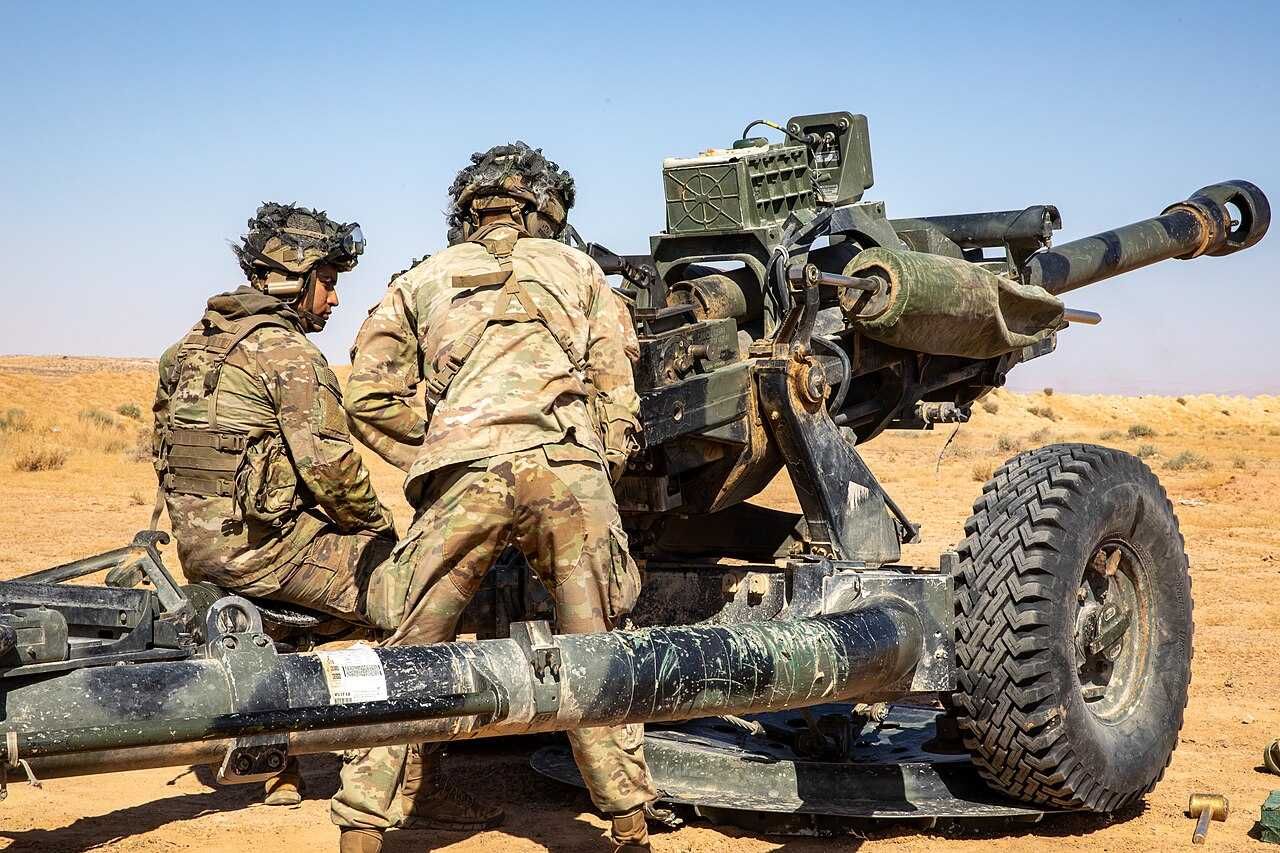
U.S. Army soldiers at Ben Ghilouf Training Area in Tunisia on April 27, 2025 (U.S. Army Reserve photo by Staff Sgt. Brendon T. Green-Daring/Wikimedia Commons)
U.S. Army soldiers at Ben Ghilouf Training Area in Tunisia on April 27, 2025 (U.S. Army Reserve photo by Staff Sgt. Brendon T. Green-Daring/Wikimedia Commons)
In a video posted on X, formerly Twitter, on Tuesday, April 21, Defense Secretary Pete Hegseth announced that the Defense Department was "discarding" the military's "mandatory flu vaccine requirement, effective immediately." Hegseth's announcement was applauded by MAGA anti-vaxxers but drew a scathing response from liberal podcaster and former MS NOW (then MSNBC) host Keith Olbermann, who bluntly tweeted, "You couldn't do more to harm our troops if you attacked them, you drunken m– –."
Retired U.S. Army Lt. Gen. Mark Hertling examines the military's new flu vaccine policy in an article published by the conservative website The Bulwark on April 22, warning that the Trump Administration is putting members of the U.S. Armed Forces in danger by increasing their chances of being infected with the flu.
"Secretary of Defense Pete Hegseth recently announced that he is discarding mandatory flu vaccinations for U.S. service members," explains Hertling, who served as commander of U.S. Army Europe under former President Barack Obama. "It may appeal to an anti-vax political base, and it may sound minor in the abstract — part of what Secretary Hegseth described as 'restoring freedom to the joint force.' But 'freedom' also comes with civic and community obligation, especially in a profession built on individual and group responsibility. In military units and on military bases, individual choices have immediate and cascading consequences for the health and readiness of others."
Hertling adds, "Consider how other high-performance organizations or facilities with throngs of people in close contact handle contagious illnesses. If a professional sports team has a player with the flu, that athlete often isn't welcomed into the locker room or told to push through practice. He's isolated to prevent the spread of the virus."
The former U.S. Army Commander warns that the flu can easily spread on military bases.
"Many soldiers live in barracks, train in formation — or share tight crew quarters in a tank, submarine, or aircraft — eat in shared dining facilities, and operate in close quarters every day," Hertling notes. "Additionally, troops who are married have families who live in base housing, send their kids to base schools and child care, attend religious services, and interact in a closed environment where exposure compounds quickly. What spreads in one unit rarely stays there."
Hertling emphasizes that in the military, "routine vaccinations" are a matter of "military readiness."
"In civilian life, getting the flu is usually an individual inconvenience — missed work, a few days of recovery, perhaps a ripple effect within a household or office," the veteran observes. "In the military, illness spreads rapidly across formations. One soldier shows up sick to morning physical training, and within days, an entire unvaccinated platoon would likely be degraded. Maintenance slows. Training schedules slip. Leaders spend time managing symptoms and manning rosters instead of preparing for missions."
Hertling continues, "Scale that to a battalion or brigade, and the impact becomes operational. For units in training, missed days due to illness mean less preparation for the next fight, which could lead to higher casualties or mission failure. For units in combat, the consequences can be even more severe…. Not every flu case is severe, but the cumulative effect of many cases, spreading quickly through formations, creates a predictable and avoidable degradation of capability. Good leaders don't ignore predictable risks; they mitigate them."