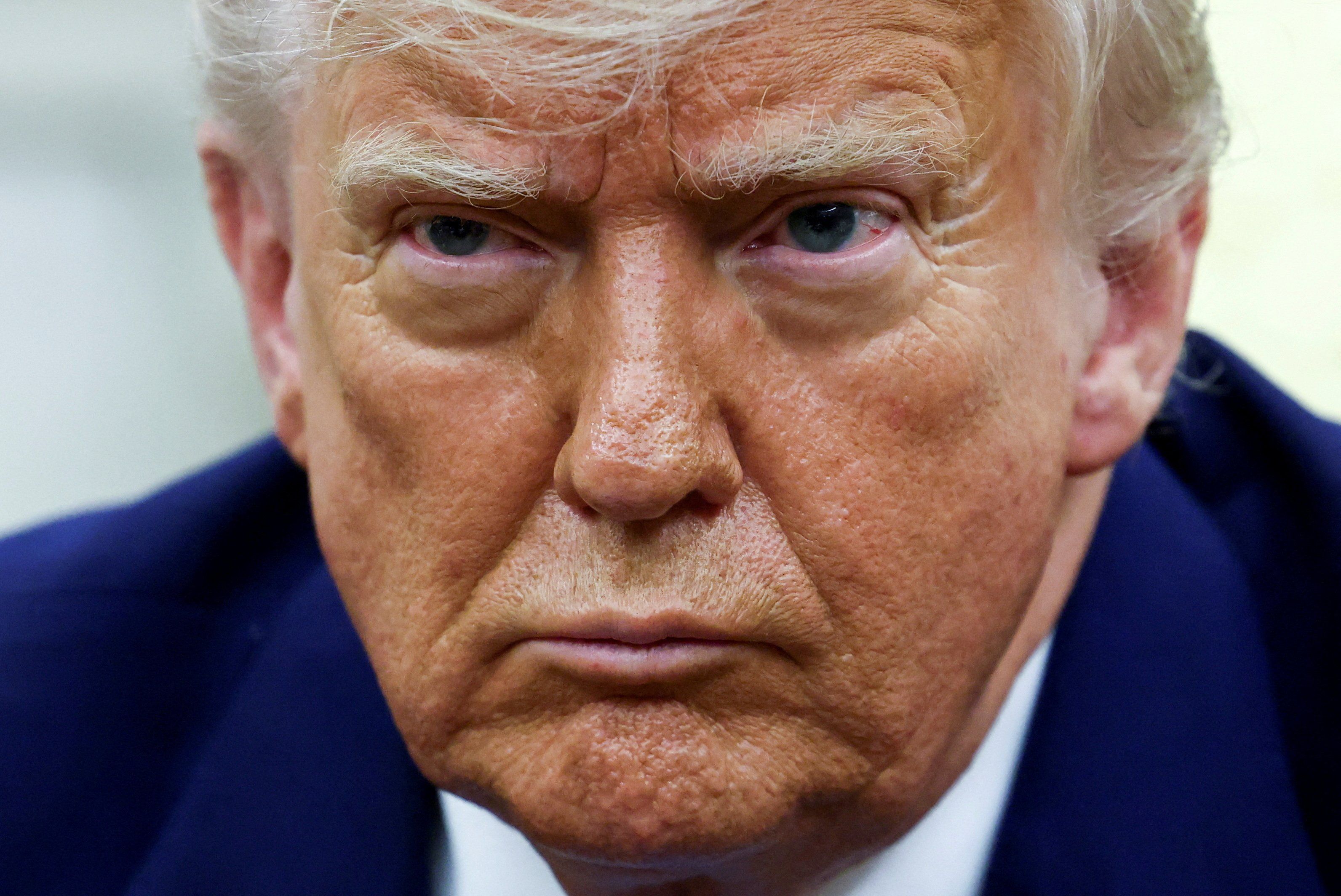
FILE PHOTO: U.S. President Donald Trump looks on as he meets South African President Cyril Ramaphosa in the Oval Office of the White House in Washington, D.C., U.S., May 21, 2025. REUTERS/Kevin Lamarque/File Photo
President Donald Trump has recently renewed his calls to make Greenland a part of the United States, but residents of the Danish territory are virtually united in their opposition to Trump's plan.
That's according to a Thursday report by CNN correspondent Nic Robertson, who said that Greenlanders are taking Trump's threats of a military occupation seriously. Robertson noted that only six percent of residents support joining the U.S., and that while a majority of Greenlanders want to eventually become an independent nation, they don't want that process to happen immediately. He also said Trump is viewed in a particularly harsh light by some residents.
"Just speaking to oneperson after we arrived here, hesaid to me, 'President Trumpthinks he's a big man, but wedon't see him that way. Wethink of him as a small person,'" Robertson said. "They like their life here. Hetells me they're worried thatit's going to changeirreversibly if the United States takes control."
Robertson further reported that both Danish officials and local elected officials in Greenland are "worried" about Trump's threats. He added that the foreign minister of Denmark specifically requested a meeting with Secretary of State and National Security Advisor Marco Rubio next week to "get nuance into the conversation."
"They feel that the United States doesn't understandwhat Denmark offers, what Greenland has on tap for themalready in terms of resourcesand potential troop deployments," Robertson said. "The foreign minister of Denmarkalso said that we need to bringthe rhetoric down, tone it down."
The CNN correspondent observed that Danish Foreign Minister Lars Løkke Rasmussen (who is also the former prime minister of Denmark) has "used even stronger language" about Trump's threats. According to Robertson, Rasmussen has warned that if Trump takes Greenland by force, it would mark "the end of NATO."
"The European Union is standing lockstep behind Denmark and Greenland right now," Robertson said.
Watch Robertson's segment below: