Bush’s refusal to call out Trump adds another failure to his mired legacy
01 September
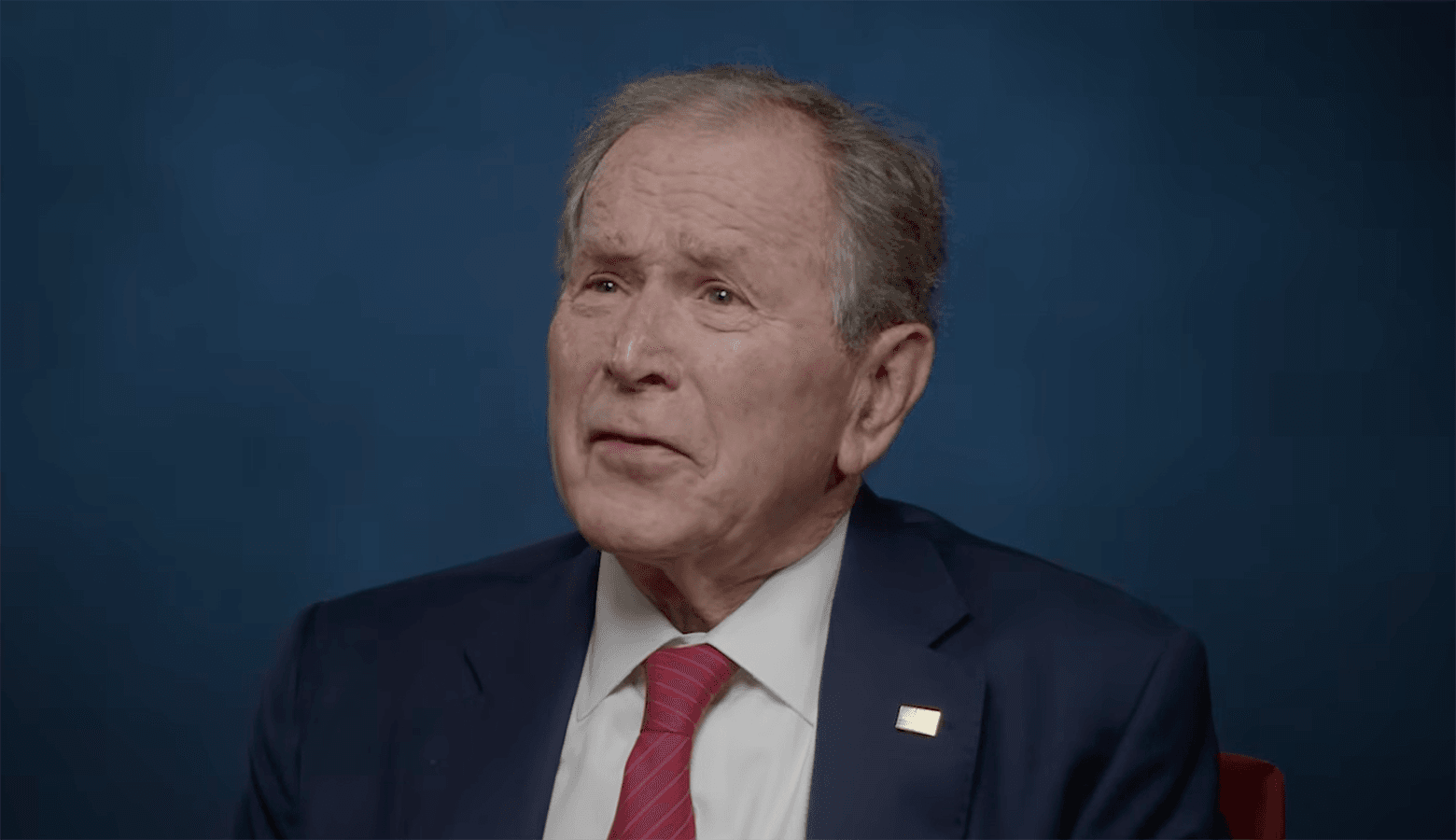
George W. Bush, Image via the George W. Bush Presidential Center.
When George W. Bush left office, he was among the most unpopular presidents in American history, and he faded into the background, spending his days painting. He remained silent during President Barack Obama's administration and during Donald Trump's presidency and critics wonder why.
Writing for The New Yorker, Jacob Weisberg argues that Bush’s enduring refusal to directly condemn Donald Trump isn't principled post-presidential restraint, but a politically convenient silence that comes out of fear, family loyalty and a fixation on repairing his own legacy.
Weisberg describes Bush as someone whose public values stand in stark contrast to those of Trump's, with his support for immigration, free trade, diplomacy, civic decency and global health. Yet, Bush has consistently avoided naming or even challenging the president, even after he issued startling cuts to Bush's long-running program to help reduce HIV/AIDS in Africa. Weisberg can't understand why, as the only living former Republican president, Bush is refusing to allow the GOP to be remade in Trump's image.
"Trump came after PEPFAR on his first day back in office," recalls Weisberg. "On January 20, 2025, he signed Executive Order 14155, withdrawing from the World Health Organization, and Executive Order 14169, freezing foreign aid, including PEPFAR. After Elon Musk’s Department of Government Efficiency destroyed the U.S. Agency for International Development, the primary steward of American health assistance abroad, uncertainty hovered over what remained of the program. According to Brooke Nichols, a professor of global health at Boston University who specializes in the mathematical modelling of infectious diseases, cuts to PEPFAR cost more than a hundred and seventy-five thousand lives within a year — nearly a quarter of the approximately seven hundred and eighty thousand deaths caused by Trump’s foreign-aid cutbacks as a whole."
Bush remained silent. Even now, as data shows the startling impact of eliminating PEPFAR, Bush is silent. It was Obama, along with U2 singer Bono, who attended a "thank you" video conference to praise USAID workers fired by the Trump administration.
“Is it in our national interests that twenty‑five million people who would have died now live?” Bush asked. “I think it is, and so do you.”
Yet, Weisberg writes, "Bush wouldn’t name the man ending the program or give permission for the video to be released publicly."
Once Trump took office, he trashed many of the Bush-era Republican positions, like building international alliances, trade and a more empathetic rhetoric toward immigrants. Trump had campaigned on “America First,” tariffs, and hard-line immigration policies. In the early days, Bush would occasionally offer indirect rebukes. After the white supremacist rally in Charlottesville in 2017, Bush condemned “bullying and prejudice” while giving a eulogy for his father, the report recalls. Still, he never named Trump.
When Trump fans marched to the U.S. Capitol and began beating police officers and breaking into the building, all Bush would say publicly was that the violent uprising was “a sickening and heartbreaking sight,” recalls Weisberg. Bush said the violence was “reckless behavior” spread by political leaders who relied on “falsehoods."
Bush is old-school, the columnist argues. He's made it clear that he doesn't believe former presidents should comment on current presidents, even one as extreme as Trump. Weisberg calls it a cop-out. There are no binding historical rules that demand it, as became clear during Joe Biden's administration when Trump went on the attack almost daily. Former Republican presidents like Theodore Roosevelt and Herbert Hoover were willing to bash their predecessors.
Weisberg said that it's possible Bush may fear provoking Trump, want to protect family members from threats, avoid harming the political career of his pro-Trump nephew George P. Bush or simply lack interest in reentering partisan fights. Bush could also fear that his legacy won't be seen as positive after he brought the U.S. into an unpopular war based on false information. Bush's failures around Hurricane Katrina and the economic crisis are still fresh in the minds of Americans. So, Trump could easily revive Bush's failures were he to weigh in, even impact fundraising for Bush's presidential library.
Weisberg closed by maintaining that Bush should set aside all trepidation and lend his voice to returning his party to a more logical position. Otherwise, he runs the risk of adding another failure to his legacy.
"Trump was burning his house down, and all Bush could bring himself to say was that it was a shame to see it destroyed. Perhaps he will paint portraits of some of the victims," Weisberg said.