‘Public deserves to know’: Angry judge grills DOJ over hidden Epstein files
13 August
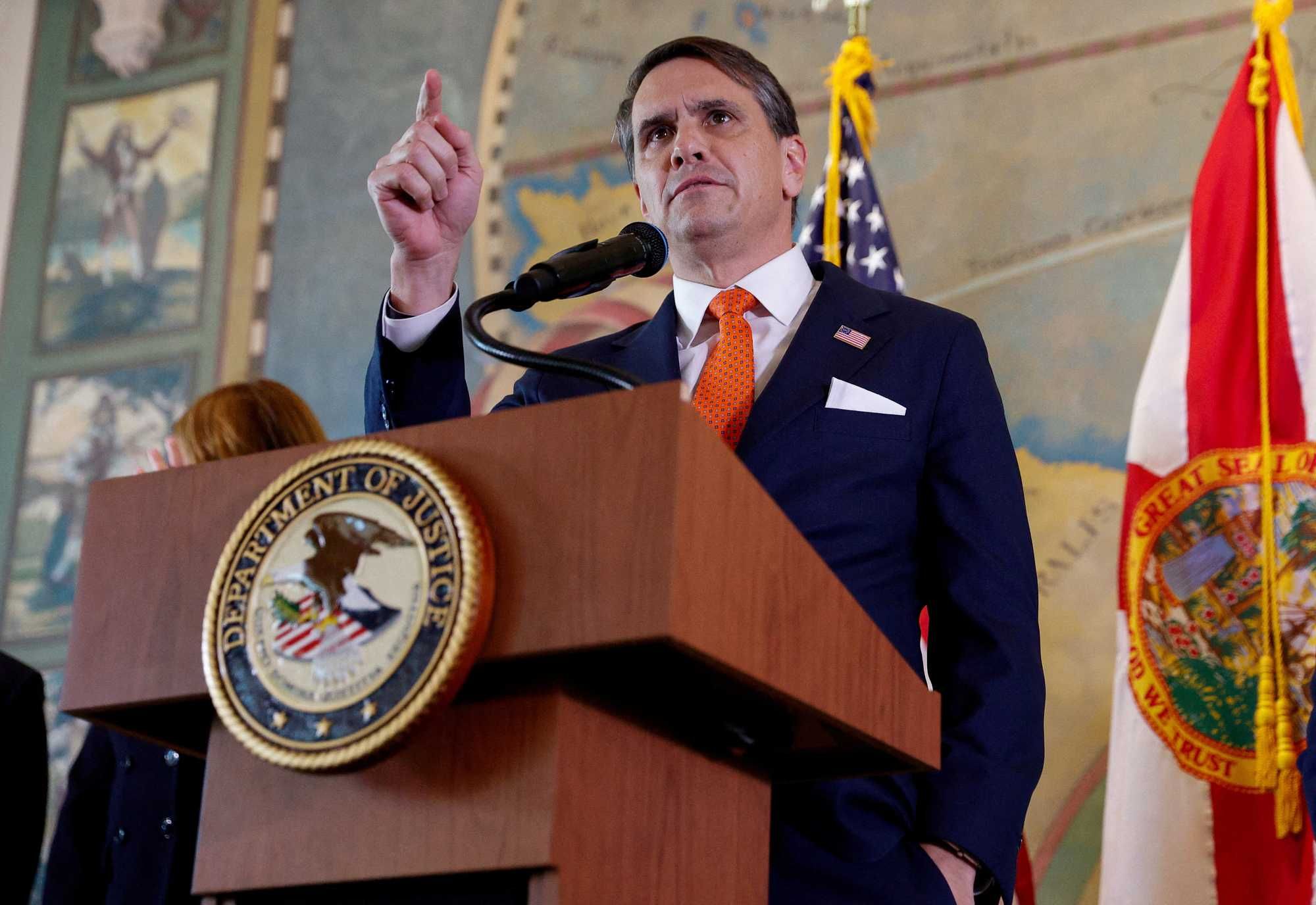
Acting U.S. Attorney General Todd Blanche in Miami, Florida, U.S., May 20, 2026. REUTERS/Marco Bello
The Justice Department is in court Thursday for a hearing demanding proof that the office complied with the law passed by Congress to release all of the files about the Jeffrey Epstein investigation.
Legal analysts like Allison Gill were watching the court proceeding and recording the back-and-forth between the judge, Justice Department lawyers, and the lawyer Katie Phang, who filed the initial lawsuit.
"We appreciate the opportunity. DOJ tried to make a good-faith effort to provide the court with what it sought. I do have a second binder if you're willing to entertain a secondary submission. Can I approach and address the court ex parte?" the DOJ asked, according to Gill's notes.
At issue were notes taken by the federal investigators who spoke with anyone who had information about Epstein. This includes the survivors, any associates or other witnesses who came forward over the years. Those interviews use a form and are referred to as "302's"
"These types of documents contain sensitive material and are under a protective order from the —" the DOJ continued before the judge cut them off.
"I'll ask some questions, and then my staff and I will huddle about this binder," the judge said. "I want to focus on the FBI interview notes. You say they are substantially similar. But you didn't point to provisions in the EFTA that allows for you to withhold substantially similar things. So why not just hand-redact the notes?"
The DOJ lawyer said that they decided handwritten notes were "duplicative."
"The attorney general memo of January speaks to that on pages four and five," the DOJ lawyer said. "The attorney general said due to the volume of docs, the presence of duplicative docs and the number of duplicative docs, I think this is just an inadvertent redaction. The decision was that the handwritten notes were duplicative."
The DOJ and the judge went back and forth about why the handwritten notes weren't included in the documents handed over, and the DOJ kept saying they had already included them somewhere else in the other documents.
"How can the court know that?" the judge questioned.
Over the past several months, Justice Department lawyers have faced increasing scrutiny from judges who found they were not fully candid with the court or submitted incomplete information.
One case involved the “Broadview Six,” a group of Illinois activists and officials who were indicted until allegations emerged that prosecutors used unethical tactics before the grand jury. The charges were later dropped.
U.S. Attorney Jeanine Pirro is facing questions in Washington, D.C., over the indictment of former Olympian David Hearn. Hearn's lawyers argue that the Justice Department’s own evidence did not support the crimes Hearn was accused of committing, raising questions about what prosecutors told the grand jury to secure the indictment. His lawyers are demanding access to the grand jury transcripts now.
"How do I know those are consistent?" the judge questioned again. "The only way to do that is to see the handwritten notes. We can't just take at face value that the notes are substantially similar. We have to determine that's correct, and I'm looking for a way to do that."
"I'm looking for evidence that your representations that the handwritten notes are consistent with the 302s. The court needs a time frame for when it can get that information," said the judge. "The only way to do this is to have the evidence. Maybe there's another way to do it. I'm open to it."
"I don't have much insight. I could take it back to DOJ. If you have an order..." the DOJ lawyer said before being cut off.
"But that was part of the order," the judge said, citing the congressional law demanding all of the information.
"I don't have any other sort of ... are you seeking a production of the handwritten 302 notes? Is that what you're asking for?" the lawyer asked.
The DOJ continued to claim that it didn't fully understand what the judge was seeking. But the judge said that it was "clear."
"What is the evidence ... the rules of evidence ... what evidence are you seeking? What process would you like DOJ to engage in?" the lawyer asked.
"Is there another way the redactions can be accomplished? Or is there a way the court can determine whether your redactions are appropriate?" the judge asked.
The DOJ explained that usually courts just believe what the DOJ says.
"Again, one of the difficulties I'm having is because of preliminary injunction posturing. At this stage, the DOJ has given its rationale. We're usually afforded the presumption of regularity. Or give us a clear, clean order to assess," the lawyer said.
New Mexico civil litigator Owen Barcala mocked the exchange on BlueSky with his own translation of what the assistant district attorney speaking for the DOJ was saying in lay terms: "But juuuudge, usually courts just accept what we say without asking for evidence!"
Toward the end of the proceedings, the judge noted: "You raise an interesting point. I thought about bringing DOJ in [into] sealed proceedings, but the public has a right to know what the hell is going on with this case. The victims deserve to know. The public deserves to know."