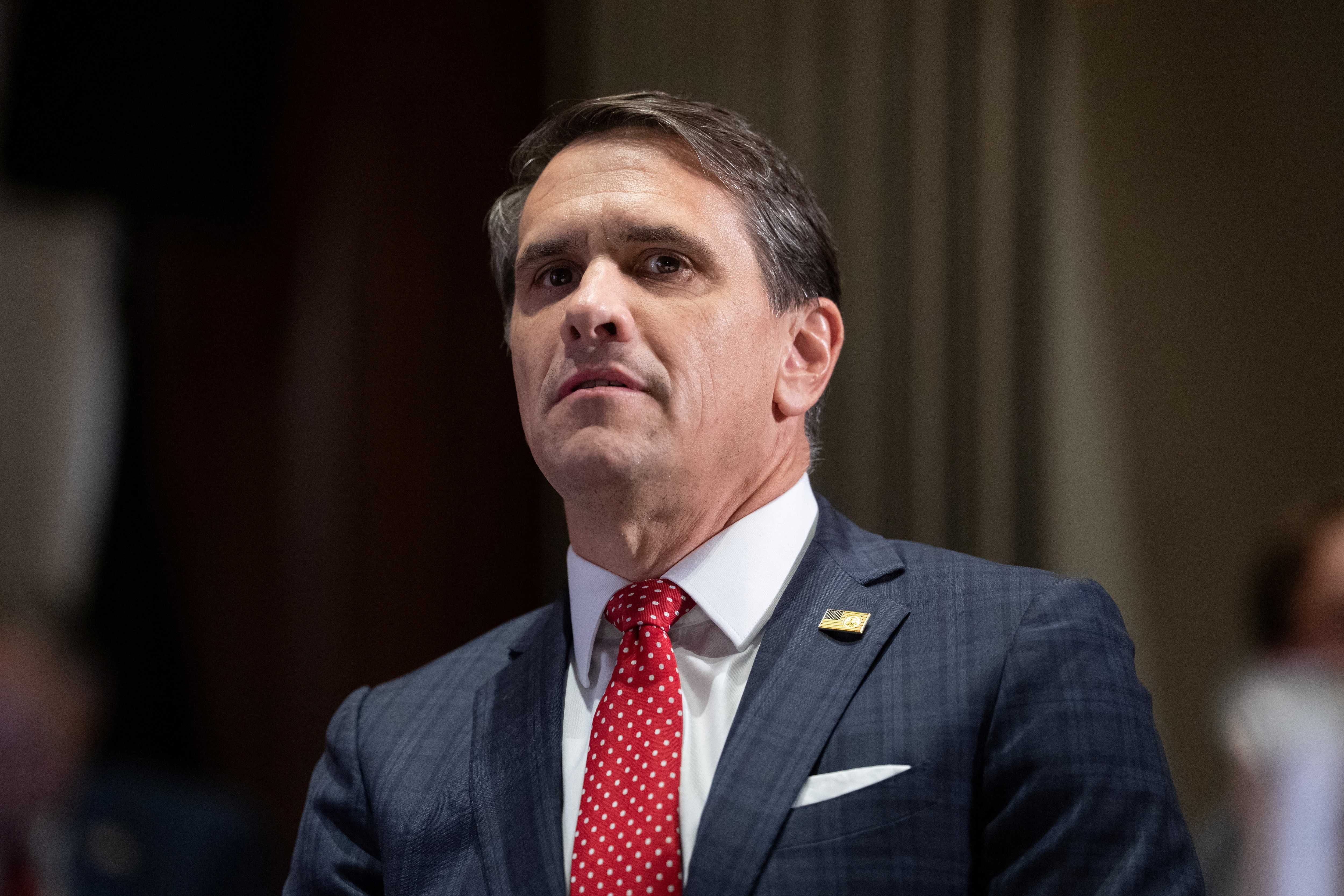
Acting Attorney General Todd Blanche attends the Republican National Lawyers Association (RNLA) 2026 National Policy Conference in Washington, D.C., U.S., April 24, 2026. REUTERS Aaron Schwartz
TheTrump administration is stilltrying in vain to kill congestion pricing in NYC. In June, the U.S. DOT appealedJudge Lewis Liman’s March decision in favor of the MTA, which had sued the federal government over President Trump’s attempt to kill the Manhattan toll.
According to Dave Colon at Streetsblog NYC, the feds’ brief contained two main arguments. The first is the one we’ve seen before in this increasingly absurd legal farce: that Liman never had the jurisdiction to hear the MTA’s case, as it was a dispute over a financial contract.
The second and new argument is similar to the one the Trump administration made in lower court. Rather than argue that the president isa de facto sovereign with unlimited powers, the Department of Justice lawyers argued that the FHWA can simply change its mind at any time.
“The government must be empowered to adjust to changing circumstances or to changed priorities,” they wrote.
In January, at a hearing before Judge Liman, DOJ lawyer Eric Hamilton made a rather unconvincing argument thatthe president and his agents have an absolute power to cancel contracts or agreements that the federal government signs with other parties. Liman described that argument as “breathtaking” and “wrong.”
The problem with the new argument, as one legal expert pointed out, is that the agreement that authorized congestion pricing under the Value Pricing Pilot Program has no kill switch, and the underlying law that authorizes the program has no “revoke whenever you want” clause.
“It’s a stretch to say they have any inherent authority just to change their mind,” said NYU law professor Roderick Hills, Jr. “I don’t know of any case that said an agency can just always change its mind, regardless of the statute under which the initial decision was made, regardless of the correctness of the original decision.”
Hills did point out that there is precedent for an agency to reverse itself if it can show it made a mistake in the first instance. “How can you correct an error that doesn’t exist?” he said.
The argument is also out of place as the federal government didn’t raise it in the lower court. The judges hearing the case could therefore easily decide to simply ignore the argument.
“The simplest thing to do would be not to rule on the merits at all, but say on second argument, you didn’t raise it below. It’s waived,” said Hills.
“Sean Duffy is the one who’s trying to change the status quo,” said Hills. “For almost two years, the MTA has been chugging along, and Sean Duffy’s been on the sideline saying, ‘Judge, stop that guy.’”
“In this case, the legal arguments are weak, and the policy here seems fine,” he said.