Chief Justice John Roberts calls out Trump solicitor general’s 'quirky' citizenship case
01 April
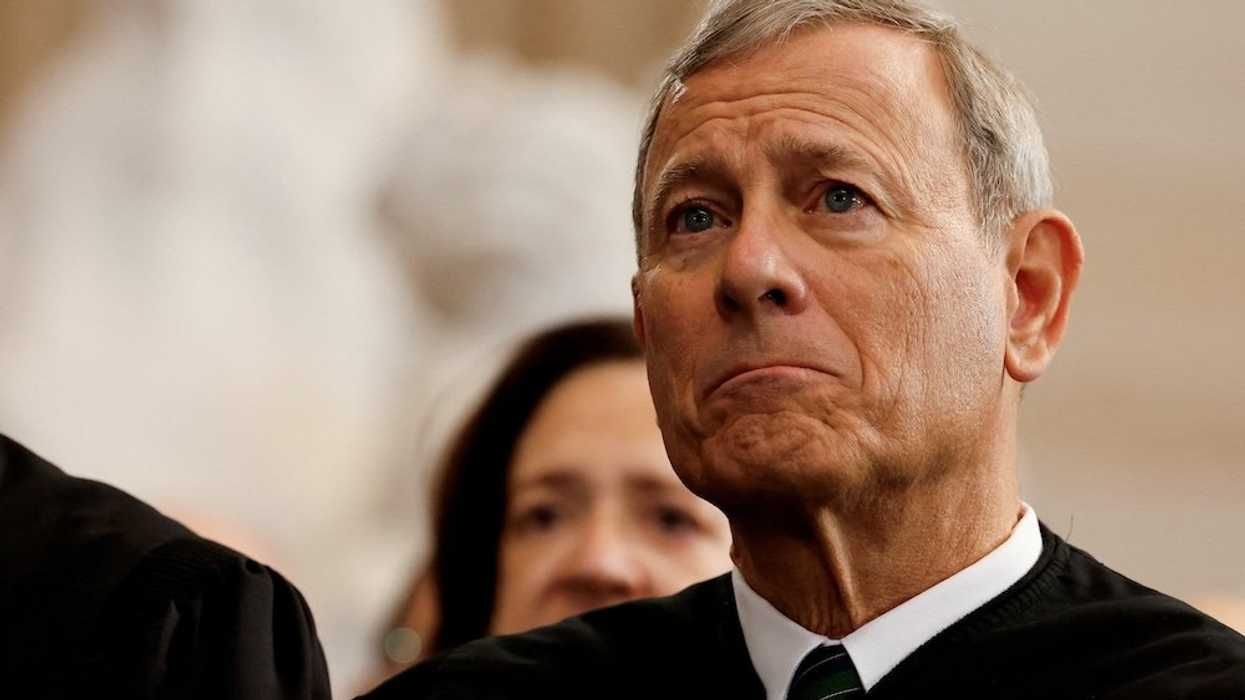
Supreme Court Chief Justice John Roberts on January 20, 2025, in Washington, D.C. Chip Somodevilla/Pool via REUTERS
On Wednesday, the U.S. Supreme Court heard oral arguments challenging key pieces of the 14th Amendment that grant citizenship to anyone born on U.S. soil.
From the early days of America, people born on U.S. soil were considered to be citizens, even if their parents were immigrants. It's a rule that the U.S. brought over from England as part of "common law."
According to American Civil Liberties Union (ACLU) lawyer Cody Wofsy, the original law was about "monarchical power; but in our young republic, it found new life as a principle of equal citizenship." The lawyer is among those arguing before the Court on Wednesday.
The law was challenged in 1856 and was officially decided by the Supreme Court in 1857 in the Dred Scott v. Sandford case. It eliminated the "common law," ruling that slaves who were kidnapped and brought to the U.S. could never be citizens. Those born to those slaves couldn't be Americans either. Wofsy called the decision "shameful" and explained it "helped precipitate the Civil War."
The U.S. responded by passing the 14th Amendment in 1866, after the Civil War, and it was ratified two years later.
"Before the American Civil War, this principle of equal citizenship was woefully incomplete," wrote Wofsy. "The founders declared that 'all men are created equal,' yet the original Constitution tacitly accepted the sin of slavery and counted enslaved human beings as 'three-fifths' of a person."
The 14th Amendment guarantees citizenship to "'all persons born' in the US are citizens, except for people such as ambassadors’ children who are immune from 'the jurisdiction' of the United States," Wofsy explained.
Chief Justice John Roberts seemed dubious as Trump's Solicitor General John Sauer began speaking.
"You obviously put a lot of weight on subject to the jurisdiction thereof. But the examples you give to support that strike me as very, uh, quirky," said Roberts. "You know, children of ambassadors, children of enemies during a hostile invasion, children on warships. And then you expand it to a whole class of illegal aliens are here in the country. I'm not quite sure how you can get to that big group from such tiny and sort of idiosyncratic examples."
Supreme Court reporter Jimmy Hoover, from Law.com noted, "After a friendly question from Justice Clarence Thomas, Chief Justice John Roberts right out of the gate expresses skepticism of the Trump administration's central argument: that children of undocumented immigrants are not 'subject to the jurisdiction' of the United States. He calls the SG's argument 'very quirky.'"
Justices Neil Gorsuch and Amy Coney Barrett seemed similarly skeptical.