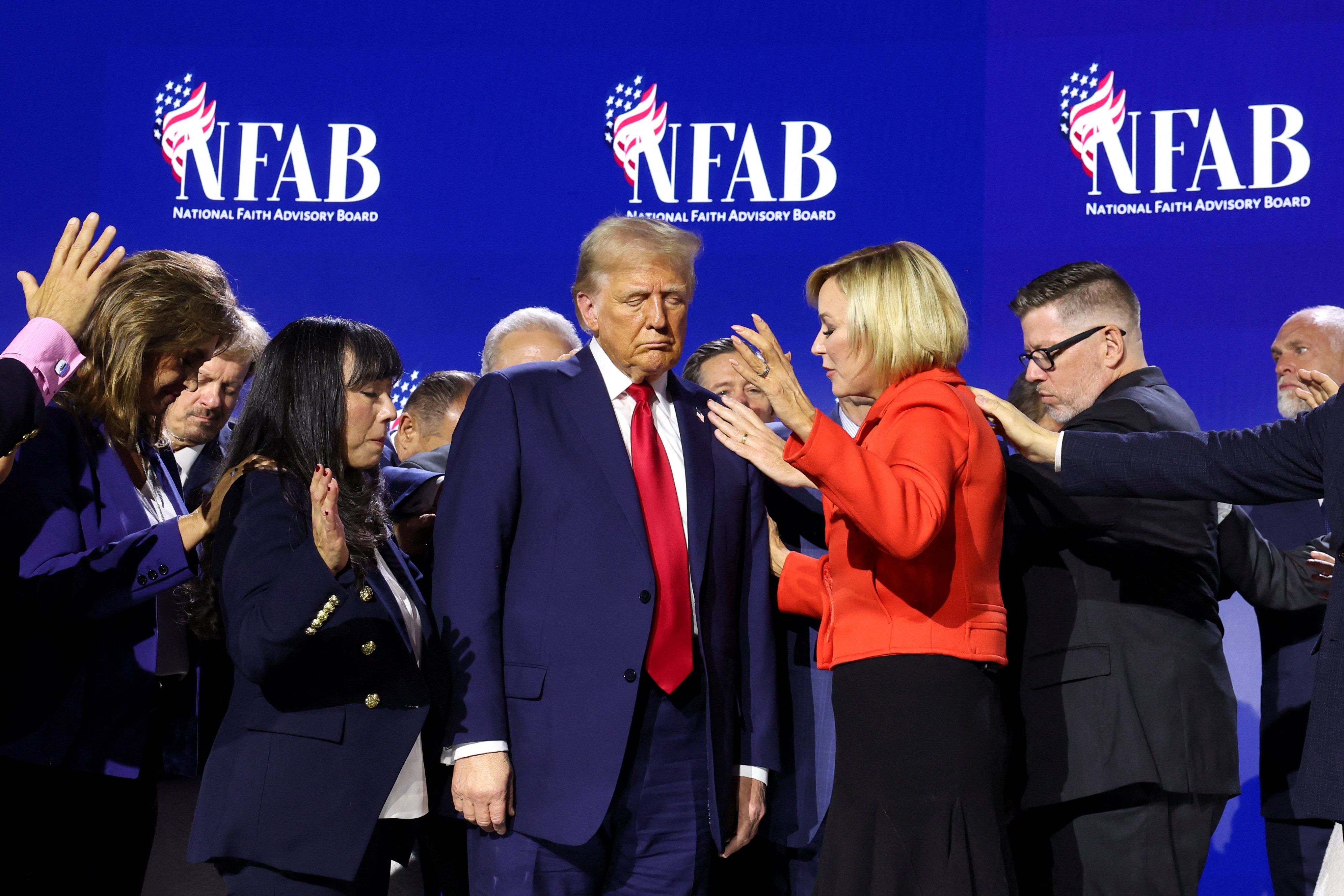
The Republicans’ historic 2026 midterm defeat exposed the reality that the party can no longer depend on the religious vote. Historically, those who identify as devout Catholics or are evangelicals have heavily aligned with Republican policy. But the midterm outcome and further research from Vox’s Christian Paz suggest that has changed significantly.
Catholic voters were one of the biggest surprises of the 2026 midterms, becoming major contributors in swing states. 2024 exit polls reveal Catholics backed Trump over Kamala Harris. But in the 2026 midterms, Catholics narrowly favored Democrats, 50-49.
The shift was caused by a variety of factors, including Trump and Republicans clashing with Pope Leo XIV and Catholic bishops over the Iran war, mass deportations and immigration enforcement. Demographic differences also contributed. Trump's immigration and deportation policies particularly turned off Latino Catholics.
Jewish Americans maintained loyalty to Democrats in the 2026 midterms; however, some numbers suggest the party may be losing some support. Exit polls reveal Jewish voters backed Democrats 68-31, compared with 78-22 in 2024. The shift varied by state but was noticeable in Michigan. Despite his victory, Democratic Senate candidate Abdul El-Sayed underperformed other Democratic candidates in precincts with large Jewish populations.
But that’s not to say all is a loss. Many Republican Jewish voters expressed concern over their party becoming too accepting of antisemitic rhetoric. Jewish Democrats expressed similar sentiments. Democrats still have a great foundation with Jewish voters, but the slimmer margins this time around show there can be problems in future competitive elections.
Trump and the GOP’s large evangelical following were shown to have remained supportive, but the support is wavering. Exit polls show that evangelicals backed Republican candidates 82-16, consistent with the 2024 presidential election. In the 2026 midterm election, they represented a smaller share of the electorate, which hints at a lower turnout in voting. Paz says this is imperative because support from the evangelical community has provided considerable influence over the GOP throughout the years.
There have been other big changes in other religious groups, such as Muslim, Mormon, and Protestant. Paz notes that data shows that Protestant Christians seemingly helped Democrats build their winning coalition this year. Mormon communities surveyed show a generational divide, with older voters steering toward Republican, but younger, more progressive voters aligning with Democrats. Due to the political tensions surrounding Israel, Islamophobia, and the Michigan Senate race involving Abdul El-Sayed, Muslim voters have been part of the evolving Democratic Party.
Paz notes that Republicans need to heed the warning signs as various religious groups either sided with Democrats or have remained Republican, but their faith in the party is diminishing. Other groups either abstained from voting or shifted their party allegiance, raising questions about how religion will influence politics moving forward. The results suggest that voters may increasingly prioritize the issues and candidates before them rather than allowing religious affiliation alone to determine their political choices.