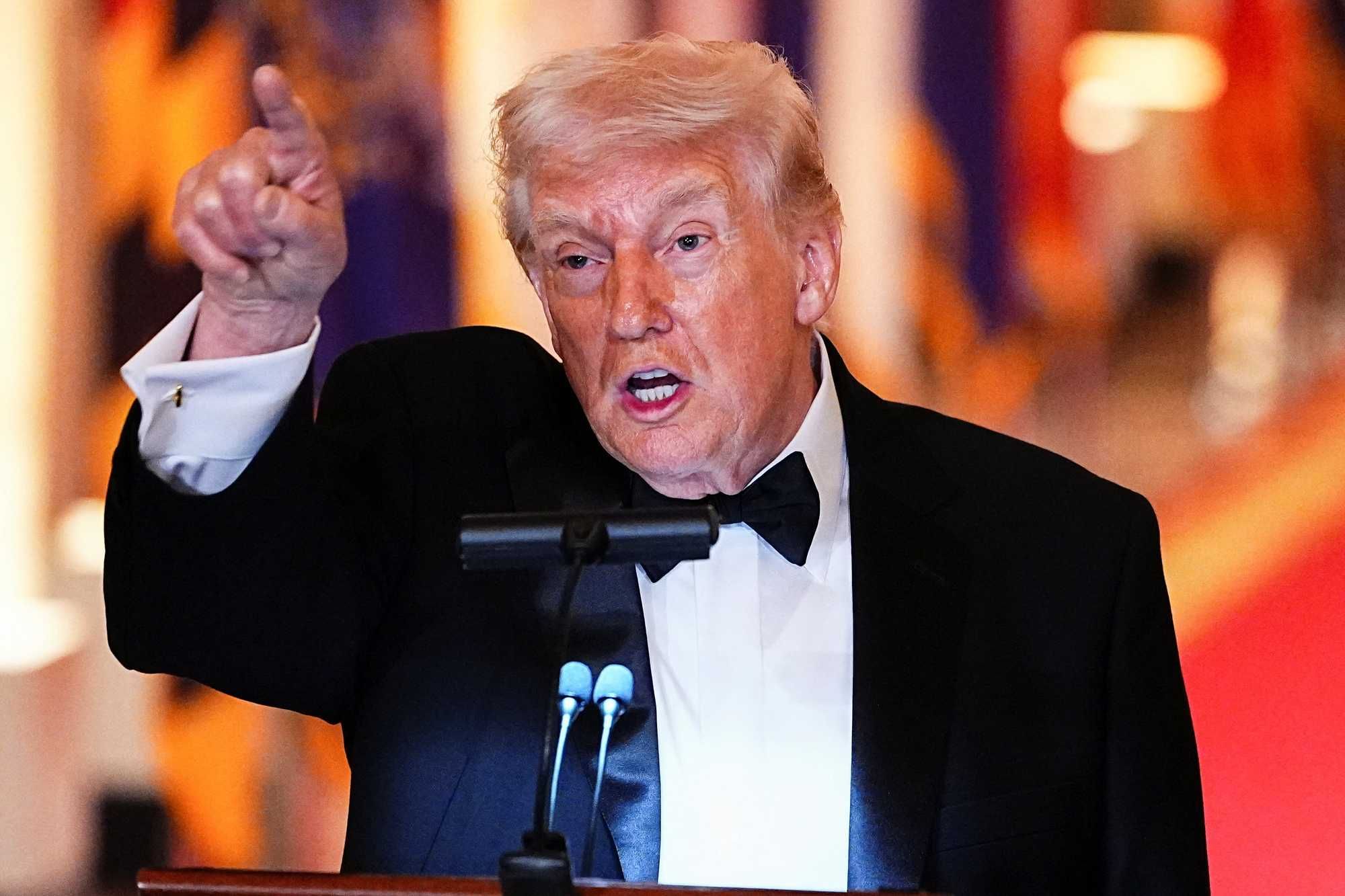
U.S. President Donald Trump in Washington D.C., U.S., February 21, 2026. REUTERS/Aaron Schwartz
President Donald Trump’s proposed law to “crack down on rogue judges” and his rhetoric toward judges who rule against him — such as calling them “criminals” and “a disgrace to our nation” — is a “breathtaking” danger to the Constitution, according to an expert.
“Demanding that the legislative branch enact laws that punish the judiciary is a breathtaking breach of the president’s oath to support and defend the Constitution, which creates our three separate — and coequal — branches of government,” lawyer and former US attorney Barbara McQuade wrote in a recent editorial for Bloomberg. “Trump’s recent attacks came after the Supreme Court struck down his tariffs, which he has used to wield economic power against foreign governments, last month. By a 6-3 majority, the Court held that the International Emergency Economic Powers Act did not authorize the president to impose tariffs, a power otherwise reserved for Congress. Among the justices joining the majority were two of Trump’s own appointees, Neil Gorsuch and Amy Coney Barrett.”
Trump, who said Gorsuch and Barrett “sicken” him because they dissented, is doing something “different” with his attempts to cower judges, McQuade wrote.
“His proposed legislation would target the judges themselves for punishment,” McQuade said. “It seems likely that Trump knows he will not get his wish. Even a Congress that has been largely submissive during his second administration would surely not go so far as to retaliate against judges based on their case decisions, a move that would wreak havoc on the separation of powers. But the president’s public statements nonetheless risk the independence of the judiciary, an essential pillar of democracy. By attacking judges and justices who rule against him, Trump is sending a message to the others: Rule my way or else you’ll be next.”
McQuade is not alone in criticizing Trump’s attacks on the judiciary. Earlier this month The New York Times reported that judges themselves are “quietly” saying that it is concerning how much “risk” is involved in speaking out against the president.
"Judges are turning up the volume" in their rulings against Trump, eschewing the judiciary’s traditional “restrained” tone in favor of "an emotive, populist approach" which permits them to give "full vent to the intensity of their concerns about cases flooding their dockets since President Trump returned to office."
The Times added, "One compared her district’s ballooning caseload to a demigod’s battle against a mythological monster. Another sought to buttress his argument against National Guard deployments to U.S. cities with a YouTube link to a 1970 protest song. A third compared the Trump administration’s rewriting of American history to the Ministry of Truth in George Orwell’s novel '1984.'"
Trump’s intimidation of the judiciary extends to the jurists he has appointed in his second term, many of whom have been required to avoid telling the truth about Trump losing the 2020 presidential election while under oath.
Senate Judiciary member Richard Blumenthal (D-CT) typically ended each hearing for a judgeship with the question, “Who won the popular vote in 2020?”
He always received variations on the same reply, namely that “President Biden was certified and served four years as president.” By using the word “certified,” they curry favor with the president who nominated them by refusing to flat-out say that Trump lost.
“There is a special peril when federal judges, who serve for life if confirmed, agree to demean themselves in this fashion,” legal analyst Jeffrey Toobin said at the time.