Legal scholar reveals 3 things needed to undo Supreme Court’s destructive rulings
30 June
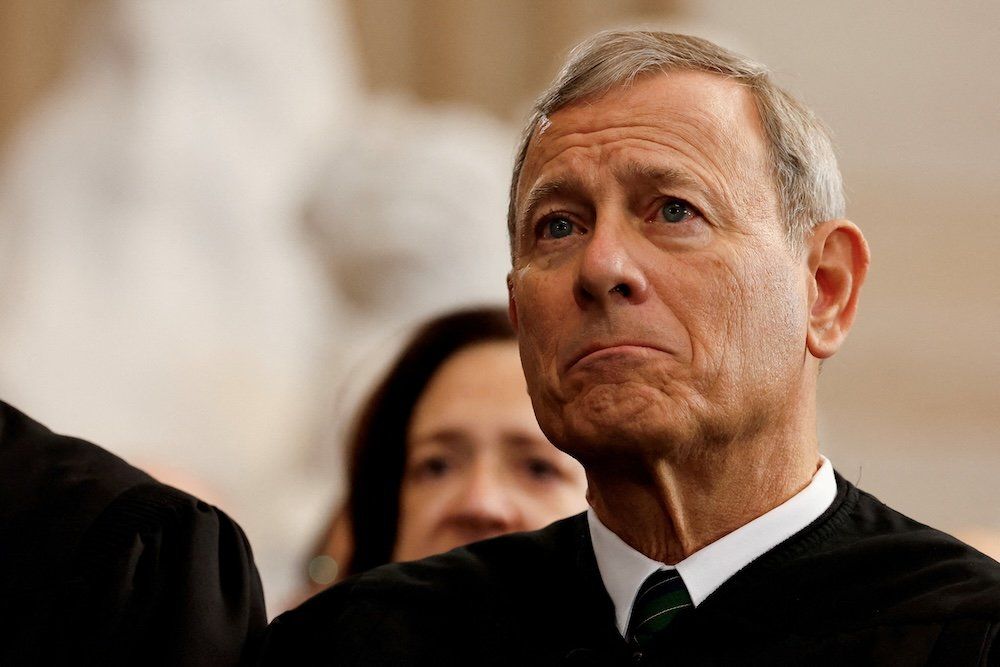
Supreme Court Chief Justice John Roberts in the Rotunda of the U.S. Capitol on January 20, 2025, in Washington, D.C. Chip Somodevilla/Pool via REUTERS
Supreme Court Chief Justice John Roberts in the Rotunda of the U.S. Capitol on January 20, 2025, in Washington, D.C. Chip Somodevilla/Pool via REUTERS
The path toward undoing the conservative Supreme Court's destructive rulings after the term of President Donald Trump will be arduous, and as one legal scholar argued for the New York Times, it will require three things to be in place.
The Supreme Court has released a new batch of highly contentious rulings favorable to the Trump administration to close out its 2026 term, continuing the conservative-majority court's longstanding trend. This week alone, the court rubber-stamped Trump's authority to fire the heads of independent federal agencies at will, a major democratic setback, and let states keep in place laws that forbid transgender women and girls from competing in women's sports.
Writing for the Times on Tuesday, Kate Shaw, a law professor at the University of Pennsylvania, argued that the Supreme Court has, with the former ruling, "all but laid waste" to the separation of powers in the federal government.
"With its decision Monday in Trump v. Slaughter, the Supreme Court’s conservative supermajority has fully embraced the unitary executive theory — the view, popular among Donald Trump’s loyalists, that presidents have unrestrained authority over the executive branch," Shaw wrote. "With this decision, the court has fundamentally reshaped the federal government and handed us an executive branch on steroids. Combine the Supreme Court’s radicalism in this case with the revanchist, overreaching second presidency of Mr. Trump, and the separation of powers as we have known it has been all but laid to waste."
In order to reverse the damage done by the John Roberts court to the constitutional order, Shaw further argued that three things will be needed: "Democratic control of both the House and Senate, and Supreme Court reform." The first two points, she explained, would be needed, "Given how congressional Republicans have coddled Mr. Trump" throughout his second term, making it unlikely they would "ready a list of reforms intended to rein in an out-of-control executive branch, and to reassert legislative primacy" once he leaves office.
"What could that court reform look like? It could mean provisions stripping the Supreme Court of the power to hear challenges to certain newly enacted laws, or legislating supermajority voting requirements so that only a showing of unanimity or close to it can justify invalidating certain laws," Shaw continued. "It could also include statutorily creating additional Supreme Court seats, then moving quickly to fill them with jurists who will not pursue the current court’s apparent goal of boundless power for both the president and itself."
She concluded: "Pairing an agenda for responding to the pathologies displayed in this presidency with an agenda for Supreme Court reform will ensure that the limits of our political imagination and political will can be far broader than what the current six-justice majority will allow."