Trump’s 'catastrophic miscalculation' escalates an 'already spiraling war': naval experts
17 March
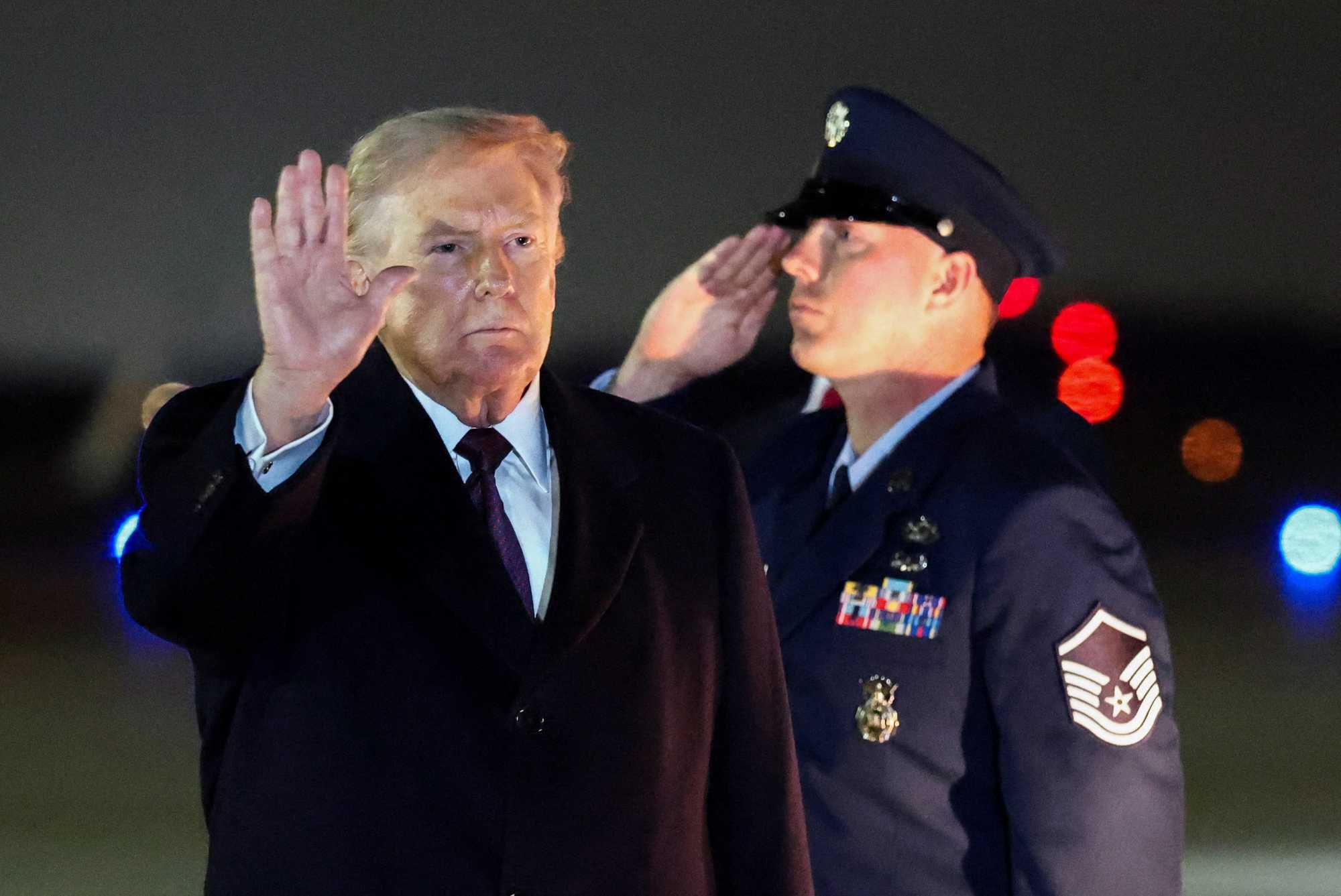
U.S. President Donald Trump at Joint Base Andrews in Maryland, U.S., March 15, 2026. REUTERS/Kevin Lamarque
U.S. President Donald Trump at Joint Base Andrews in Maryland, U.S., March 15, 2026. REUTERS/Kevin Lamarque
During a Monday night, March 16 broadcast, MS NOW's Rachel Maddow lambasted U.S. President Donald Trump for saying that U.S. allies would be helping United States forces militarily in the Strait of Hormuz — only to later tell reporters that the U.S. doesn't need their help in that crucial Middle Eastern waterway.
"My attitude is: we don't need anybody," Trump declared during a press conference.
The Strait of Hormuz is vital to the flow of oil. And with the U.S. at war with Iran, that flow is being interrupted — thus causing oil prices to soar.
In an article published by the U.K.-based i Paper on March 17, reporter Jessie Williams lays out some reasons why the crisis in the Strait of Hormuz could go from bad to worse.
"Donald Trump's demand for U.S. allies to send warships to defend against Iranian attacks in the strategic Strait of Hormuz risks a catastrophic miscalculation that pulls in more countries to his," Williams explains. "Any naval deployment to escort ships through the Strait risks them being targeted by drone and missile launchers at very close range along the Iranian shore, experts have said. The U.S. president has threatened his NATO (North Atlantic Treaty Organization) allies with a warning that the alliance faced a 'very bad future' unless they helped in the 'small endeavor' of sending warships to help open the vital shipping lane, where Iran has been targeting shipping, sending global oil markets into chaos."
But Williams emphasizes that according to military experts, "deploying warships to the narrow" Strait of Hormuz risks "pulling more actors into the U.S.-Israel conflict against Iran" and "sparking a dangerous escalation in the war, which has already drawn in more than a dozen countries in the region."
Dr. H.A. Hellyer, a geopolitics expert for the Royal United Services Institute (RUSI) in the U.K., told the i Paper, "The main risk is miscalculation at sea: mines, drones, or missile strikes against shipping or escort vessels. That kind of incident could gradually pull more actors into the crisis, even if most governments are trying to avoid exactly that outcome."
Bryan Clark, a naval operations expert for the Hudson Institute, told The Hill, "The challenge is going to be dealing with the proximity of the drone launchers and the missile launchers that are going to be along the Iranian Coast. The issue is that you only have a couple of minutes once the launcher comes out before the missiles are going to get on top of you, because you're only talking about three or four miles from the shoreline to the transit lane."