Why 'astonished' Europeans and 'skeptical' MAGA side-eye Trump’s foreign policy
27 February
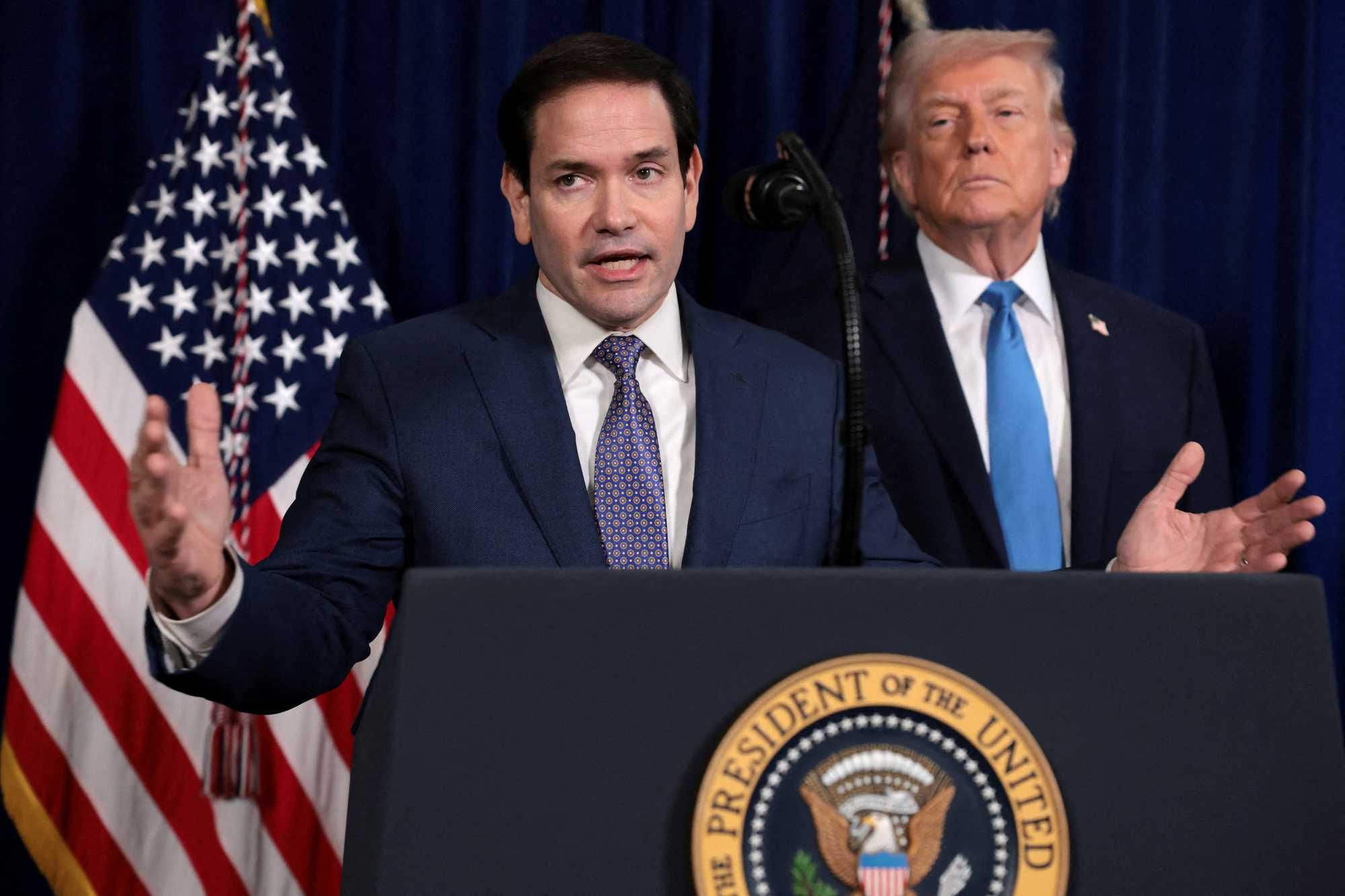
U.S. Secretary of State Marco Rubio with U.S. President Donald Trump, January 3, 2026. REUTERS/Jonathan Ernst
U.S. Secretary of State Marco Rubio with U.S. President Donald Trump, January 3, 2026. REUTERS/Jonathan Ernst
When Donald Trump launched his 2016 presidential campaign, his America First views on foreign policy drew intense criticism from neocons — especially Bill Kristol, now with The Bulwark — but were praised by paleoconservatives, isolationists and Patrick Buchanan supporters. And that isolationist mindset continued well after 2016: After Russia invaded Ukraine in 2022, now-Vice President JD Vance remarked, "I really don't care what happens to Ukraine one way or another."
But Trump has taken an unexpectedly imperialistic turn during his second presidency, from the capture of former Venezuelan President Nicolás Maduro to wanting the U.S. to buy Greenland to calling for Canada to become "the 51st state."
In an article published on February 27, the New York Times' Edward Wong describes Trump's second presidency as a "resurrection of the mission of empire — acquiring the territories and resources of sovereign peoples — that animated European and other well-armed powers up to the 20th Century." And he examines the role that Secretary of State Marco Rubio is playing in Trump's current foreign policy.
"President Trump's foreign policy has veered wildly across the globe, but has remained consistent in its aggressive nature and reliance on the use of force," Wong explains. "He has seized the leader of Venezuela while claiming the country's oil and attacking nearby civilian boats. He has pushed Cuba into a humanitarian crisis through a blockade, and asserted a right to control Canada and Greenland. And he has amassed the largest U.S. military force in the Middle East since the 2003 invasion of Iraq, threatening a new war against Iran after attacks last June. Mr. Trump calls his policy 'America First' — a stated focus on U.S. interests as he defines them. But it is not isolationism or a retreat from the world, as some analysts have argued."
Noting Rubio's speech at the recent 2026 Munich Security Conference in Munich, Germany, Wong explains, "As Mr. Trump pushes bellicose actions — he threatens war against Iran almost daily, and spoke of Greenland again last weekend — some analysts have looked to Mr. Rubio's speech as a sign of things to come."
America First Republicans are skeptical of Rubio where foreign policy is concerned, and former Rep. Marjorie Taylor Greene (R-Georgia) believes the second Trump Administration has betrayed the America First agenda.
But journalist Andrew Day, who writes for The American Conservative, doesn't see Rubio's Munich speech as imperialistic.
Day told the Times, "I sincerely doubt that Rubio was promoting a return to imperialism and colonialism. Rather, he was pointing to a certain cultural malaise and lack of self-confidence that westerners suffer from."
Historian Stephen Wertheim, a historian at the Carnegie Endowment for International Peace, believes that Rubio's speech "accurately" reflect "where Trump's foreign policy stands today."
Wertheim told the Times, "Despite widespread fears that Trump might pull back from the world, he is working to reinvigorate U.S. military dominance across the board. It's America First globalism. Far from exiting alliances, Trump is weaponizing them as platforms for coercion…. But it is out of place in a world that has decolonized and democratized."
According to Constanze Stelzenmüller, director of the Center on the United States and Europe at the Brookings Institution, the Trump Administration's imperialistic rhetoric was astonishing to Munich Conference attendees.
Stelzenmüller told the Times, "They were saying, 'This is astounding'…. OK, the U.S. is reverting to type, and at least you're being honest…. I think this language may be part of an attempt to condition Europeans into acceptance — that they're powerless to resist whatever expansionist designs the (Trump) Administration might have."