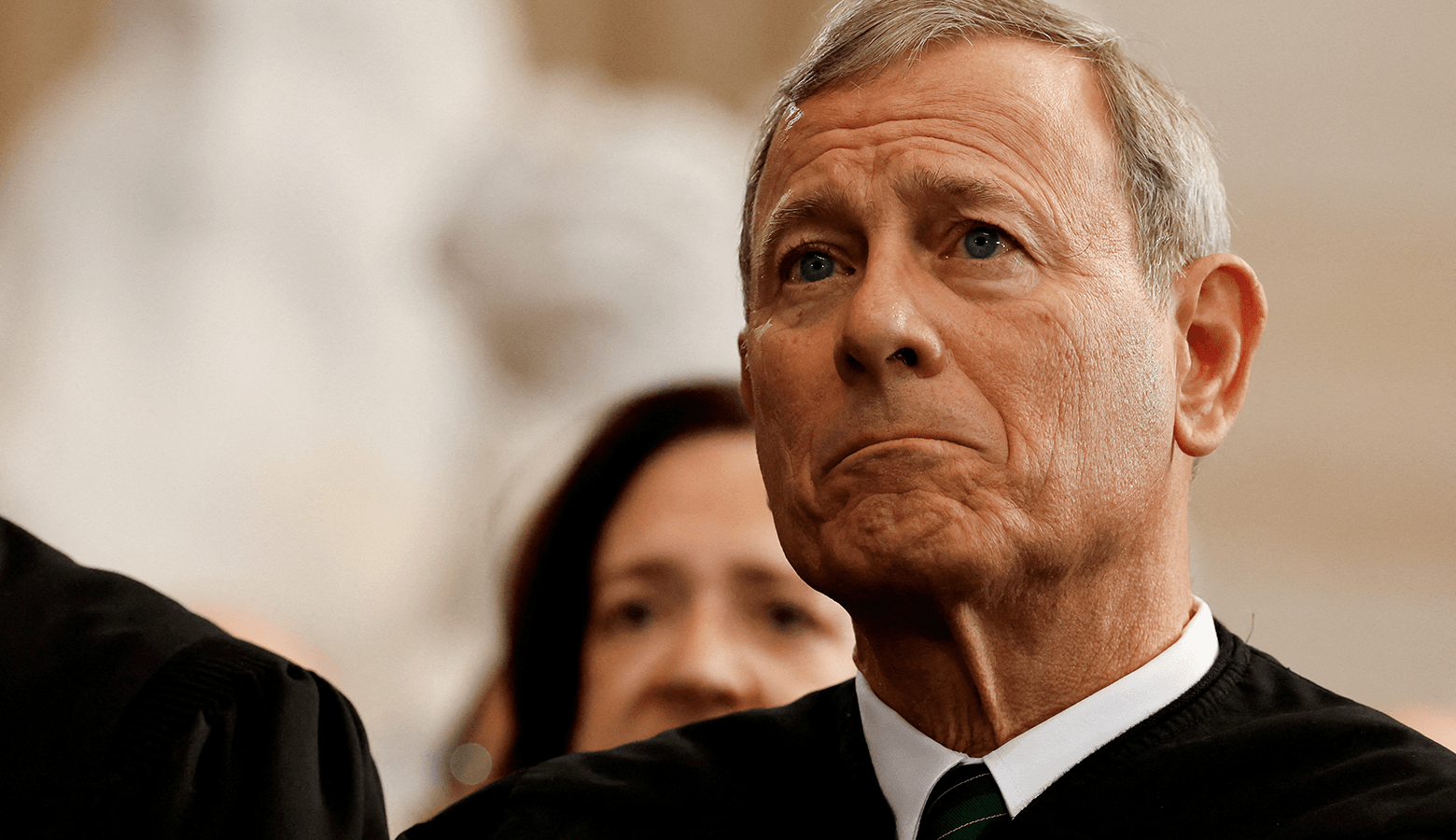
Don’t know 'what the Constitution is': Why Chief Justice Roberts says rule of law is 'endangered'
Carl Hulse, New York Times chief Washington correspondent said the Republican Party got too happy about its extreme right-wing pet Supreme Court, and pulled them out of the bottle one too many times. Now the overreach has spun and whacked them.
“Republicans celebrated last April when the Supreme Court held that a Louisiana House district drawn to give Black voters more say in who represented them was an unconstitutional racial gerrymander,” said Hulsted. “The decision freed legislatures across the South to reconfigure maps to their party’s advantage, providing what Republicans thought would be an edge for them in the midterm congressional elections.”
The decision caused the elimination of some majority-minority districts during GOP legislatures mad dash for a mid-decade gerrymander to give mostly white Republican voters an edge. Republican cracked majority Black voters into majority white suburban districts and virtually eliminated mostly-Black districts like the mostly Black city of Memphis.
“[But] the decision enraged and energized Black voters in a region where the history of past attempts to restrict minority voting rights still runs deep,” said Hulse. “It spurred a backlash that amped up turnout, helping propel Democrats to big new majorities in the House and Senate.
Voting data still being compiled by The New York Times showed a significant uptick in the Black share of the electorate across the South from 2024 to 2026, while the national share remained unchanged, said Hulse.
“The Supreme Court was absolutely the motivator in all of this,” said U.S. Rep. James E. Clyburn, (D-S.C.), a civil rights activist first elected in 1992 when the court initially opened the door to “majority-minority” congressional districts to offset an ugly history of voter suppression. “… I went into 14 states, and [resentment] was everywhere, even in states that were not necessarily what you might call targets.”
“It wasn’t just on voting rights where the court’s influence was felt. In taking up cases on immigration enforcement, presidential spending and more, the high court delivered a series of decisions that at first appeared to benefit the president and his party, but ultimately may have had the opposite effect,” said Hulse. “Many voters didn’t like what they were seeing. They concluded that the Trump administration needed a check that the court under the stewardship of Chief Justice John Roberts, a longtime critic of the Voting Rights Act, was not providing, and that the court might need a check of its own.”
“John Roberts, perhaps unwittingly, undercut the Republican cause as much as anyone else except for Donald Trump,” said Sen. Richard Blumenthal (D-Conn.), who served as a Supreme Court clerk in the mid-1970s. “He has tried to function as a politician in robes completely unsuccessfully because he has no intuitive grasp or experience in the political world.”
The court’s lopsided conservative majority made rulings that alienated Black Americans, Hispanics, more moderate Republicans and independents — all groups that Hulse says were instrumental Trump and congressional Republican victories in 2024.
“It broke up their 2024 coalition,” said Rahm Emanuel, the former House Democratic strategist who ran his party’s successful effort to capture the majority in 2006.
Other court decisions looked too much like a sop to the Trump White House that Democrats had no problems making advertisement against them, like the Supreme Court ruling allowing construction of the White House ballroom to continue (which followed the horrific demolition of the East wing.)
But Black voters remain angry, said Clyburn, noting that the conservative-dominated court had been steadily chipping away at the Voting Rights Act and that he and others needed to drive home in the election what was at risk.
“It was the center part of my campaign,” said Clyburn.