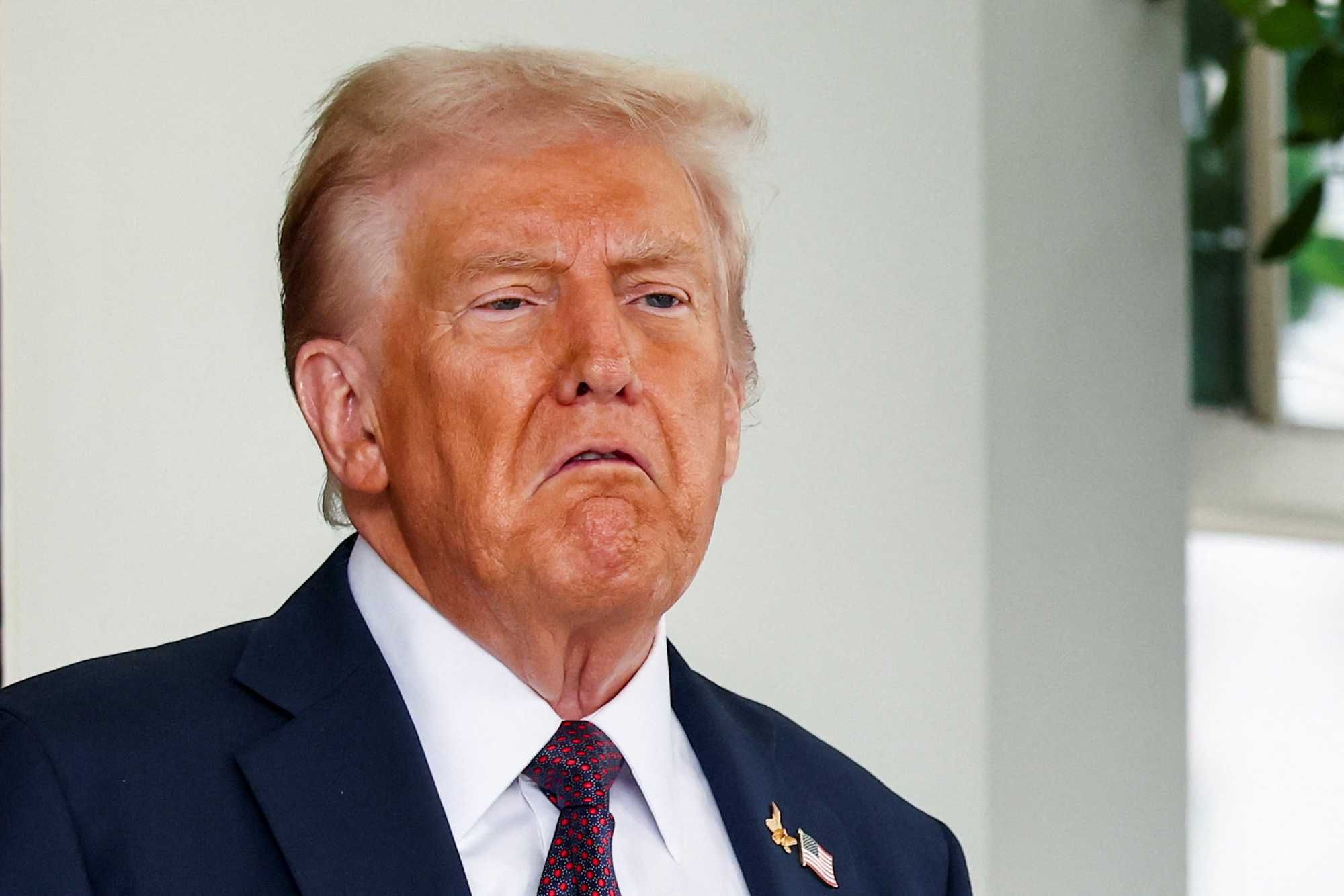
President Donald Trump likely faces some uncomfortable Iran questions in the near future. (REUTERS Kevin Lamarque)
The race to throw dirt on former National Counterterrorism Center Director Joe Kent’s allegations about the Iran war has a “disturbingly familiar” feel, according to one former top official from the Department of Homeland Security.
Kent punctured President Donald Trump’s public reasons for the Iran war while resigning from his post. Kent’s resignation letter said that Iran “posed no imminent threat,” making Trump into a liar over his statements that the U.S. was acting in self-defense.
“A president must demonstrate that the danger was real, urgent and left no time for deliberation,” said an iPaper analysis from Miles Taylor, a former chief of staff at the U.S. Department of Homeland Security. “That’s why, hours after the (Iran) offensive began, Trump quickly released a statement saying his objective was “eliminating imminent threats from the Iranian regime.”
Trump predictably tried to downplay Kent’s contrary statements, saying that he found him to be “weak on security.”
But as Taylor writes, “you don’t diffuse a bomb by insulting it.”
At some point, investigators, prosecutors and congressional committees will dig into the Kent allegations. They will have reason to ask the question that eventually brought down Richard Nixon in the Watergate era: “What did the President know and when did he know it?”
The question may get its first airing during the congressional committee asking U.S. Director of National Intelligence Tulsi Gabbard questions. She will have to state under oath whether there was indeed an imminent threat.
Taylor posed other questions that will emerge at some point: “What did the President know about Iranian intentions and capabilities before the first strike? What did his intelligence community tell him about the timeline of any threat? Did he ignore or override assessments that contradicted a decision he’d already made? Did he knowingly mislead Congress?”
Meanwhile, Kent will not go away quietly. He is set to hit the podcasting circuit, which will keep his allegations in the news.
Taylor anticipates what the White House reaction will be. “I know something about how this President handles inconvenient truths. I served in the first Trump administration as his chief of staff at the Department of Homeland Security, and I resigned in protest because of what I saw. On matters of life and death, I encountered a president whose national security decision-making was ad hoc, impulsive and often recklessly indifferent to facts that complicated his preferred course of action.”
Trump “didn’t weigh options,” Taylor adds. “He made decisions and then demanded justifications after the fact, including when policies were foreseeably unlawful.”
That formula and the attacks on Kent look “disturbingly familiar,” Taylor writes. He predicts others will join in “what is beginning to look like a fracturing dam.”
“Aides to the President will continue to attack Kent and limit the fallout,” Miller writes. “In reality, they’re terrified of what comes next. In the first term, when people like me started resigning in protest, it wasn’t an aberration. It became a wave. And that wave swept Trump out of the White House.”