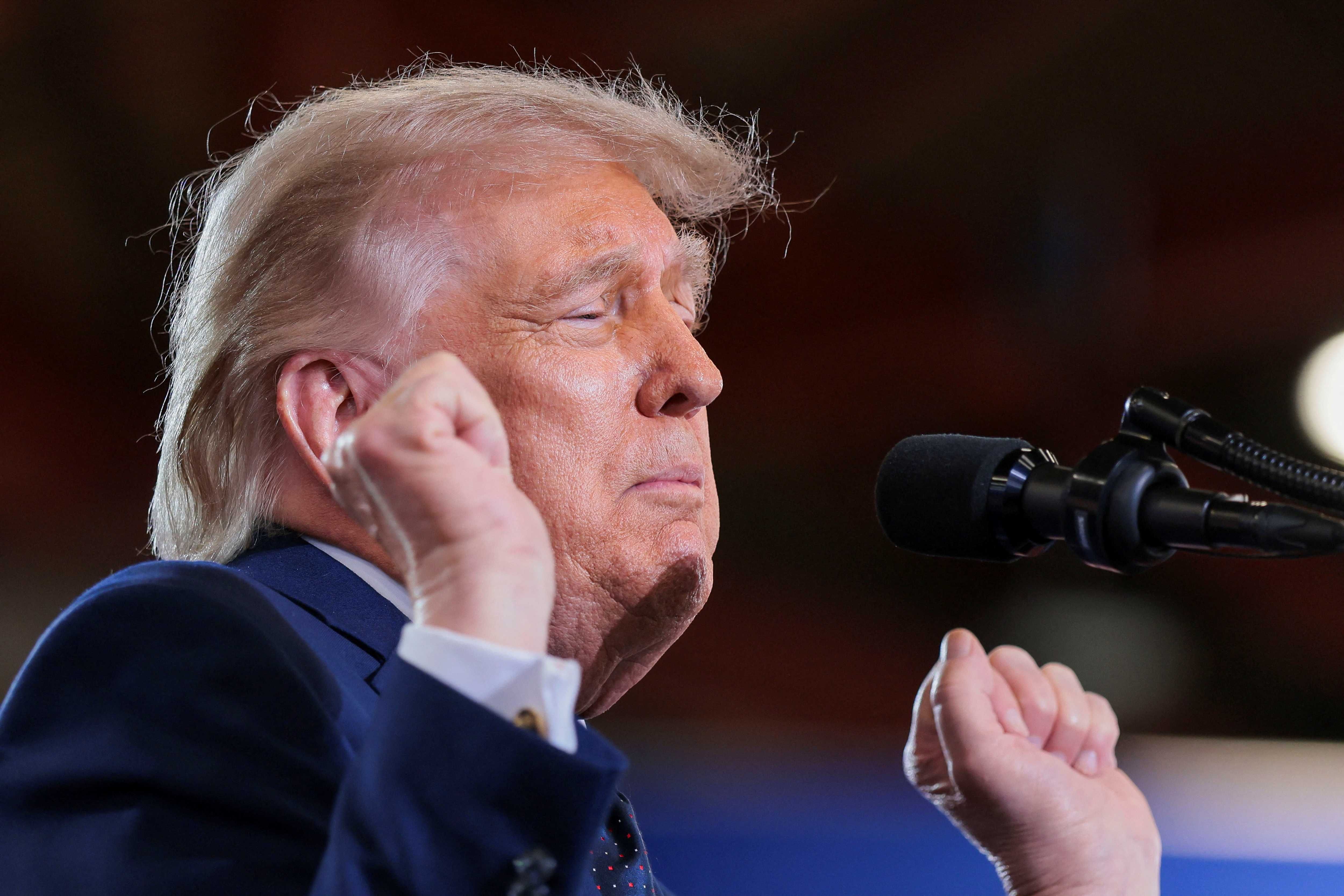
U.S. President Donald Trump reacts as he delivers remarks at Rockland Community College in Suffern, New York, U.S., May 22, 2026. REUTERS Kylie Cooper
The New York Ties reports the U.S. budget deficit is nearing $2 trillion and putting the kibbutz on President Donald Trump’s economy — and his big plans for cutting cost.
The United States budget deficit, which increased to $1.99 trillion this fiscal year from $1.78 trillion in 2025, “approached its highest level since the pandemic, as spending on the military, safety net programs and interest on the debt dwarfed the Trump administration’s cost cuts, Treasury Department figures showed on Friday,” said Times reporter Alan Rappeport.
The widening gap between what the government spends and what it collects in taxes and other revenue comes at a critical moment when investors are already spooked about the nation’s surging debt load, along with stubborn inflation. All of this is driving up borrowing costs. Treasury bond yields boosting interest rates for mortgages, credit cards and auto loans, pushing them to their highest levels in two decades earlier this month.
“Without real action on these vital fiscal issues, America is careening toward an ominous fiscal crisis that would leave all of us much worse off sooner than anyone in Washington apparently wants to believe,” said Carolyn Bourdeaux, executive director of Concord Action, an advocacy group that promotes deficit reduction.
The last time the deficit topped $2 trillion was in 2021, when the pandemic prompted Congress to approve a huge stimulus package to help keep the economy afloat. But analysts point out that there is no pandemic-style crisis forcing the nation to take on that load this time—just a president’s extravagant spending policies.
“Instead, the shortfall stems from increased spending on the military, interest payments on the debt and Social Security benefits, coupled with falling corporate tax receipts as a result of the tax cut package,” reports the Times.
This, explained Bourdeaux, means we’re already accruing a dangerous, outsized amount of debt—which will turn into a black hole when the next expensive crisis rolls along.
“The higher that interest rates move in the government bond market, the less likely it is that governments can finance these interest expenses in a sustainable way, so the stress begets more stress,” said Daleep Singh, chief economist at Prudential Global Investment Management told the Times. “It crescendos in the absence of a credible fiscal plan, which is not forthcoming.”
The Congressional Budget Office said last week that spending in the United States has been pushed higher by the growing cost of Social Security benefits, which are tied to rising inflation, and payments to military personnel. Higher long-term interest rates increased the cost of interest on Trump’s escalating debt by more than $100 billion from 2025. The Ties reports overall, spending was up 6 percent to $7.4 trillion.
The avalanche of Trump-style annual deficit will certainly reduce the fiscal ambitions of Treasury Secretary Scott Bessent to a distant dream. Bessent said that his goal was to bring the deficit as a share of the economy to 3 percent, said the Times. But after falling from 6.3 percent in 2024 to 5.9 percent in 2025, the measure rose above 6 percent again this year.