'Insidious shift': Gobsmacked experts stunned as Trump admin trades Gulf access for cash
18 February
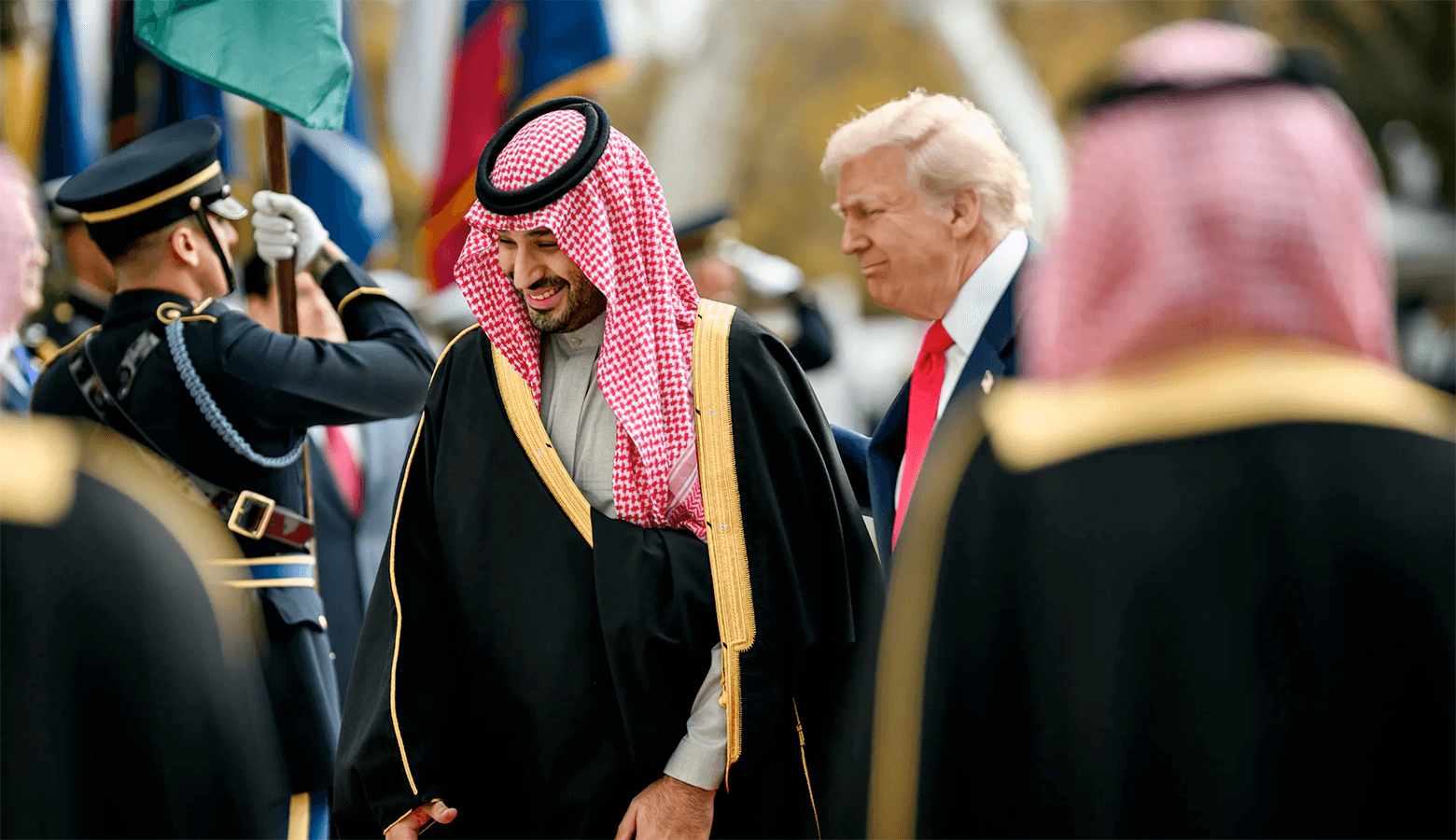
President Donald Trump’s foreign policies ventures from Venezuela and Greenland to Gaza and Iran are linked by one theme, according to an expert — and it represents an “insidious shift” for how foreign policy is conducted all over the world.
“A structural shift in how power itself is exercised,” Nancy Okail, President and CEO of Freedom House's Egypt program, wrote for The Hill. Okail observed that, while past imperialist shifts were motivated by various ideological programs, Trump and his supporters are openly capitalizing on his foreign policy ventures.
“There is an insidious shift underway: The monetization and privatization of foreign policy for personal enrichment,” Okail wrote. “In Venezuela, oil revenues are routed through opaque financial arrangements that bypassed Congress altogether, with funds placed in a Qatari bank. In Greenland, military and mineral narratives obscure a deeper attraction: a jurisdictional gray zone valued not only for resources, but as a lightly regulated space attractive to oligarchic networks seeking insulation from oversight.”
Okail then shifted focus to Trump’s so-called “Board of Peace,” which has no transparency and a series of arbitrary appointments.
“Trump’s objective is not effectiveness but displacement,” Okail wrote. “The aim is not to reform multilateralism, but to make it obsolete by hollowing out the idea that peace and security are governed by states, law and collective responsibility.” In the case of the Board of Peace, this means prioritizing “transactional normalization while marginalizing Palestinian rights.” The goal appears to be to entrench the status quo while enriching the immediate participants.
“Jared Kushner’s regional business interests, Middle East Envoy Steve Witkoff’s framing of the Middle East as a real-estate opportunity, offshore financial maneuvers beyond congressional oversight and resource ambitions from Venezuela to Greenland all reflect the same operating pattern,” Okail wrote. She added that, according to The New York Times, Trump and his family have accrued at least $1.4 billion in personal profit during the first year of his second term “from expanded crypto ventures, real-estate licensing, settlements and other business income that coincided with regulatory and diplomatic developments during his presidency.”
In short, Trump’s foreign policy philosophy is to centralize power in himself and his cronies, then divide up the world amongst themselves for personal profit.
“This is not chaos — it is consolidation,” Okail wrote. “Trump is moving rapidly to entrench power before institutional constraints tighten. His fears may not be unfounded: He warned that if Republicans lose their majority in Congress, impeachment could follow.”
Okail is not the only foreign policy expert to claim Trump has become overtly imperialistic. Politico reported in December that “Trump is heading into 2025 with imperialism on the brain. Since his November victory, the president-elect has suggested the U.S. should own Greenland, annex Canada and reclaim the Panama Canal — an expansionist air he doubled down on in a spree of Truth Social posts on Christmas Day.”
In response to Trump’s belligerence toward Denmark (through Greenland) and his “quiet quitting” of NATO, European leaders are moving quickly to establish “digital sovereignty” and “monetary sovereignty” from the United States. This means that European governments and institutions are decoupling from American Big Tech and Big Finance companies, which have proved a willingness to work with Trump.
“The American people are better than our current government,” conservative commentator William Kristol recently wrote. “Civic spirit and enlightened patriotism are by no means dead in the United States. As the people of Minnesota have again reminded us.”