Trump may not be losing his mind — another possibility is much more sinister
10 February
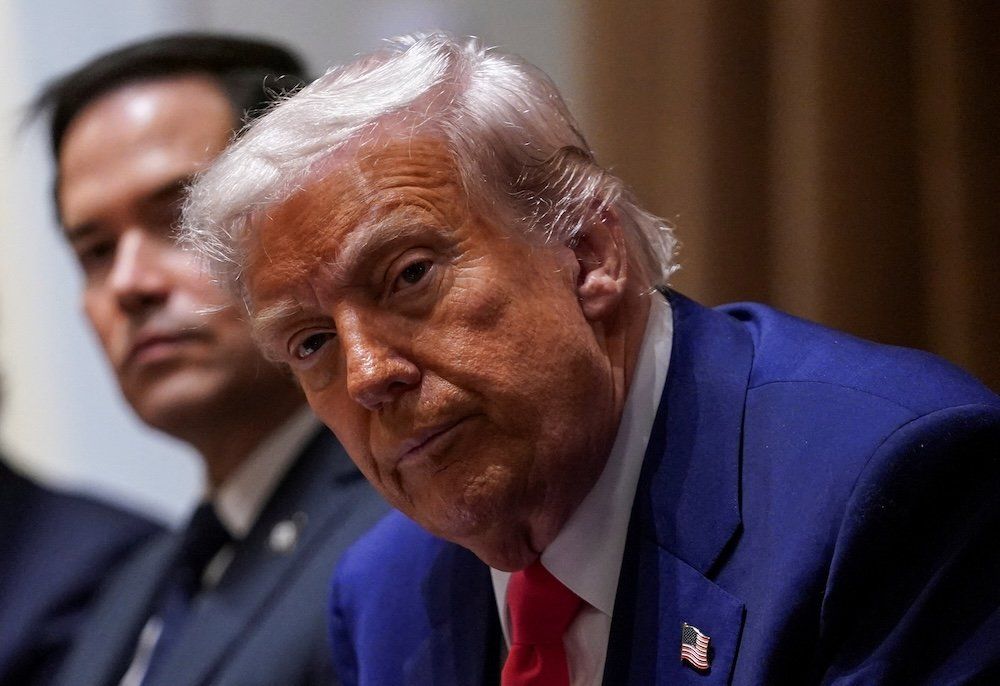
Donald Trump
The blatantly racist video clip Trump posted last Thursday night, portraying former President Barack Obama and former First Lady Michelle Obama as apes, was bad enough. Insisting he had nothing to apologize for after deleting the video and pretending he knew nothing about it was in some ways worse.
It’s the pattern one expects from a troubled adolescent who causes parents and neighbors to worry he might damage himself or others. But, my friends, we’re talking about the president of the United States.
This is just the latest in a series of bizarro behaviors from the putative leader of the free world. If you’ve seen his off-script rants, speeches that veer into angry tirades, demands that his name appear everywhere, and aggressively hostile responses to reporters, you know what I’m talking about.
“The Super Bowl Halftime Show is absolutely terrible, one of the worst, EVER!” Trump posted after the show was over. “Nobody understands a word this guy is saying, and the dancing is disgusting.”
On Thursday morning he gave a crazed speech at the National Prayer Breakfast, telling attendees, among other things: “They rigged the second election. I had to win it. I had to win it. I needed it for my own ego. I would’ve had a bad ego for the rest of my life. Now I really have a big ego, though. Beating these lunatics was incredible, right? What a great feeling, winning every swing state, winning the popular vote. The first time, you know, they said I didn’t win the popular vote. I did.”
It should go without saying (but I’ll say it anyway) that anyone with a mental or personality disorder merits our compassion. But compassion doesn’t necessarily extend to putting such people into positions of high governmental responsibility, or keeping them there. The 25th Amendment was enacted to allow their timely removal from office.
So, today’s Office Hours question: Is Trump really, finally, losing his mind — and if so, why?
If he is losing his mind, it’s useful to know why because different forms of loss typically occur at differing speeds and trajectories and with their own characteristics.
I’ve been asking specialists who know far more than I do about the aging human brain for their views about Trump’s mental state and have categorized their responses as follows. Please take a look and share your thoughts.
1. He’s not losing his mind. He’s been like this most of his adult life.
One view is that all the oddities now showing up in Trump’s speech and behavior have been there since a very early age. Older age may be aggravating them a bit, but he’s essentially the same weird, obnoxious, entitled Donald he was many decades ago. (For a full treatment of how his personality was warped early on, you might want to read the revealing and disturbing Too Much and Never Enough: How My Family Created the World’s Most Dangerous Man,Mary Trump’s 2020 bestseller about her uncle. Not incidentally, she’s a clinical psychologist.)
2. Yes. He’s suffering from dementia.
Another view is that, while his warped personality may have been formed quite early, he’s now showing clear signs of irreversible cognitive decline affecting his memory, thinking, and daily functioning. Alzheimer’s disease is one form of dementia. Other types include vascular, Lewy body, and frontotemporal dementia. All are marked by increasing confusion, impaired judgment, irritability, personality changes, mood swings, and sometimes hallucinations. These symptoms often overlap and worsen over time. The trajectory and speed of loss can be quite severe.
3. Yes. What he’s experiencing is best understood as elderly paranoia.
One gerontologist told me that a more precise way to characterize what she sees in Trump is termed “elderly paranoia,” which is characterized by an often profound and persistent fear or belief that others are causing them harm, stealing from them (elections?), or plotting against them. Elderly paranoia affects 16 to 23 percent of older adults. It can stem from dementia, but it can also result from sensory loss or be among the side effects of medication or the consequence of a mild stroke or infection. Elderly people with paranoia will not necessarily succumb quickly; this condition is said to worsen gradually.
4. Yes. His precise condition is elderly narcissism.
I wasn’t aware of this condition until I called around, but apparently it’s not uncommon among people who had narcissistic traits when younger. While some narcissists mellow with age, people with high levels of narcissism often become more bitter, controlling, manipulative, selfish, defensive, and entitled as they age. Elderly narcissism features increasingly intensified grandiosity and lack of empathy. Aging narcissists may create artificial crises to gain attention and control. I’m told that people with this condition can worsen quickly and turn violent. As their physical and cognitive abilities decline, they may struggle with the loss of admiration, leading to growing rage and resentment.
In your view, based on your observations, which of these most accurately characterizes Trump today?
Robert Reich is a professor of public policy at Berkeley and former secretary of labor. His writings can be found at https://robertreich.substack.com/."