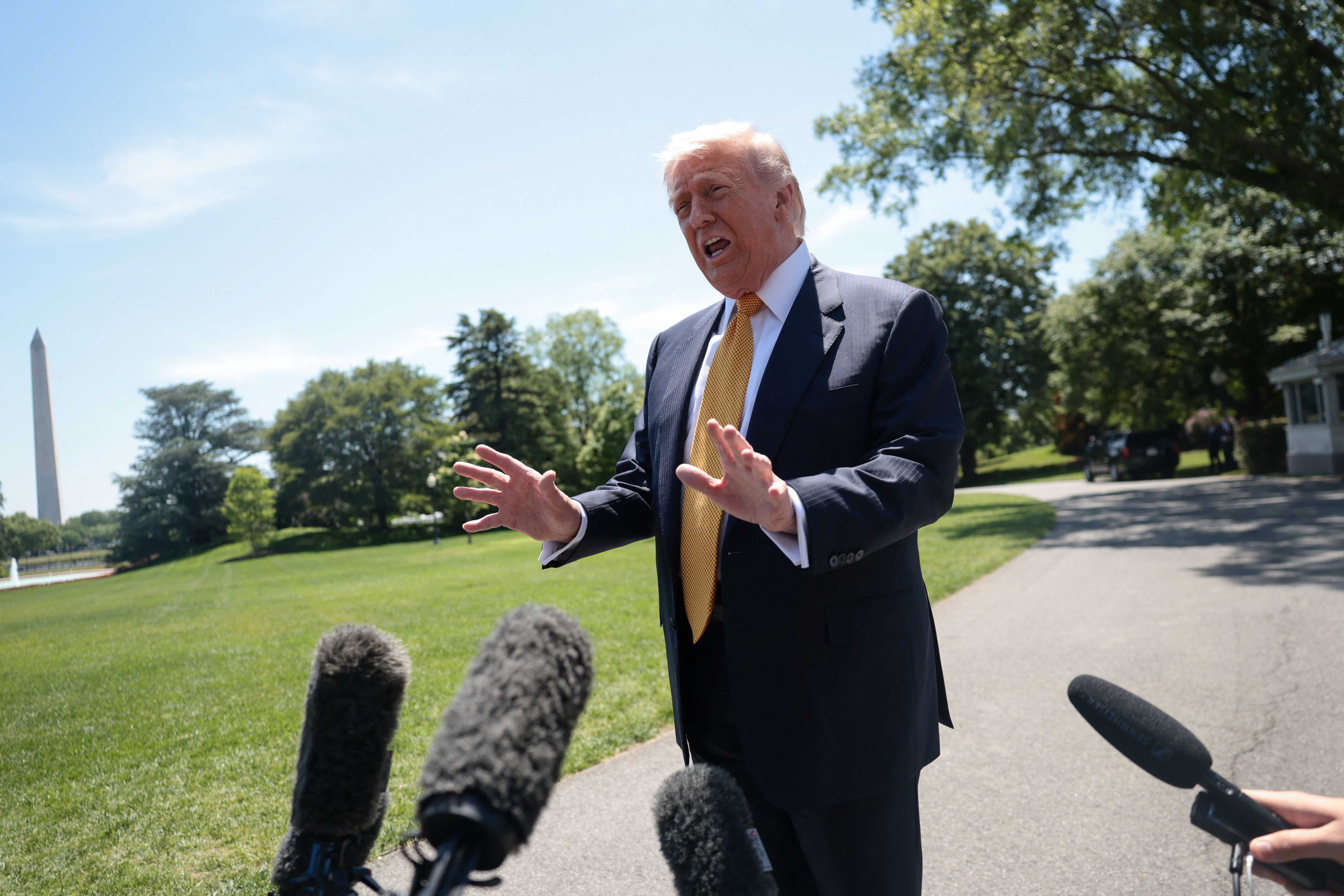
U.S. President Donald Trump in Washington, D.C., U.S., May 12, 2026. REUTERS/Evelyn Hockstein
President Donald Trump has a long history of promoting conspiracy theories, from the racist "birther" theory aimed at former President Barack Obama to falsely claiming that the 2020 election was stolen from him. Trump's conspiracy theories have been repeatedly debunked: Obama's birth certificate clearly show that he was born in Honolulu, Hawaii on August 4, 1961 — not in Kenya, as Trump claimed — and one vote recount after another confirmed that Joe Biden won the 2020 election fair and square.
Regardless, Trump often doubles down on conspiracy theories despite evidence contradicting them. And according to Salon's Amanda Marcotte, his "addiction to conspiracy theories" keeps coming back to haunt him.
Trump himself has been the subject of conspiracy theories, including claims that the three assassination attempts he survived were staged. Marcotte stresses that while "there is no evidence" that Trump "staged" any of those "high-profile attempts on his life," he has contributed to an environment in which more people are likely to believe bogus conspiracy theories involving him.
"A new survey from NewsGuard shows that 54 percent of Americans are open to the theory that at least one of the attacks was staged, with only 38 percent saying definitively they believe all three were real," Marcotte explains in Salon. "When asked about each separate assault — the 2024 shooting that grazed Trump's ear at a Pennsylvania campaign stop, the arrest of the armed man at the president's West Palm Beach golf course later that year and the recent incident at the White House Correspondents' Dinner — fewer than half said these events were authentic. No one deserves more blame for this state of affairs than Trump himself, and not just because he's spent a decade lying and sowing his own conspiracy theories, giving permission to both his allies and his opponents to take a looser approach to the truth."
Marcotte adds, "Once in a while, a conspiracy theory may be wrong but still manages to channel authentic frustrations. This particular one is false, but its underlying assumptions about the president — that he's a liar, and that he's manipulative, corrupt and politically desperate — are all too real."
Marcotte argues that Trump's "reaction to" the third assassination attempt against him "likely made his political situation worse."
"He immediately tried to exploit the shooting to tout the need for his garish White House ballroom, an indulgence Americans already disapprove by a two-to-one margin, according to a Washington Post poll," the Salon journalist observes. "Trump's self-indulgence will only look worse as gas and grocery prices continue to soar for everyday Americans. Republican demands that Americans foot a $1 billion bill for Trump's tacky ballroom have only made it easier for voters to channel their frustrations into this shooting conspiracy theory…. Trump's addiction to conspiracy theories gave him a way to connect with voters who shared similar paranoia and hostility to the reality-based world. But the same mindset is now giving a small but significant number the story they need to turn their backs on the president."