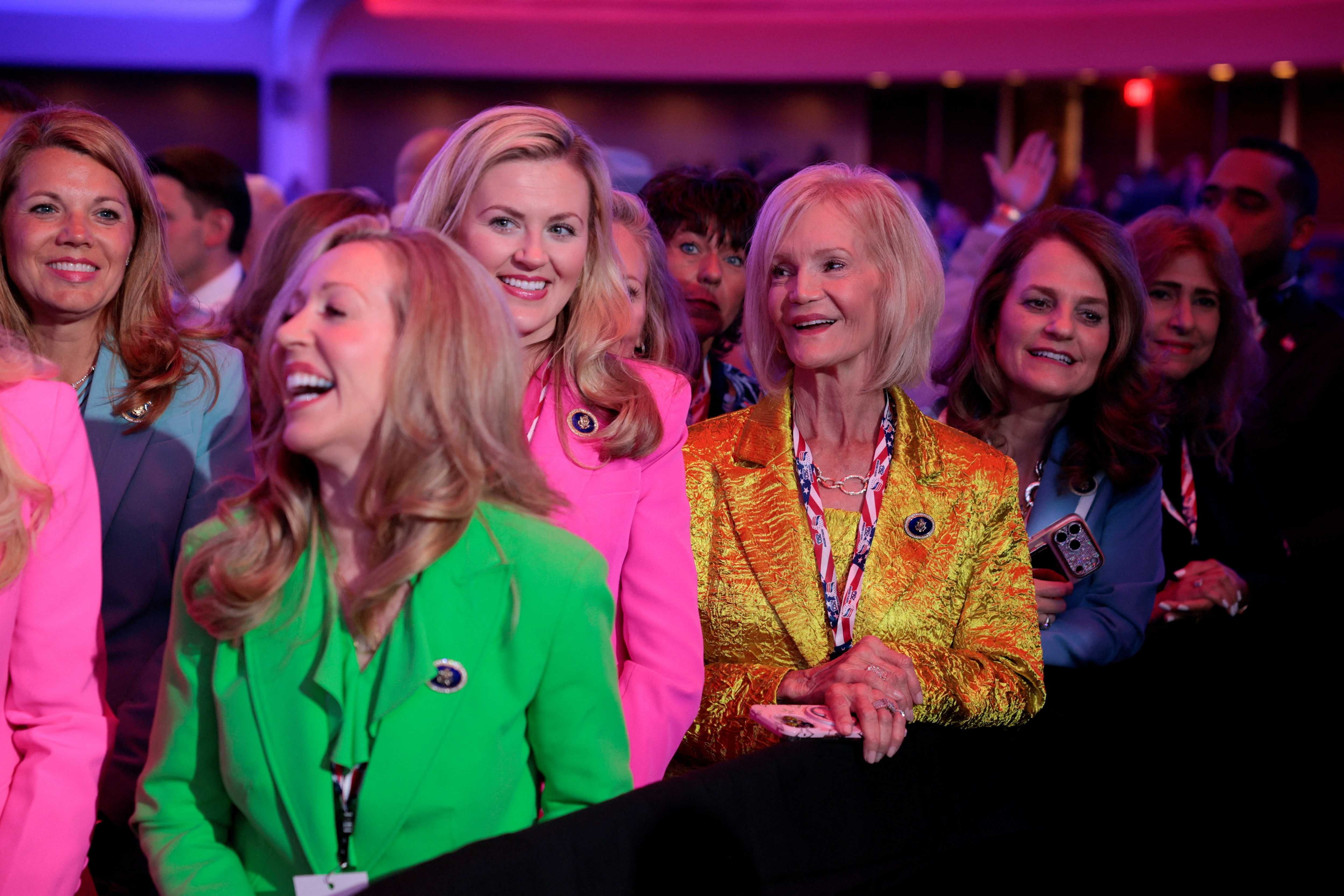
Supporters of U.S. President Donald Trump await his remarks at an event at the Faith & Freedom Coalition's 2026 Policy Conference at the Washington Hilton, in Washington, D.C., U.S., June 26, 2026.
Conservative pundit and Dispatch Editor-in-Chief Jonah Goldberg says he’s figured out one of President Donald Trump’s most fatal flaws: he’s an entertainer, not a president.
“What I mean is that if you start to see your job as telling fans what they want to hear, you risk becoming an entertainer rather than a thinker, and eventually you become a caricature,” said Goldberg in the Fulcrum.
It’s the Trump trap that’s also managed to nab the careers of once-respectable conservative pundits, said Goldberg.
“In journalism — or what passes for it — you can see the same arc most acutely in talk radio and TV hosts, who define their roles as telling the audience what it wants to hear rather than what it needs to hear,” said Goldberg. “In the early Trump era, many prominent pundits were fairly conventional conservatives. When the audience veered towards populism and MAGA, the hosts followed [them],” in pursuit of an audience.
But that’s just entertainers. The situation gets worse when an entertainer takes that route to politics.
“Politicians often are captured by their true-believing base,” said Goldberg. “It’s most commonly seen among ‘conviction’ politicians, who make a name for themselves on a single issue or idea. Congressman and Secretary of State William Jennings Bryan’s deep populist support was enough to earn him the Democratic nomination three times (1896, 1900 and 1908), but his support wasn’t wide enough to ever win.”
The same held true for segregationist candidates like George Wallace, socialists like Norman Thomas, and Patrick Buchanan. Sarah Palin, Bernie Sanders, Kari Lake and Ron Paul represent more recent cautionary tales, he said.
The trap is sweetened by ego, he warned, and some egos are bigger than others by far: “Politicians see huge crowds or read favorable media coverage and assume their people are the people.”
Lake, for example, thought she didn’t need John McCain Republicans to win her 2022 bid for an Arizona U.S. Senate seat. Nor did she think she needed support from the Democrats and independents who voted for McCain, because she mistook “intensity of support for quantity of support.”
But MAGA are loud. They are not plentiful.
“Jesse Watters, a reliable water-carrier for President Trump, is Fox News’ most popular prime-time host, averaging about 2.7 million viewers per night,” said Goldberg, but that means on any given night, roughly 346 million Americans aren’t watching. “But if you’re Trump, you might think Watters is representative of the American people.
Watters’ audience matters because GOP primary voters and small donors are more likely to watch his show, but he said primary voters are a small fraction of the greater electorate.
Still, politicians like Trump are orienting themselves to “small, intense slices of the electorate,” said Goldberg. And the polarizing dynamic is further intensified by social media.
“Politicians and activists mistake the ‘vibes’ of X and TikTok for the real world. They become intensely ‘online’ and responsive to the feedback they’re fed by social media algorithms,” Goldberg said.