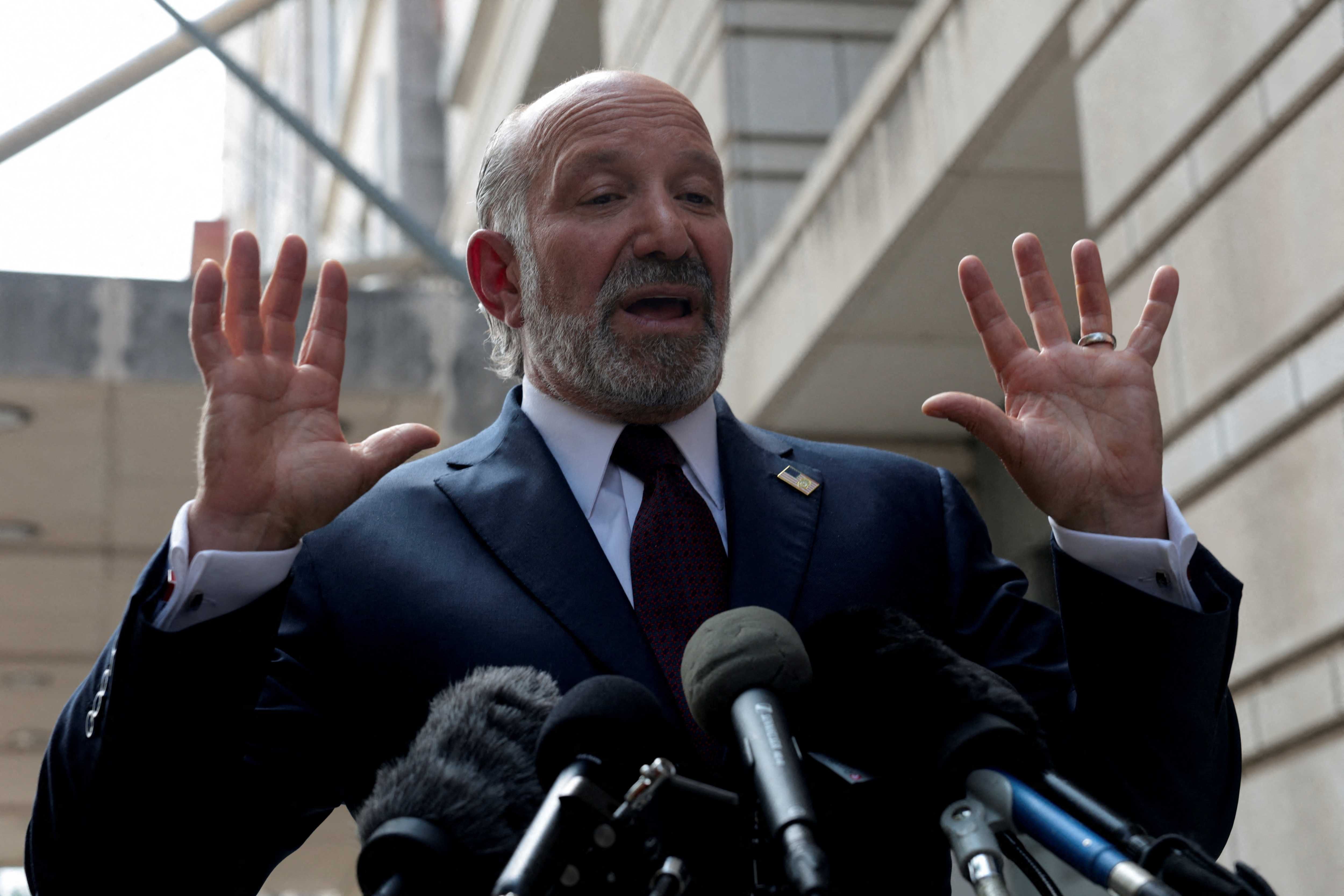
U.S. Secretary of Commerce Howard Lutnick in Washington, D.C., U.S., August 27, 2026. REUTERS/Evelyn Hockstein
U.S. President Donald Trump continues to double down on his steep tariffs, escalating a trade war with Canada and other U.S. allies. But with the midterms a little over two months away, Republicans fear that soaring prices will cost them control of Congress. And according to Politico, worries over the price of pasta imported from Italy set off a "panic" from Commerce Secretary Howard Lutnick — who went into damage-control mode by "leaning on agency staff not to drive up tariffs on grocery items and other goods ahead of the midterm elections."
Politico reporters Ari Hawkins and Oliver Ward explain, "Agency leaders first stepped in late last year, after a Commerce Department investigation determined in September that leading Italian pasta makers had been underpricing the products they sold in the U.S., in violation of trade rules. The proposed punishment — sky-high tariffs on the pantry staple — drew headlines at a time when the administration was trying to convince Americans its trade agenda was not driving up prices."
A Commerce Department insider, interviewed on condition of anonymity, described Lutnick's angry reaction to reports of increasing pasta prices.
The source told Politico, "Lutnick was very upset that the work was making it on the news, from the perspective that he was responsible for inflation. Then he became a micromanager. He micromanaged every decision that came out to try to water down enforcement and compliance."
Hawkins and Ward report that according to four Politico sources — all of them interviewed on condition of anonymity — Lutnick and other Commerce Department officials "have discouraged staff from pursuing the most aggressive possible tariffs in the pasta case and other similar investigations into trade violations."
"In some cases," the Politico journalist note, "senior officials instructed staff to recalculate rates that were deemed too high, two of the people said. The result has been much lower duties on violators in recent months compared to the past.
Those decisions are worrying career Commerce officials as well as other trade and legal experts, who say the rates for any new duties should be based on hard data and legal criteria. And it illustrates how concerns about inflation and affordability approaching the midterm elections have begun to override Trump's desire to crack down on foreign companies that cheat domestic industry."
Lutnick, Hawkins and Ward note, "signaled to staff across meetings and private correspondence in the fall of 2025 that the administration would no longer prioritize the most aggressive forms of enforcement, according to the four people."
"In a meeting in March," Hawkins and Ward report, "senior Commerce officials told private-sector lawyers about the new approach, stressing that the administration would no longer back the most aggressive form of enforcement, two of the people said. That same month, the Commerce Department finalized the tariffs on the Italian pasta companies at a maximum rate of 7 percent for Garofalo and a minimum of 2.65 percent for La Molisana, while 11 other Italian companies were hit with a 5.21 percent duty — far lower than the 91.74 percent rate initially proposed."