History offers warning signs on Trump’s push for 'authoritarian rule': analysis
23 April
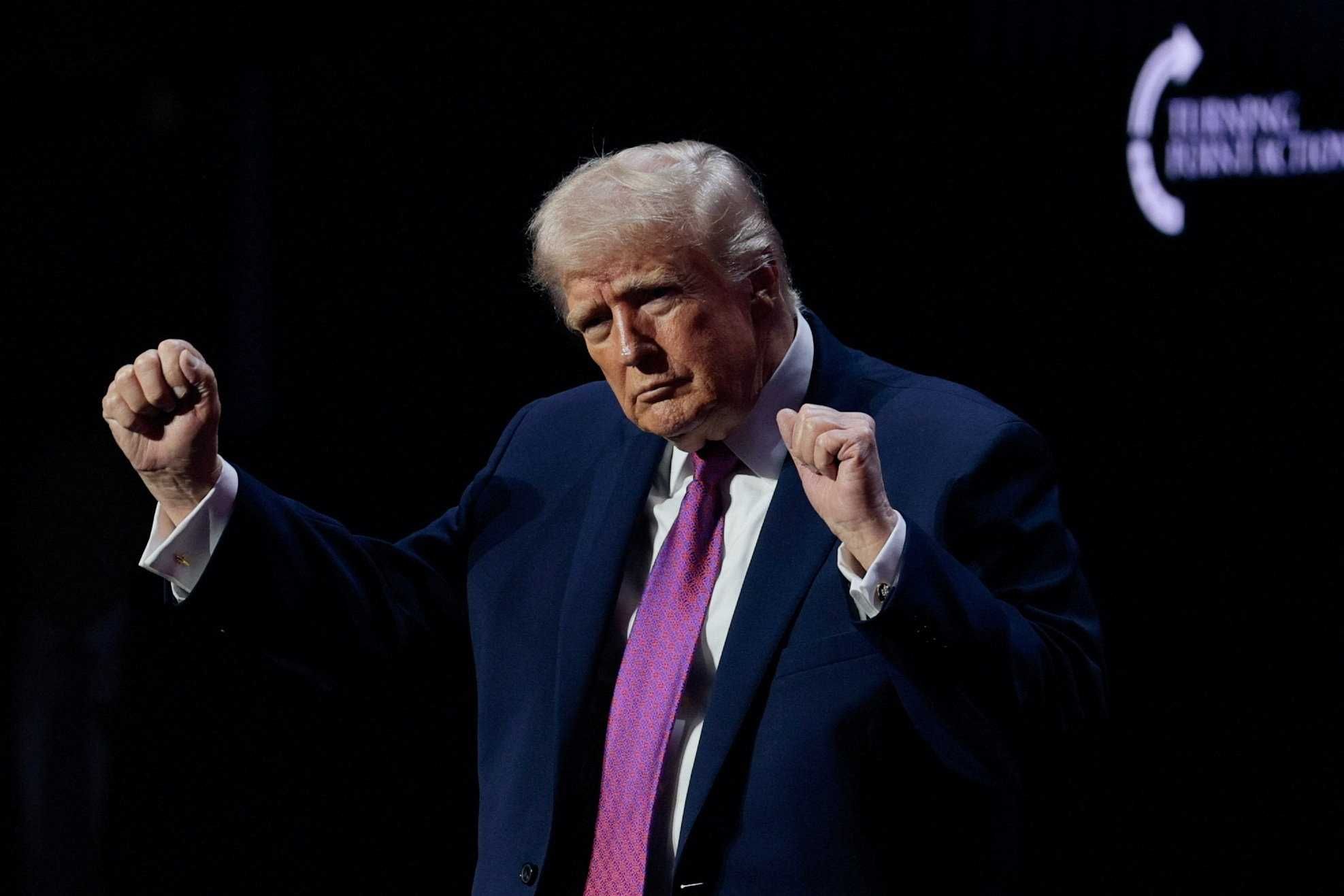
U.S. President Donald Trump at Dream City Church in Phoenix, Arizona, U.S., April 17, 2026. REUTERS/Evan Vucci
Authoritarians, either far-right or far-left, don't necessarily come to power via militarized coup d'états like the late Gen. Augusto Pinochet in Chile. Many of them were voted into office and, after being sworn in, did everything to undermine their country's system of checks and balances — from Russian President Vladimir Putin to the late Venezuelan President Hugo Chavez. In Hungary, Prime Minister Viktor Orbán and his far-right Fidesz party stayed in power for 16 years, and he seemed entrenched. But Orbán was finally voted out of office in recent parliamentary elections.
During the 1930s, Adolf Hitler didn't turned Germany into a fascist dictatorship overnight. But the longer he stayed in power, the more dangerous his regime became.
In an article published by Zeteo on April 22, journalist John Harwood argues that author Laurence Rees' 2025 book "The Nazi Mind: Twelve Warnings From History" offers some useful warning signs on the types of dangers the United States is facing during Donald Trump's second presidency.
"To state the obvious, Donald Trump is not Adolf Hitler," Harwood argues. "MAGA is not Nazism. No despot or movement in history compares to the Third Reich, and the nature and scale of evil it perpetrated. Moreover, Trump's handiwork appears less formidable today. Most of America recoils from his second-term grotesquerie. If permitted free and fair elections, voters will punish his Republican Party this fall — just as Hungarian voters have now punished Trump's authoritarian role model Viktor Orbán. But the lessons Rees identifies remain relevant to the crisis confronting 21st-Century America. And that is not merely because Trump and a disturbing number of his young fans have, at times, expressed admiration for Nazi strength and ruthlessness."
Rees, during a 2025 interview with conservative Anthony Scarmucci — who briefly served in the first Trump Administration but is now very much in the Never Trump camp — pointed out that Hitler received only 2.6 percent of the vote in 1928 but five years later, was chancellor of Germany.
Rees' books and video documentaries, Harwood notes, "explore how skillful, if repugnant, Nazi leadership drove ordinary Germans to monstrous wrongdoing during World War II."
"Donald Trump’s musings about dictatorship once sounded almost funny," Harwood warns. "Nobody laughs anymore. Trump has not created a dictatorship. He has, however, dragged the U.S. further toward authoritarian rule than many of us thought possible. His corruption of the legal system, subordination of Congress, embrace of state violence, and hostility toward free elections led the sober-minded centrist Jonathan Rauch to write earlier this year: 'Yes, it's fascism.'"
Harwood continues, "How Trump has managed to do that, contravening the values that made the U.S. the world's leading democracy, remains hard to fathom. But at least part of the answer lies in his use of techniques that earlier historical figures have used to amass and centralize power."