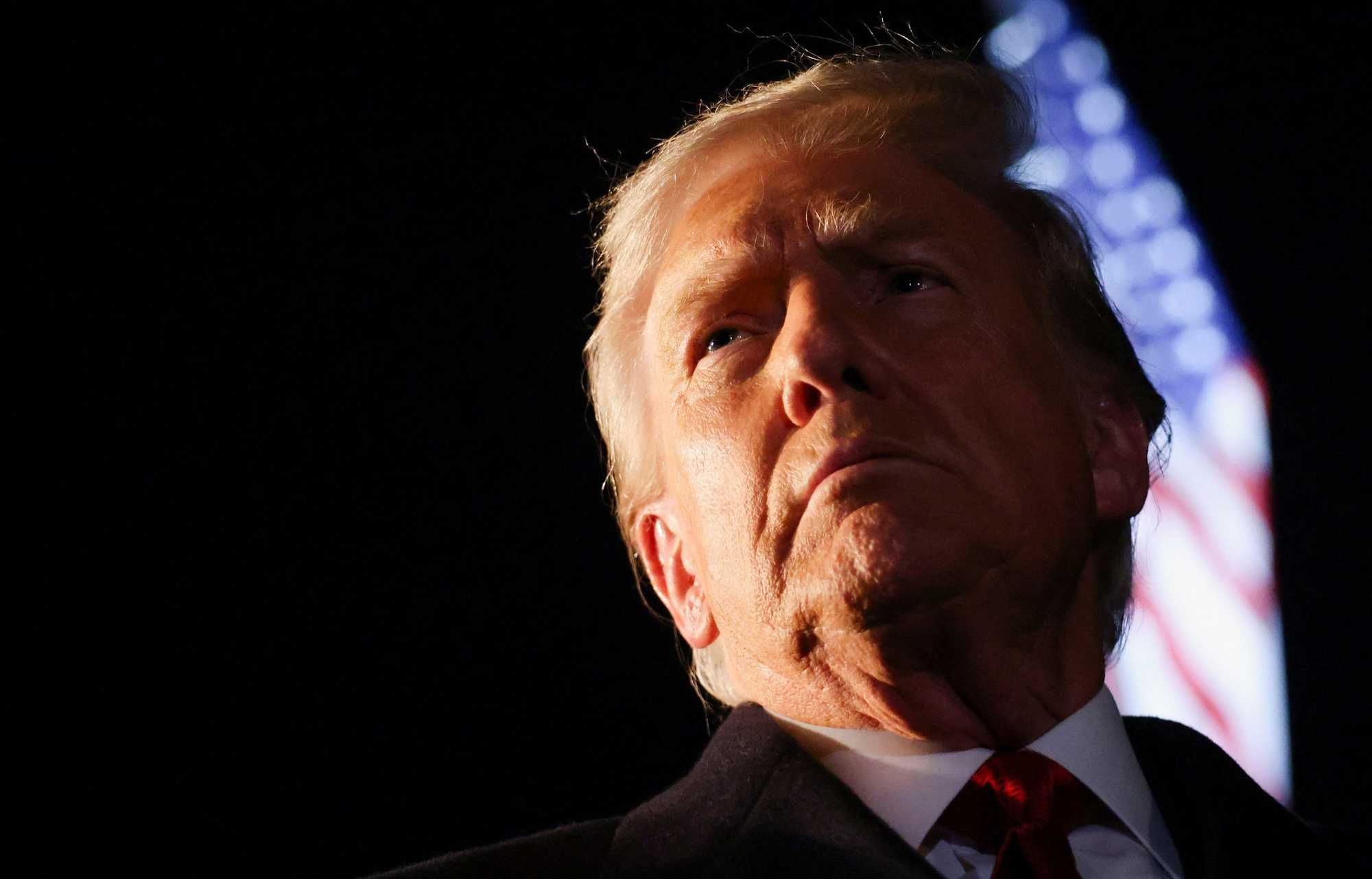
U.S. President Donald Trump looks on as he departs for Asia from the South Lawn of the White House in Washington, D.C., U.S., October 24, 2025. REUTERS Kylie Cooper
President Donald Trump has made it clear that he plans on rigging the 2026 midterm elections, from delivering a speech touting unsubstantiated claims of meddling in the 2020 presidential election and trying to purge people from the voter rolls to attempting to thwart mail-in balloting and potentially firing the House of Representatives Clerk for not being sufficiently compliant.
Yet he has been 0 and 18 in the courts, with the latest defeat being notable because it involves a case in which non-citizens were proven to have voted.
“President Donald Trump’s Department of Justice (DOJ) suffered its 18th defeat, with no wins, in its nationwide voter data crusade Wednesday, when a federal judge dismissed the department’s lawsuit seeking New Jersey’s unredacted voter rolls,” reported Democracy Docket's Yunior Rivas on Wednesday.
Rivas added, “U.S. District Judge Zahid Quraishi wrote that the error had ‘no bearing’ on whether DOJ had a right to the voter rolls.” The reporter pointed out that “in his ruling, Quraishi granted New Jersey’s motion to dismiss and denied DOJ’s motion to compel the records, ruling that the Civil Rights Act of 1960 does not give the federal government access to the state’s live voter registration database.”
Rivas continued, “The dismissal with prejudice prevents DOJ from refiling the same claim in the district court, though the department can appeal, as it has almost every other loss.” They also pointed out that “New Jersey had already provided DOJ with its publicly available voter list.”
In his decision, Judge Quraishi pointed out that “the Constitution's architects chose to delegate election administration to the states, recognizing that local governments have the deepest understanding of their constituents' circumstances.” Later, quoting the Massachusetts Convention’s 1788 debates about the Constitution, the judge added that “the Framers of the Constitution chose to embrace balance in crafting the Elections Clause. The diffusion of power between state and federal government was intended to ‘preserve and restore to the people their equal and sacred rights of election [against] the influence of ambitious or popular characters, or in times of popular commotion, and when faction and party spirit run high.’”
Trump’s latest gambit was prompted by news that New Jersey accidentally added roughly 6,600 noncitizens to the state’s voter rolls through a glitch in its DMV software, with roughly 400 actually casting ballots in 2023 and 2024 elections.
Trump's 0-18 court record on voter data demands reflects a broader pattern of judicial rejection of his election-related claims.
Legal experts argue that Trump's DOJ is using the noncitizen voting issue—which affects less than 0.01% of votes cast—as a pretext to gain access to voter databases that could enable partisan purges. Constitutional scholars note that the Framers intentionally distributed election authority between states and the federal government to prevent exactly this type of centralized manipulation.
Despite repeated legal defeats, Trump's administration continues filing similar suits, suggesting the litigation is less about addressing actual election fraud and more about creating a veneer of legitimacy for undermining state election administration.