Democrats could flip the House—but the Senate is a whole different story: analysis
13 July
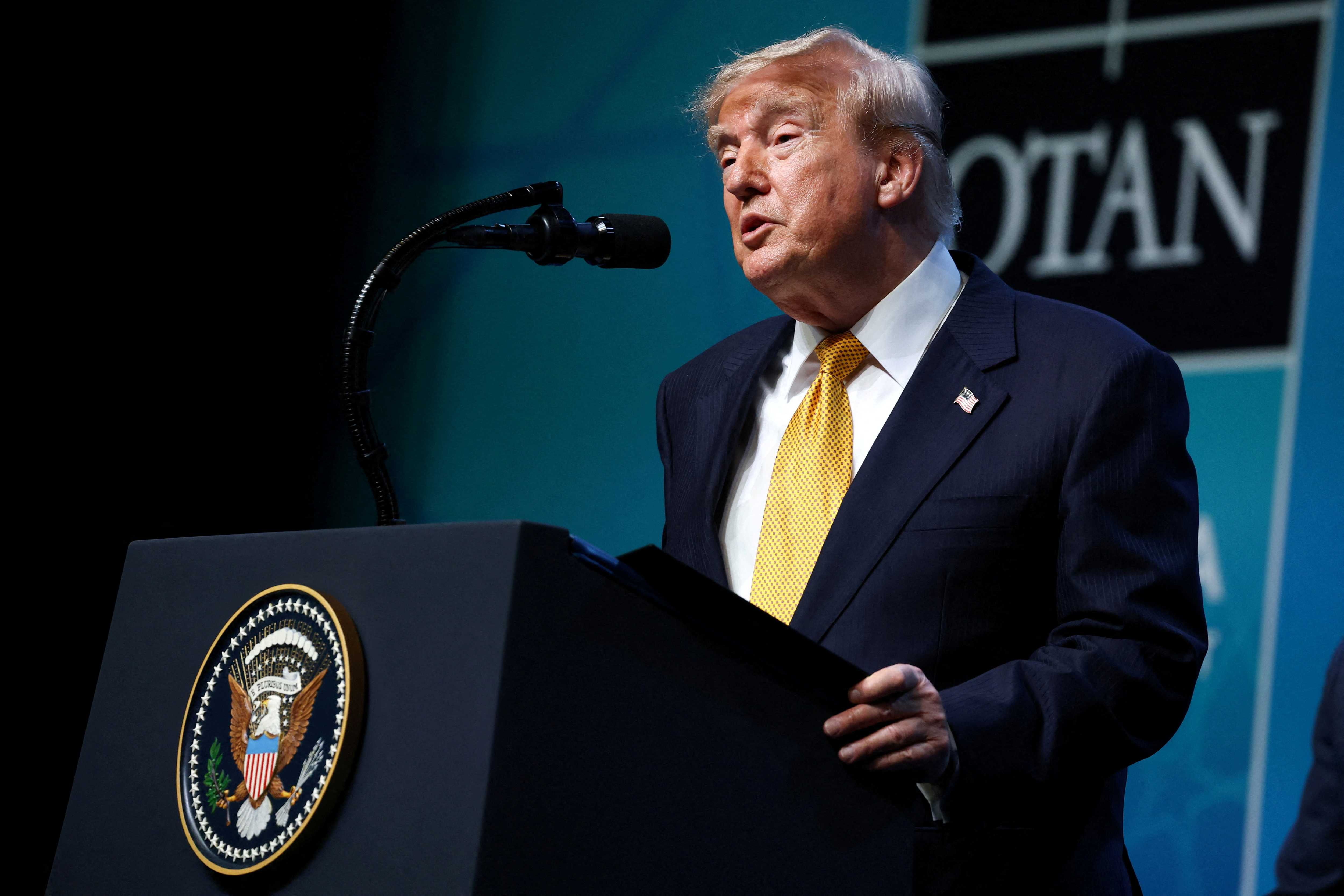
U.S. President Donald Trump in Ankara, Turkey, July 8, 2026. REUTERS/Stoyan Nenov
If Democrats flip either or both branches of Congress in the United States' 2026 midterms, it will be a major setback for President Donald Trump. A Democratic majority in the U.S. House of Representatives would likely subject Trump to a wide variety of investigations, and a Democratic U.S. Senate majority would make it much harder for Trump to get his nominees confirmed. But according to pollsters and political scientists interviewed by the New York Times, Democrats are facing a lot of obstacles in their fight for control of Congress in the midterms.
Carlos Odio, founder of Equis Research, told the Times, "All signs point to a Democratic House majority. But there is a drag on Democrats keeping them from a larger tsunami. My informed suspicion is that groups that swung the most toward Trump in 2024 haven't entirely turned against his party — yet. For a Senate majority, Democrats need to win in at least two states where Trump won by double digits. Even in the blue wave of 2018, only two incumbents (Jon Tester in Montana and Joe Manchin in West Virginia) did that. Today, I can see Democrats pulling off one miracle — but it's too early to anticipate more. I still think Maine will move on from (Sen.) Susan Collins."
Pollster Nate Silver, who publishes the Silver Bulletin newsletter, warns Democrats that they are facing a major uphill climb in the Senate.
Silver told the Times, "With the Democratic lead on the generic ballot (currently about D+6), you'd expect them to overcome the Republican advantage from redistricting. That could grow, because most polls right now are among registered voters, and Democrats are likely to have an enthusiasm advantage that will show up once there's a switch to likely-voter polls. In the Senate, to win those four seats, Maine is a problem. There's not much polling on non-Platner alternatives versus Collins, and any bridge burning by him on the way out could make it hard to unify around the new nominee. Coupled with the recent Times/Siena Senate polling, that makes for more combinations where Democrats come up short."
Medium Data's Charlotte Swasey is equally skeptical about Democrats' chances of flipping the Senate, telling the Times, "Democrats are very, very likely to win a House majority. They're only a few seats shy, and midterm elections are highly thermostatic, with the president's party losing seats in every midterm since 2002. The real question is if they can get a Senate majority to match it. I think not quite — the overall Democratic shift seems likely to sweep North Carolina, but past that you run into a wall of states with either unusually strong Republican candidates (Maine) or solid Trump margins (Ohio, Alaska, Texas, Iowa)."
Lynn Vavreck, a political scientist at the University of California, Los Angeles (UCLA), stresses that GOP and Democratic strategists will need to keep a close eye on Pennsylvania between now and November.
Vavreck told the Times, "Josh Shapiro is on the ballot in November seeking a second term as governor of Pennsylvania, and I'm watching. It's not a competitive race, but he's a popular Democratic governor in a swing state (he won by 15 points in 2022), he has a national profile, and he'll use all of this to try to swing Pennsylvania's highly competitive Republican-held districts. If the Democrats pick up the 7th and 10th Districts, they are probably on track for a House majority. If the 8th District flips, they are expanding into working-class territory, raising the possibility that places like northeastern Pennsylvania remain open to Democrats like Shapiro. Results like these will deepen the conversation about the party's post-2026 future — and Shapiro's potential role in it."
According to Echelon Insights' Patrick Ruffini, inflation will play a major role in the midterms' outcome.
Ruffini told the Times, "Inflation is a key indicator — and more to the point, gas prices. Figuratively and literally, gas prices are the scoreboard people drive by every day that tells them if things are going well or poorly in the economy. They’re also a decent barometer of whether Trump will have succeeded in extricating the country from the war in Iran. A national average price of $3.50 or lower — they are currently at about $3.90 — is probably table stakes for any chance that the GOP has of exceeding expectations."