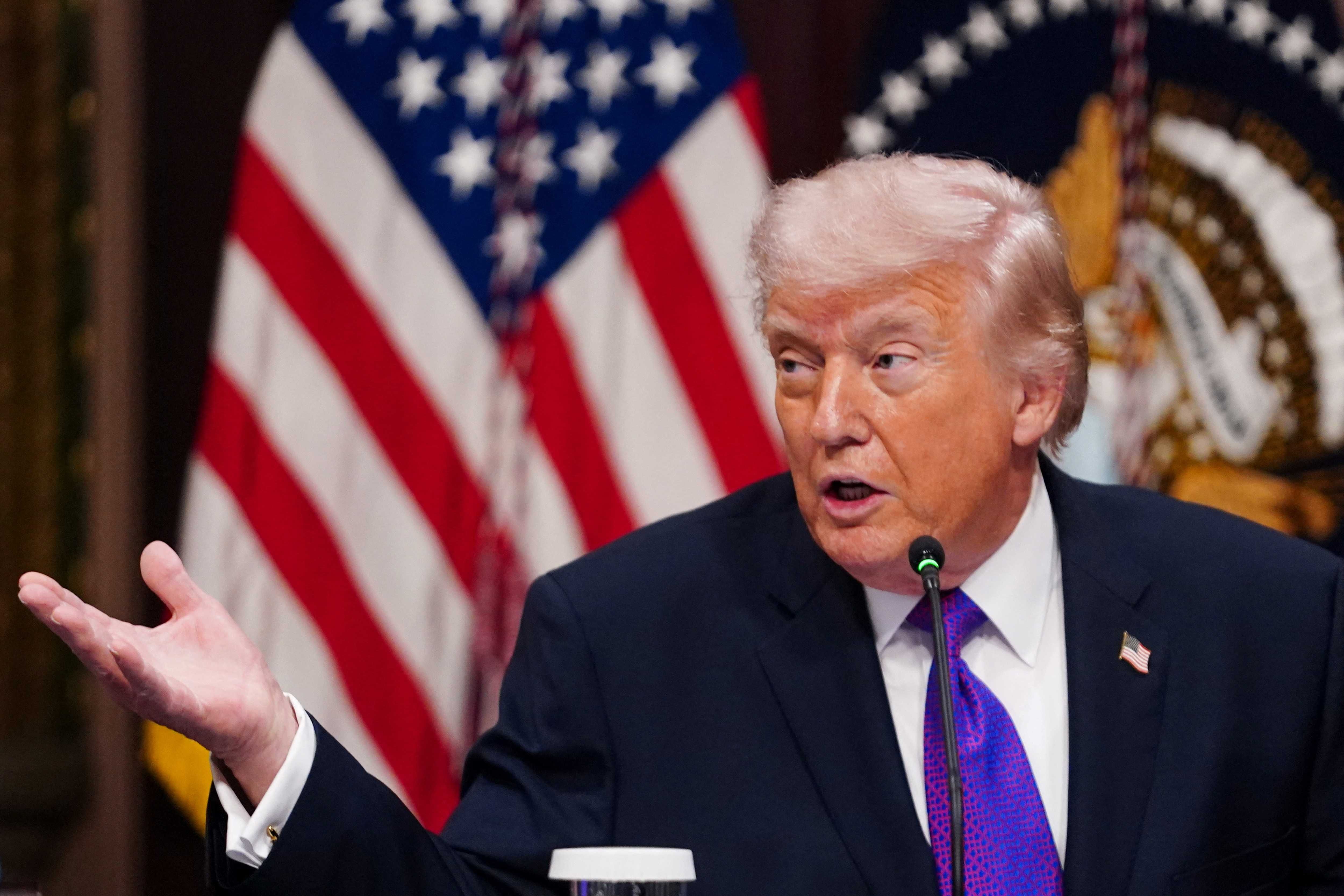
U.S. President Donald Trump in Washington, D.C., U.S., March 4, 2026. REUTERS/Nathan Howard
U.S. President Donald Trump in Washington, D.C., U.S., March 4, 2026. REUTERS/Nathan Howard
Many critics of U.S. President Donald Trump's decision to go to war with Iran — a combination of Democrats and Never Trump conservatives — are urging Congress to use the War Powers Resolution of 1973 to rein him in. Trump, they argue, had no business getting the United States into a war via executive order and not getting Congress' input — and the War Powers Resolution is a tool lawmakers need to be taking advantage of.
But former U.S. Rep. Jane Harman (D-California), in an article published by the conservative website The Bulwark on March 5, emphasizes that Congress has a "far more direct way" to "intervene" in the Iran conflict: "the power of the purse."
"Few in Washington are asking the most obvious question: What has this conflict already cost, and what will it ultimately cost the American taxpayer?," Harman explains. "Between the cost of deploying carrier strike groups and more than a hundred aircraft to the region, and the expenditure of hundreds of Tomahawk cruise missiles at roughly $2 million apiece, the price tag is reportedly about $1 billion per day. Reuters reported, this week, that the Pentagon is working on a supplemental budget request of around $50 billion focused on replacing weapons stocks."
The former House Democrat adds, "Congress should be preparing now to meet that moment, demanding a full accounting of costs and requiring the administration to define the mission's objectives and a plan to achieve them."
During her years in Congress, Harman, now 80, focused heavily on national security, serving on the House Intelligence Committee and chairing the Homeland Security Committee's Intelligence Subcommittee. Long before that, she was a counsel for the U.S. Defense Department under President Jimmy Carter.
"Both the Afghanistan and Iraq wars were authorized by Congress," Harman notes, "though the intelligence on Iraq turned out to be deeply flawed…. According to Brown University's nonpartisan Costs of War project, the final bill for Iraq exceeded $2 trillion. Afghanistan cost another $2.3 trillion. Congress needs to confront Iran's costs now, keeping in mind that Iran is only the most immediate item on a much larger bill. In January, President Trump called for a 50 percent increase in the annual defense budget — from roughly $1 trillion to $1.5 trillion — the largest proposed single-year jump since the Korean War. Congress should not wave these numbers through. Article I of the Constitution gives Congress the power to raise and support armies and to appropriate military funds."