Trump advisers 'increasingly worried' GOP will pay the price for his failures: WSJ
07 May
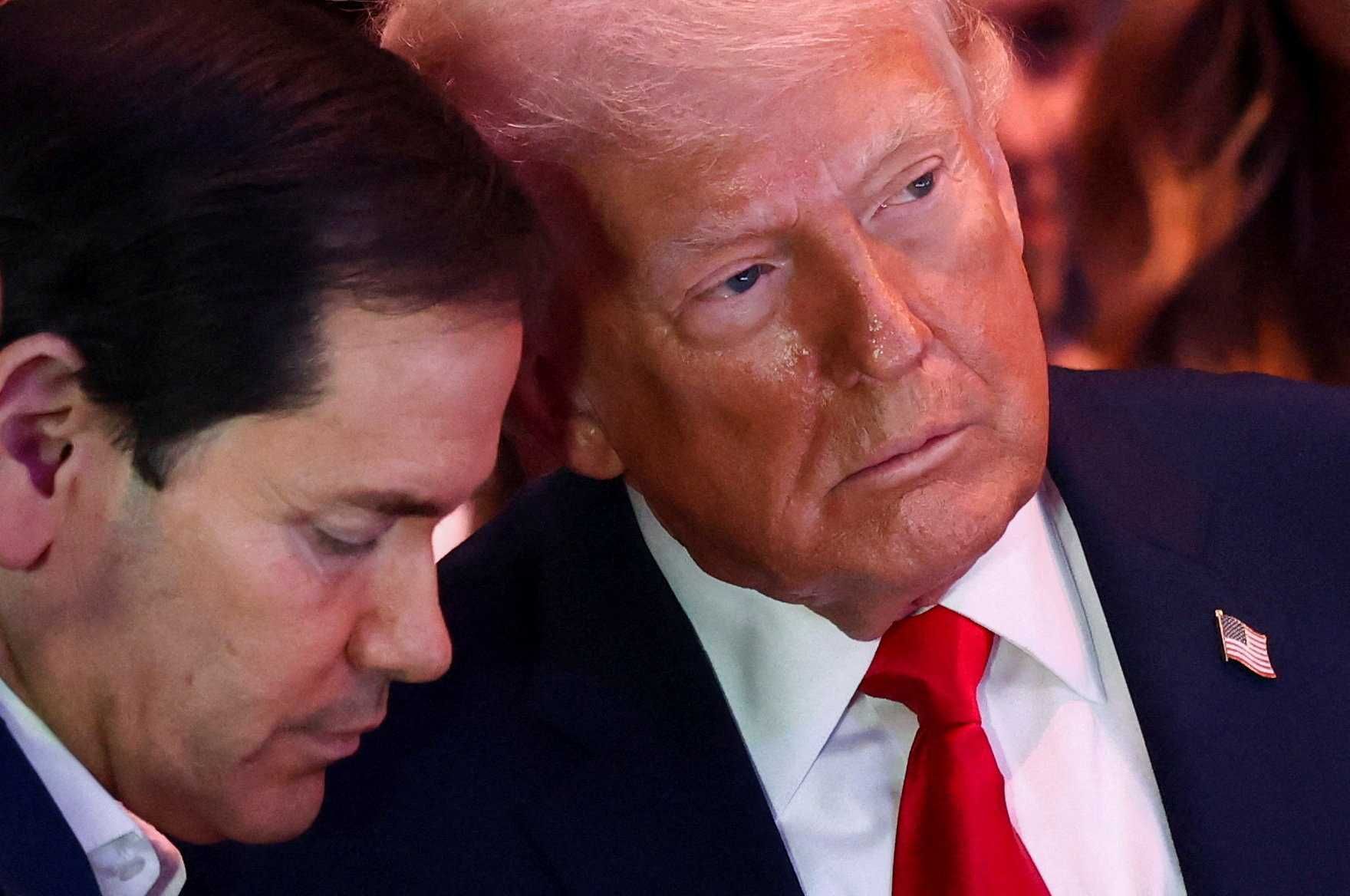
U.S. President Donald Trump, and U.S. Secretary of State Marco Rubio in Miami, Florida, U.S., April 11, 2026. REUTERS/Kevin Lamarque
U.S. President Donald Trump's approval ratings, in numerous polls, were weak even before he went to war against Iran in late February. But the war is making him even more unpopular in polls. A Washington Post/ABC News/Ipsos poll released in early May found Trump's overall approval at 37 percent, although his numbers were lower than that on inflation (27 percent), the cost of living (23 percent) and the economy (34 percent).
According to Wall Street journal reporters Brian Schwartz and Alison Sider, Trump's advisers are growing "increasingly worried" about his unpopularity and fear that Republicans will suffer for it in the 2026 midterms.
Schwartz and Sider, in an article published online on Wednesday night, May 6 and in WSJ's print edition the next day, report that former New Hampshire Gov. Chris Sununu, a Republican, "sounded the alarm" about "high jet-fuel prices" during a recent meeting with Treasury Secretary Scott Bessent. Sununu, who heads the airline industry group Airlines for America, warned that the economic impact of the Iran war could be a major political liability for Republicans.
"Administration officials have gotten the message," according to the WSJ reporters. "Privately, President Trump's advisers are increasingly worried that Republicans will pay a political price for the rising fuel costs, according to people familiar with the matter. Many of those advisers are eager to end the war in hopes that prices will begin moderating before November's midterm elections. The fallout from the U.S.-Israeli attack in late February has slowed traffic through the Strait of Hormuz, a vital shipping lane, triggering a sharp increase in oil, gasoline and jet-fuel prices. That means consumers are grappling with high costs ahead of the summer travel season, as they consider vacation plans."
According to a recent NPR/PBS/Marist poll, 63 percent of Americans blame Trump, to varying degrees, for higher gas prices.
"Jet-fuel prices roughly doubled in a matter of weeks after the war began, and they have remained high," Schwartz and Sider note. "Airlines have said that will add billions of dollars of additional expenses this year, squeezing profit margins…. Carriers have been raising ticket prices, hoping to pass the cost along to consumers, and they are culling flights that will no longer make money at higher price levels. In March, the price of a U.S. domestic round-trip economy ticket rose 21 percent from a year earlier to $570, according to Airlines Reporting Corp., which tracks travel-agency sales."