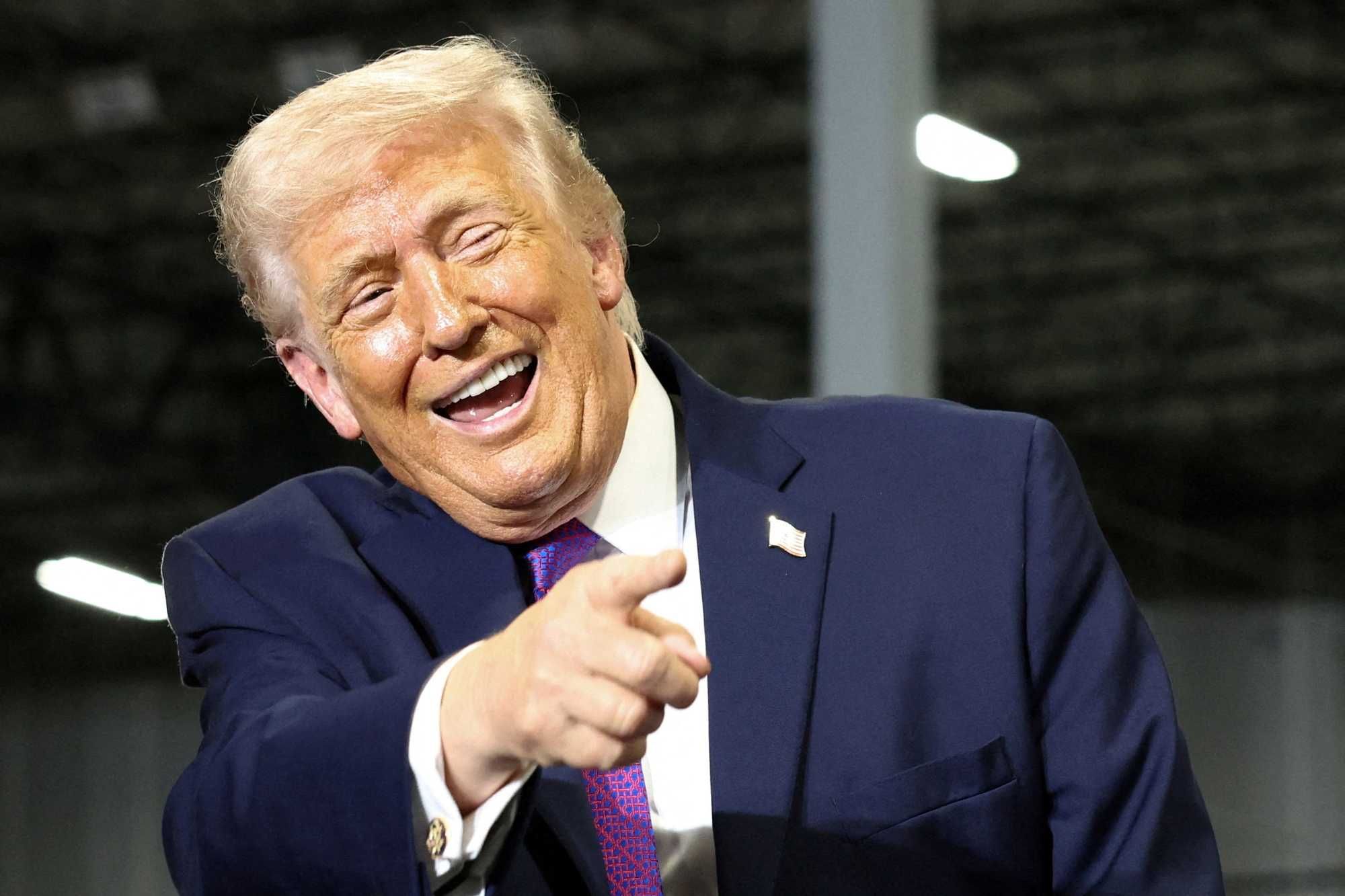
U.S. President Donald Trump gestures during a visit to Verst Logistics in Hebron, Kentucky, U.S., March 11, 2026. REUTERS Kevin Lamarque
Austin, Texas, single mom August Tapia says she’s had it with President Donald Trump’s economy.
“It's a little daunting. I'm not gonna lie,” Tapia told MS NOW reporters. “Even though I have the support of family … the prices are just through the roof. I'm on a very fixed income. I'm only bringing in $400 a month.”
Tapia said she worries about not being able to afford groceries, and not being able to give her daughter “three meals a day.”
And she said the impact of Trump’s policies on gas prices are swooping in to take what little she has to give every time she fills her tanks.
“I went from filling up my tank for $50 to $85 this last Monday. That $35 is, you know, extra money if I need,” said Tapia, adding that she could have used that blown money to but “socks for my daughter, clothes for my daughter, extracurricular activities.”
“If I wanted to take her to the splash pad or if I wanted to take her on an ice rink — I mean, those $30 are pivotal,” she added, pointing out that she bought “nine items today” (water, ground beef, potatoes, bread, strawberries, two lemons, a juice and milk) costing $49.16.
Every shopping trip, no matter what, she said is not between $50 to $150.
“Unfortunately, women in my position are feeling the brunt of it,” Tapia said.
When asked if American were “going to feel a reprieve” from Trump-era inflation anytime soon, Catherine Rampell replied “it is highly, highly unlikely.”
“If anything, there are a number of forces conspiring to probably make grocery prices, food prices in general higher throughout the year. That's because of the Iran war, which has driven up fertilizer costs, diesel costs, other inputs that go into producing food. We haven't seen the full effect of those yet,” Rampell said. “… But in addition to all of that, you also have the early effects of the so-called one Big, Beautiful Bill that passed last year, which to date has kicked at least 700 000 children off of food stamps, just across the 12 states that have reported data thus far.”
Rampell added that the nation now has “fewer manufacturing jobs today than we did when Donald Trump took office, and that's partly because of his own actions” by tariffing materials that U.S. manufacturers need to manufacture their own products, including steel, aluminum, lumber, as well as chemical and industrial inputs. This has driven many U.S. employers to either go under or lay off workers or pause production.
“That alone, is quite problematic,” said Rampell. “It's very difficult for this president to deliver on many of the promises that he made when running for office, given that his economic agenda undercuts pretty much all of them.”