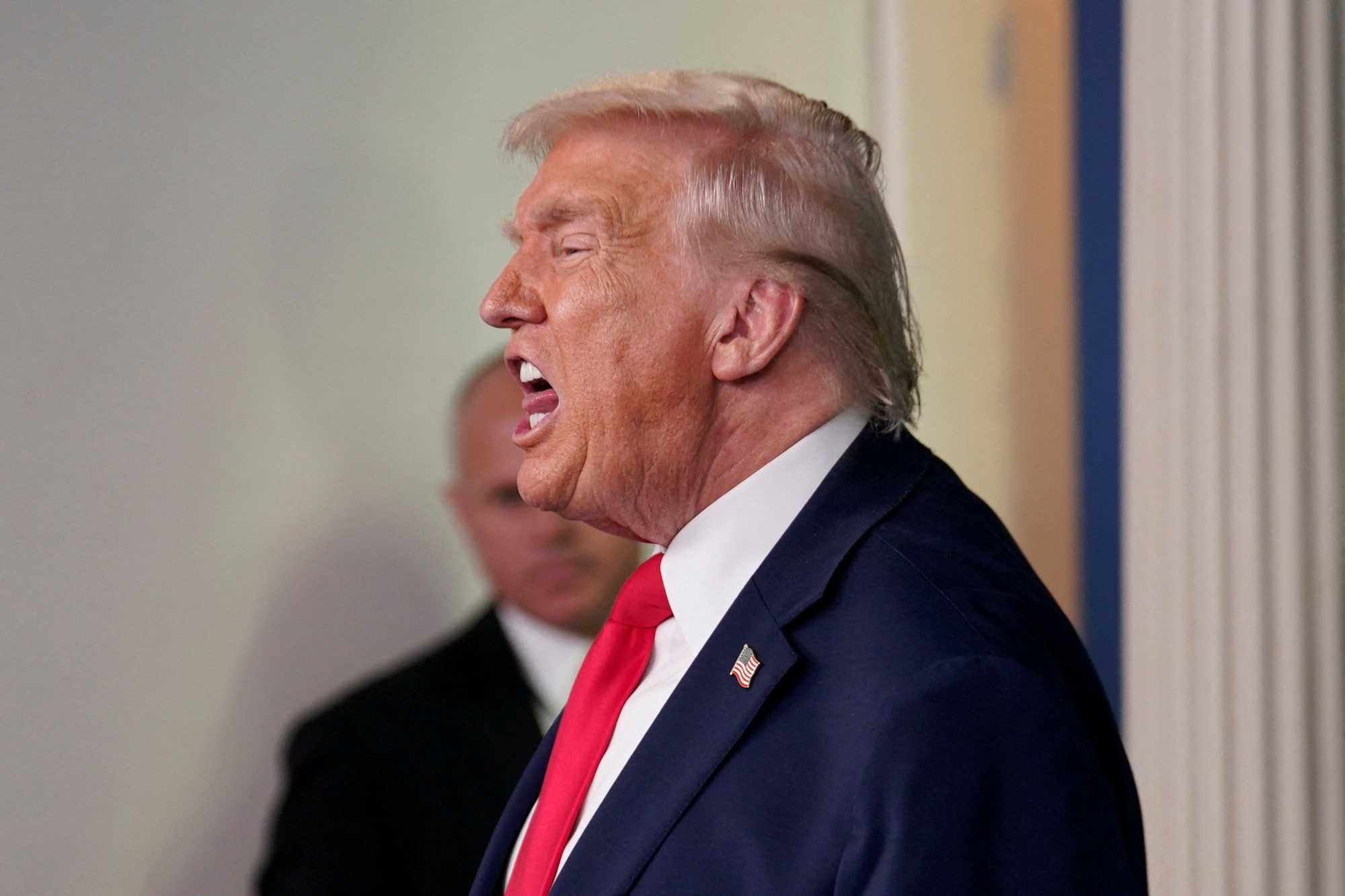
U.S. President Donald Trump speaks during a press briefing at the White House, on the one-year mark into his second term in office, in Washington, D.C., U.S., January 20, 2026. REUTERS Nathan Howard
When President Donald Trump began his second term, he had promised lower prices, cheaper borrowing, and stronger economic growth, but several of the key elements of his economic programme have, in fact, contributed to inflationary pressure and have helped cause interest rates to rise.
As the Wall Street Journal points out, Trump's advisers had originally hoped that tighter spending and deregulation would reassure bond investors, lower the long-term Treasury yields, and enable borrowing costs to fall without the need for cuts in Federal Reserve rates. That result has not happened. The 10-year Treasury yield is now higher than it was on Inauguration Day and has recently hit its highest level since 2007.
Jessica Riedl, a former Republican Senate aide, told the Journal that the White House inflation woes were “entirely predictable,” adding that the tax cuts, new spending, and the President’s pressure on the Fed to lower interest rates are all factors in the rising inflation.
The Journal stated that the fiscal restraint which had been intended at the beginning of Trump's term never in fact came into effect, whereas a number of the administration's policies introduced new price pressures. Tariffs raised the cost of imported goods and the conflict with Iran caused oil and diesel prices to go up. Additionally, the newspaper said that immigration restrictions had an effect on reducing growth in the labour force.
The Labor Department found that the Consumer Price Index increased by 0.4% in August and by 3.4% over the previous year. Gasoline prices went up by 3.9% during the month and were responsible for more than one-third of the total monthly increase.
This month the Federal Reserve increased its benchmark interest rate by one-quarter of a percentage point, setting the target range at 3.75 to 4 per cent, which marks its first rise since 2023. The Fed's policymakers have also said that a further increase might take place before the end of the year if inflation stays high.
Trump has on several occasions stated that the rates should be much lower and has demanded that the federal funds rate be brought down to 1%. However, economists interviewed by Reuters explained that a sharp cut in rates could have the contrary effect by raising inflation expectations, causing the dollar to weaken and thereby pushing longer-term Treasury yields up.
The administration is likewise having to take account of economic factors that lie outside the original fiscal strategy; the prolonged Iran conflict has led to higher energy costs, whereas continued consumer spending and strong business investment have contributed to the economy’s growth.
The resilience seen has meant that the Fed has not had to act by reducing interest rates in order to promote growth, since ongoing inflation has caused policymakers to take the opposite course. As a result, consumers have found mortgages, car loans, and other types of credit to remain expensive even though Trump is still pushing for lower borrowing costs.