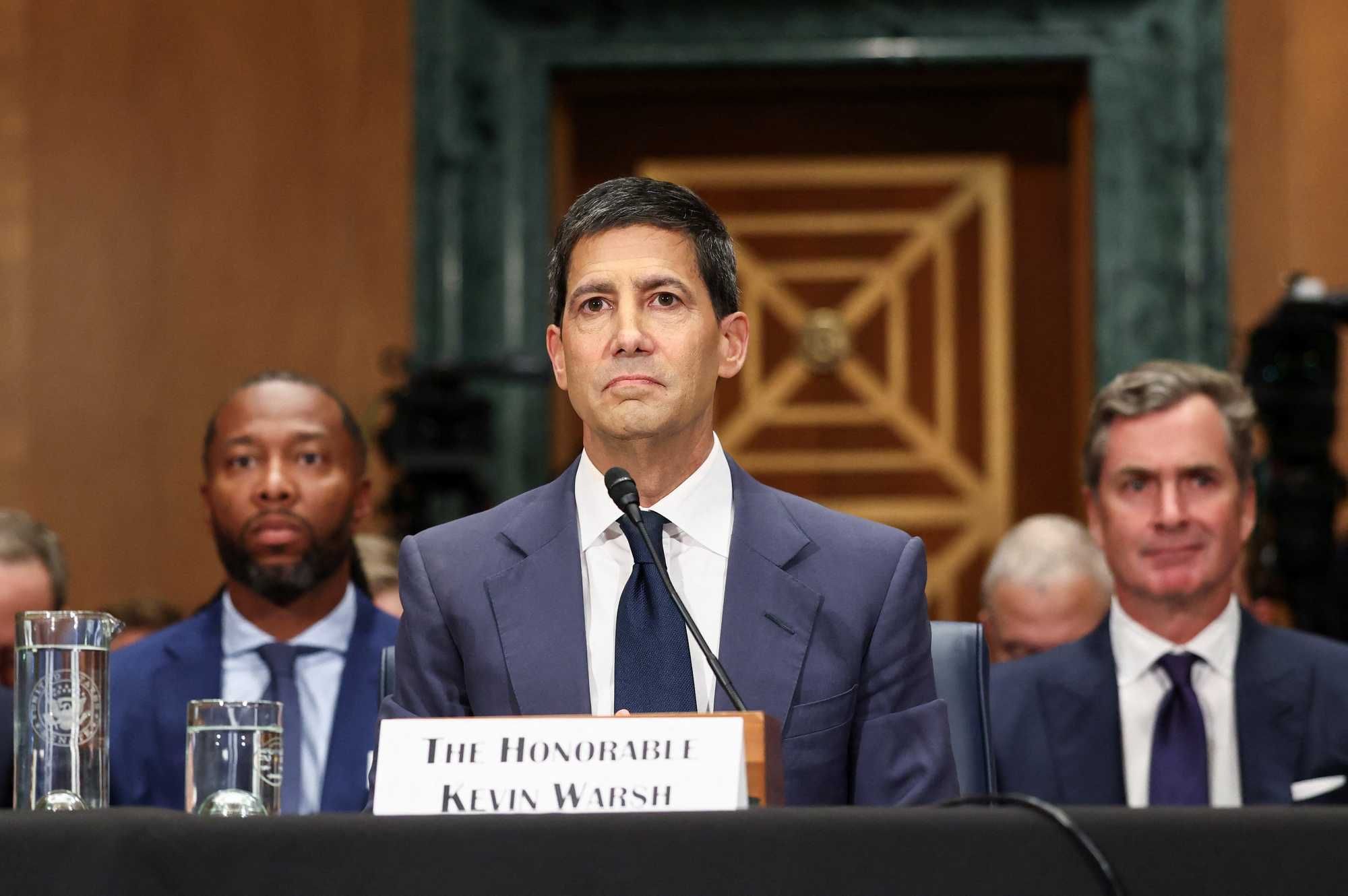
Kevin Warsh, President Donald Trump's nominee to be the next chair of the Federal Reserve, attends a Senate Banking Committee confirmation hearing on Capitol Hill in Washington, D.C., April 21, 2026. REUTERS/Kevin Lamarque
President Donald Trump appointed Kevin Warsh to the Federal Reserve in the hope that the Hoover Institution Economics Fellow will change how inflation is measured, and thereby convince the public it is lower. Experts say his plan will backfire.
“Bank of America economist Aditya Bhave warned Wednesday that such a reconfiguration — part of a broader ‘regime change’ that Warsh has promised for the central bank — might not pan out as he hopes,” wrote CNBC’s Alex Harring on Wednesday. Harring then described Warsh’s proposal to exclude volatile food and energy prices from inflation measurement and instead focus on the core price index for personal consumption expenditures, or the “core PCE.” By doing this, inflation will look “softer,” but at a price.
“Bhave said that making this switch may mean energy and food — currently excluded — would matter more for Fed policy,” wrote Harring, who then quoted Bhave saying that “even if these shocks get trimmed out, they might still raise the trimmed mean by preventing other shocks from getting trimmed. This is ironic because Warsh also argued yesterday for looking through one-off, supply-driven price increases.”
Harring added, “In other words, by trimming only the most extreme readings, some more minor spikes in inflation — perhaps caused by food and energy prices jumping — could creep into the inflation reading under Warsh’s method and cause it to be higher than the Fed’s current preferred view.”
Economics journalist Catherine Rampell earlier this month expressed doubt on the conservative website The Bulwark that Warsh could be trusted to fight inflation in good faith, despite his previous reputation as an "inflation hawk."
“The person that Donald Trump wants to appoint to succeed Jerome Powell is this guy, Kevin Warsh, who his entire career was known as an inflation hawk, basically wanted tighter monetary policy,” Rampell told The Bulwark’s Andrew Egger. “But lo and behold, [he] has changed his tune just in time to accept this nomination. And now he wants looser monetary policy, i.e. the lower interest rates that Donald Trump just coincidentally also happens to want.”
When AlterNet reached out to President Trump earlier this month about criticisms of the Iran war’s impact on prices, spokesman Kush Desai dismissed those observations.
“President Trump has been clear about short-term disruptions as a result of Operation Epic Fury, and the Administration went into this military engagement with a plan to mitigate these disruptions to America’s long-term economic resurgence," Desai said to AlterNet. "As energy markets begin to stabilize, historic tax refund checks hit the mail, and the rest of the Trump administration’s pro-growth agenda continues taking effect, Americans can rest assured that the best is yet to come.”