Tensions with US fuels push to empower euro as allies reject 'Trump-shaped world order'
17 February
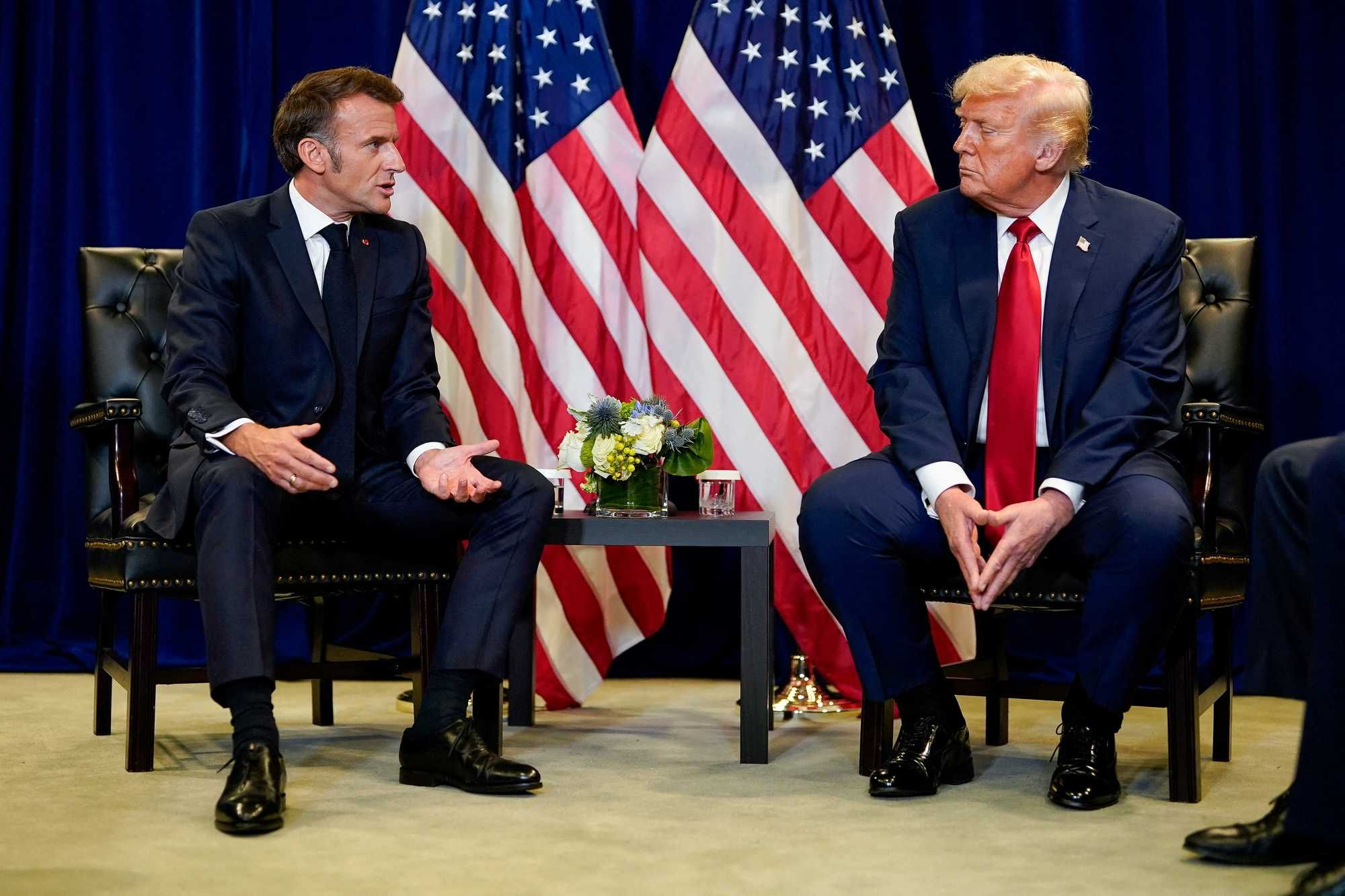
U.S. President Donald Trump with French President Emmanuel Macron in New York City, New York, U.S., September 23, 2025. REUTERS/Al Drago
U.S. President Donald Trump with French President Emmanuel Macron in New York City, New York, U.S., September 23, 2025. REUTERS/Al Drago
At two major gatherings in Europe this year — the 2026 World Economic Forum (WEF) in Davos, Switzerland in January and the 2026 Munich Security Conference in Munich, Germany in February — tensions between the Trump Administration and Europe were a recurring theme. Canadian Prime Minister Mark Carney, during his WEF speech, lamented that a "rupture" has occurred in relations between the United States and its North Atlantic Treaty Organization (NATO) allies. And similarly, when German Chancellor Friedrich Merz spoke at the Munich event, he told attendees, "A divide has opened up between Europe and the United States. The United States' claim to leadership has been challenged, and possibly lost."
According to Axios reporters Courtenay Brown and Neil Irwin, European leaders are responding to tensions between the Trump Administration and Europe by taking aggressive new steps to promote the euro.
"European leaders are trying to carve out a bigger global role for their currency in a Trump-shaped world order," Brown and Irwin report in an article published on February 17. "If they are successful, it could chip away at America's biggest economic advantage: the outsize demand for dollars and U.S. debt. Other dollar alternatives look less likely, since the world generally distrusts China. Squeezed by Russia, China, and an increasingly belligerent United States, Europe is reacting by bolstering its common efforts in both national security and monetary affairs."
The Axios journalists add, "Even if the euro's shift doesn't dethrone the dollar as the global reserve currency, its broader influence could narrow America's margin of financial power."
The European Central Bank (ECB), according to Brown and Irwin, is "launching a permanent facility that allows eligible global central banks to borrow euros when needed — a move that, ECB President Christine Lagarde said during her Munich Security Conference speech, "reinforces the role of the euro."
"For years," the Axios reporters note, "European policymakers — including Lagarde — warned of a world more vulnerable to shocks than before the pandemic. That risk intensified when President Trump returned to office and imposed the steepest tariffs in over a century, while wielding trade threats as geopolitical leverage…. Trade concerns, along with other factors like worries of eroding Fed (U.S. Federal Reserve) independence, have spooked global investors. The dollar is down roughly 9 percent over the past year — a decline that has pushed the euro to its highest level against the dollar in about three years…. The bottom line: Europe is trying to persuade the rest of the world of the euro's attractiveness in ways that could gradually reshape the balance of power in global finance."