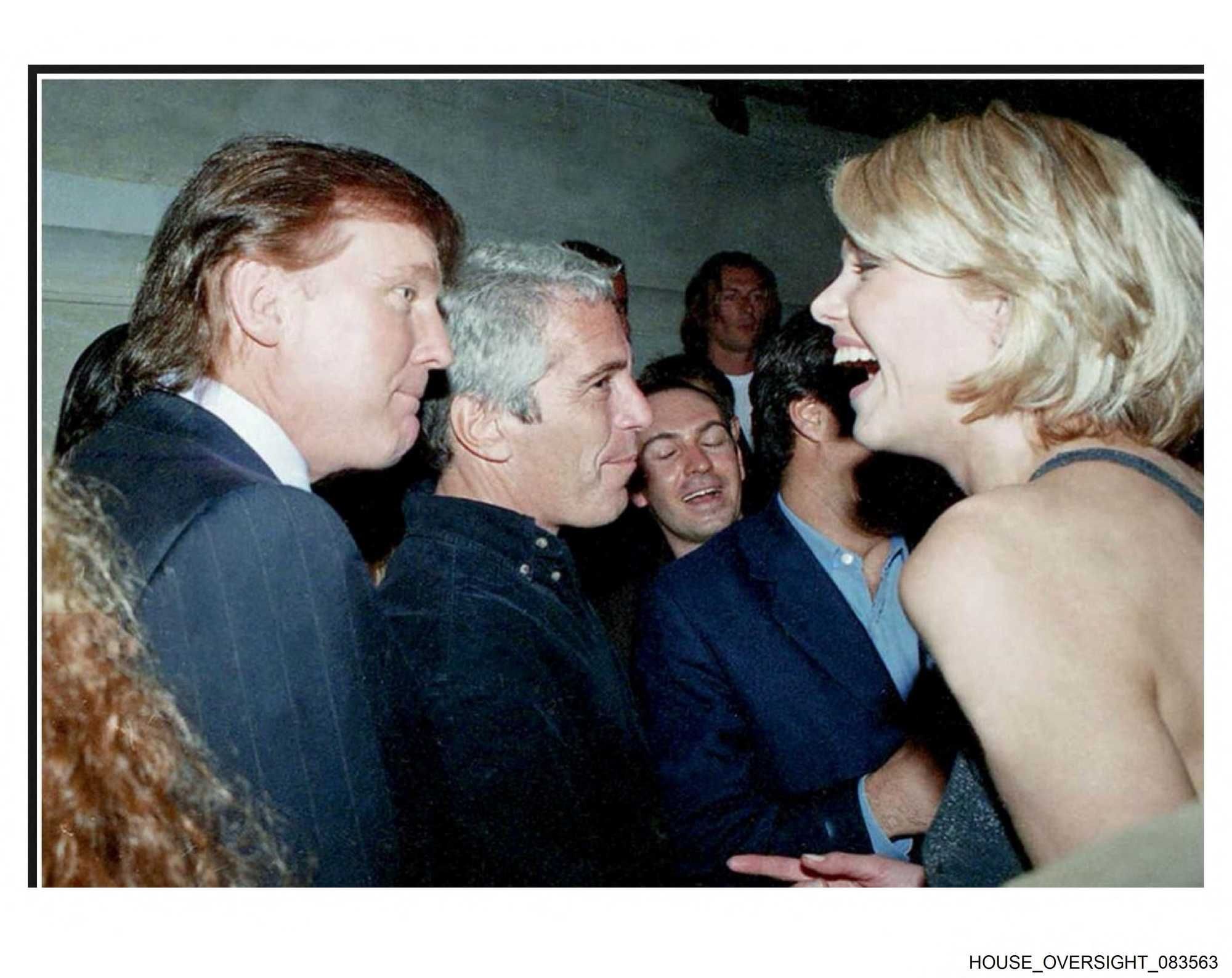
A handout photograph shows U.S. President Donald Trump with the late financier and convicted sex offender Jeffrey Epstein, from Epstein’s estate. House Oversight Committee Democrats/Handout via REUTERS.
Former federal prosecutor Nick Akerman, who served as a member of the Watergate prosecution team, on Sunday “[connected] the dots” about a “key email from” the estate of late convicted sex offender Jeffrey Epstein — and revealed an explosive theory about the president’s connection to the FBI probe of Epstein.
“A key email from Jeffrey Epstein’s estate, in combination with statements by Trump ally House Speaker Mike Johnson, shows it is highly likely that Trump was a confidential FBI informant in the first sex trafficking investigation into Epstein and his partner in crime Ghislaine Maxwell,” Akerman wrote on Substack.
As Akerman notes, “on April 2, 2011, Epstein emailed Maxwell" about Trump, calling him a “dog that hasn’t barked.”
“Epstein authored this email after the conclusion of the investigations by the State of Florida and the FBI into his conduct with underage girls, and after Epstein had served his overly lenient sentence,” Akerman explains. “The second federal investigation had not yet begun, but victims began filing civil lawsuits against him, and Epstein was a registered sex offender.”
As Akerman details, “The phrase, ‘dog that hasn’t barked’” relates to a Sherlock Holmes story that concludes a watch dog won’t bark at the scene of a crime if it knows the perpetrator.
“In reference to the silent watch dog, Epstein raised with Maxwell the peculiarity that Trump ‘has never once been mentioned’ in the investigation by the ‘police chief. etc.’ [a shorthand reference to the Palm Beach detectives who physically conducted the investigation], even though Trump had ‘spent hours at my house’ with one of the victim-witnesses, Virginia Giuffre,” Akerman writes.
The former federal prosecutior adds that a Sept. 5 statement by House Speaker Mike Johnson only solidifies his theory. At the time, Johnson told reporters Trump “was an FBI informant to try to take this stuff down." Johnson later walked back his comment, after "reportedly [confusing] even Trump administration officials," the Guardian wrote at the time.
“Clearly, Trump does not want it publicly known that he was an FBI informant. From my experience as a prosecutor, the principal way a person becomes a confidential informant is when the FBI uses a person’s involvement in criminal activity to turn the individual into an informant to avoid prosecution,” Akerman writes.
Read the full analysis at Substack.