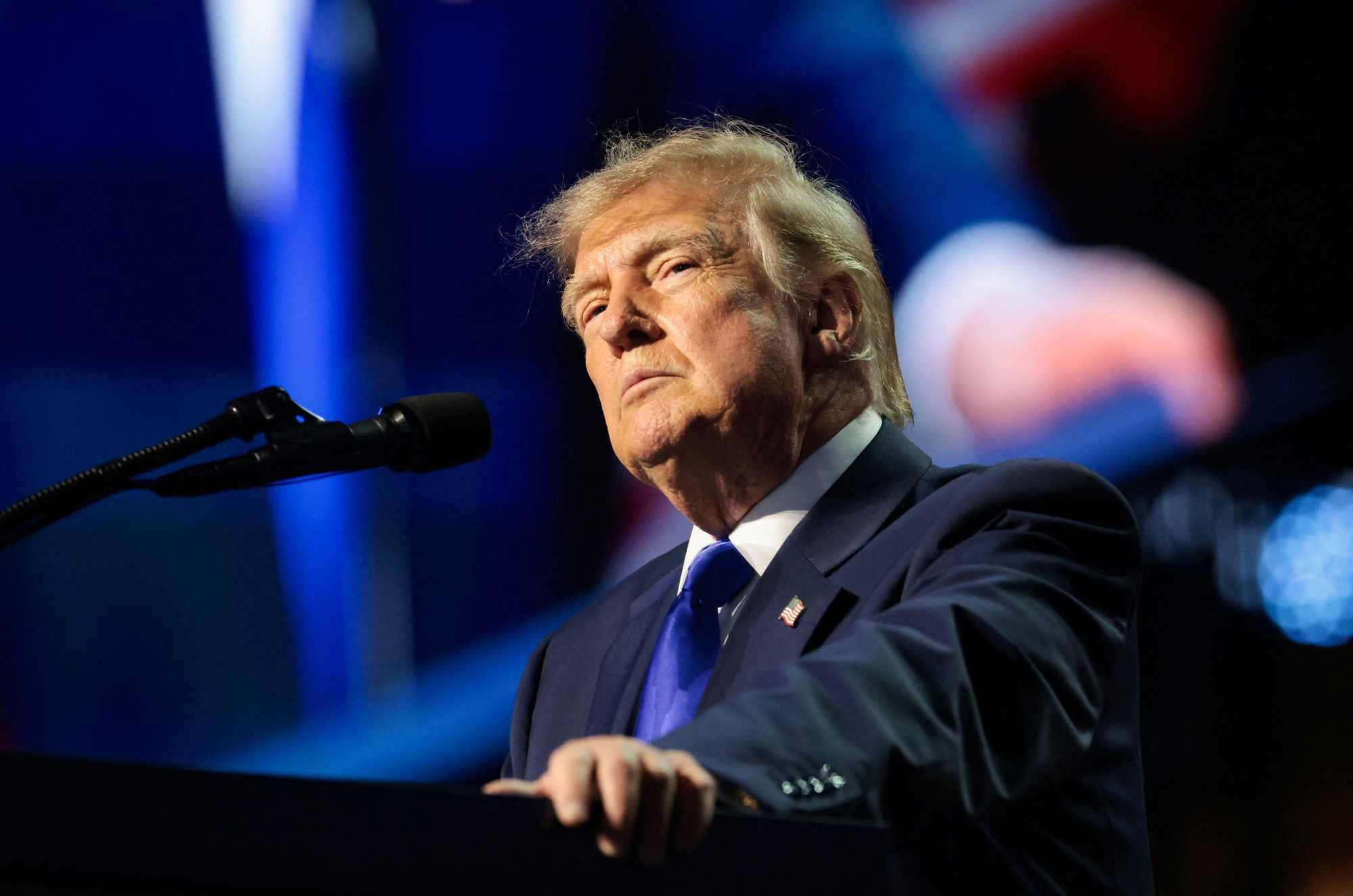
U.S President Donald Trump reacts while speaking on stage during the Republican National Midterm Convention in Dallas, Texas, U.S., September 9, 2026.
President Donald Trump has frequently attacked the idea of foreign countries meddling in U.S. elections, but according to one of his first-term staffers, his real feelings are more two-faced and self-serving than he lets on, and there was one moment when the truth "clicked" for him.
Miles Taylor previously worked at the Department of Homeland Security during Trump's first term, rising to the level of chief of staff before leaving in 2019. Prior to that, he first gained national recognition for an anonymous op-ed he penned for The New York Times claiming to be part of an internal White House resistance to Trump's worst impulses. Since then, he has emerged as a vocal critic of his former boss and frequently offers insights he gained from firsthand experience in the administration.
As Trump is once again attacking the integrity of U.S. elections and mused about taking over the midterm voting process, Taylor wrote in his latest piece for The i Paper that he was part of another resistance group within his first administration, one that tried to prepare for a similar assault on the 2018 midterms.
"I take the threat seriously, because I used to work for the man. And I saw the earliest signs of how he likes to influence elections," Taylor wrote. "In August 2018, I brought together the heads of the FBI, the intelligence community and my own department, the Department of Homeland Security (DHS), at the White House podium to warn Russia not to interfere in that year’s midterms. We were concerned they might try to meddle again."
In response to that press conference, Taylor said that Trump called it "terrible" and pressed to find out if anyone had pressured them to do it. Despite legitimate warnings about Russia interfering in the midterms, Trump later went after a different target altogether.
"Weeks later at the United Nations, he publicly accused China of trying to interfere in the midterms, but he said nothing about the country his team had actually told him was a threat: Russia," Taylor recounted.
In light of that discrepancy, Taylor said that Trump's true intentions around foreign election meddling became clear.
That’s when it clicked for me. Trump didn’t seem to mind foreign interference in American elections, if it was helpful to him," he wrote. "The Russians had backed him in 2016, and he did not seem to mind their interference in 2018. What I suspect irked him was that nations like China could use propaganda to undercut him personally, or his hand-picked candidates."
He added: "Back then, I thought the selective enforcement was outrageous. We shouldn’t let any foreign nation hack our democracy, whether or not they were aligned with the President’s political interests. Of course, it got far worse in 2020. Trump fanned the flames of baseless 'voter fraud' claims after he lost, and for the first time in the history of the United States, a President attempted to prevent the transfer of power."