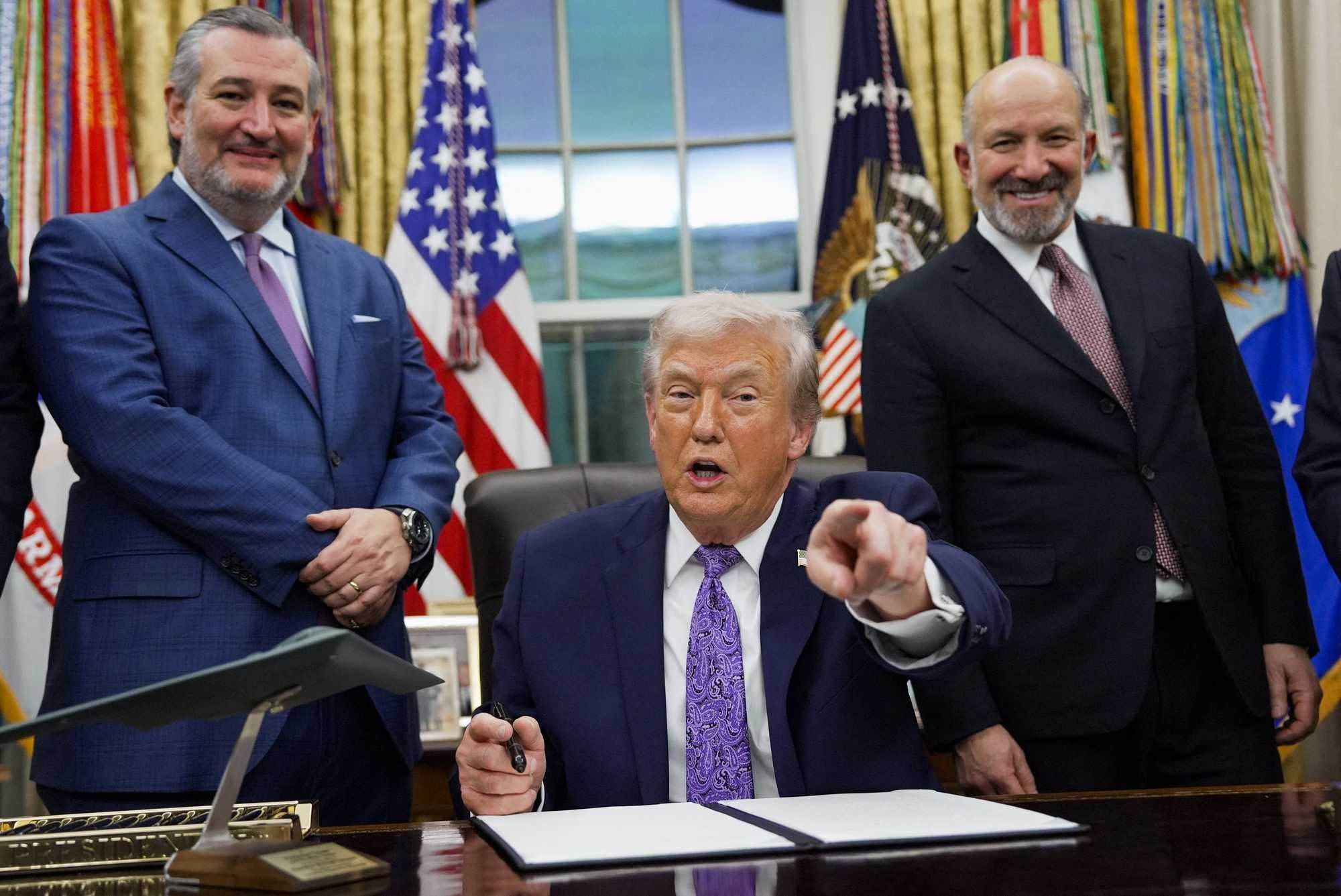
During a Tuesday night, December 23 appearance on Sean Hannity's Fox News show, Commerce Secretary Howard Lutnick claimed that the U.S. economy is booming during Donald Trump's second presidency.
Lutnick bragged, "This is the golden age coming." But his claims come at a time when Trump's approval ratings on the economy are plummeting in poll after poll.
The commerce secretary is an aggressive promoter of Trump's most controversial policies, from his steep new tariffs to his support of artificial intelligence (AI) technology — which, many economists are warning, could put a lot of Americans out of work.
In an article published on Christmas Eve Day 2025, New York Times reporters Tony Romm and Colby Smith stress that the Trump Administration is moving full speed ahead with his policies despite warnings from economists and skeptics.
"For Mr. Trump, there is no risk, only reward, posed by the dawning and disruptive new age of computing," Romm and Smith report. "Over the past year, the president and his top aides have fully embraced AI, and showered its leading corporate backers with money and regulatory support, as the administration looks to supercharge one of the primary areas of growth in an otherwise precarious U.S. economy. That optimism was on display on Tuesday, (December 23), after the federal government reported that the U.S. economy grew at an annual rate of more than 4 percent last quarter."
The Times reporters add, "Kevin Hassett, the director of the White House National Economic Council, told CNBC that the new data indicated that the president’s broader agenda was working as he touted the signs of a 'boom' in AI."
Romm and Smith note that the Trump Administration's "unqualified support" for AI " contrasts starkly with the more cautious tone struck by economists and even some technologists in Silicon Valley."
"Many still question whether AI might cause significant job losses, at least temporarily, and fret over the speed and methods that have allowed the industry to grow in ways that may not be sustainable and could risk financial havoc," the Times journalists explain. "The White House has largely waved off many of those concerns. Instead, Mr. Trump, who has long viewed the stock market as a barometer of his economic success, has courted and celebrated the soaring stock prices of major technology companies like Nvidia….. For now, economic data reflects no mass firings because of AI. But a growing body of research still hints at the ways the technology may reshape the labor force, particularly for younger Americans, including recent college graduates."
Darrell M. West, a senior fellow at the Brookings Institution, is warning that if tech companies banking on AI run into a "major crisis" in the future, a bailout from the federal government is a strong possibility — not unlike the bank bailouts of the Great Recession.
West told the Times, "AI is too big to fail, so it's really important that government learn the lessons of past bubbles. We don't know if we're in a bubble, because no one ever knows until it’s too late, but there are certainly many warning signs out there."
Read Tony Romm and Colby Smith's full New York Times article at this link (subscription required).