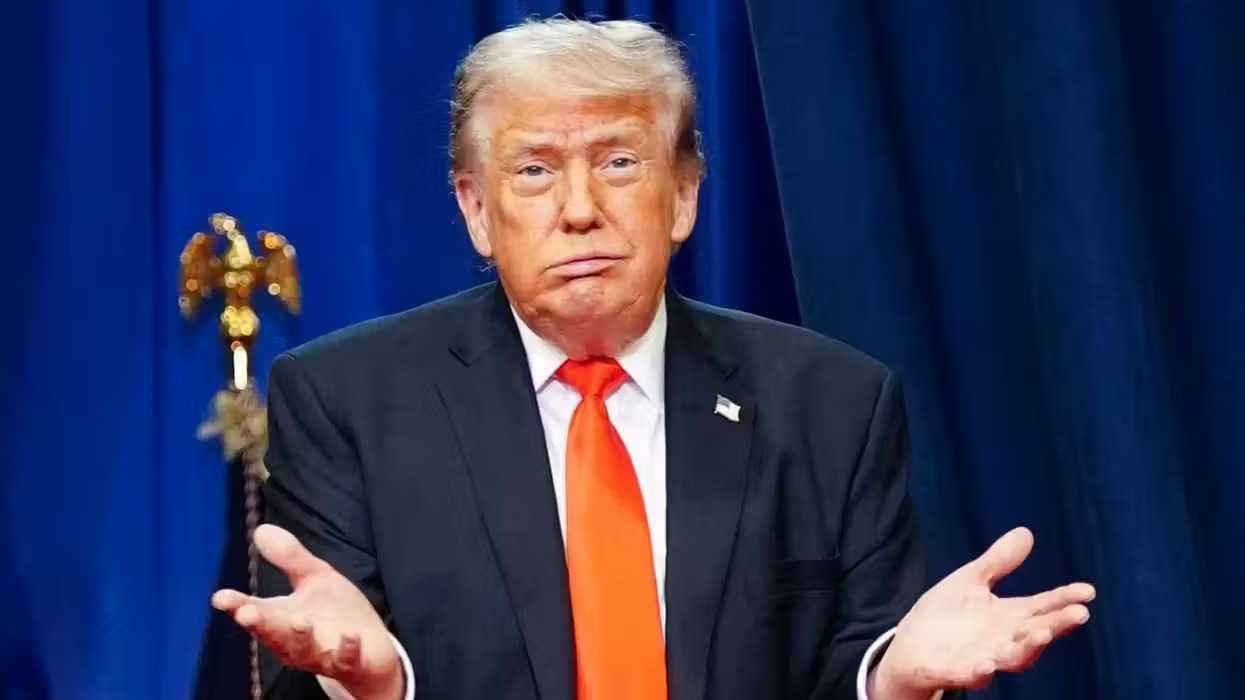
U.S. President Donald Trump gestures during an event at The Villages Charter School at The Villages, Florida, U.S., May 1, 2026.
On Monday, in the wake of a disastrous jobs report released late last week, economic analyst and former Treasury official Steve Rattner noted that a key economic indicator has plunged so low that it has erased “the entire post-pandemic recovery.”
“Labor force participation has fallen to 61.5 percent — the lowest since 2021, erasing the entire post-pandemic recovery,” posted Rattner. “Since Trump's inauguration, over a million people have left the job market — which explains part of the reason the unemployment rate dropped last month.”
Two factors drive Rattner’s assertion. First is, as noted, labor force participation, which is the percentage of people who are eligible for work and hold a job. The last time it was at 61.5 percent was in March 2021, after which it climbed steadily, peaking at 62.8 percent in mid-2023 and remaining stable just below that for the following two years. Then shortly after Trump took office, labor participation began a downward plunge.
The second factor involved the jobs report for May, which at the time of its release was declared surprisingly robust, showing low unemployment and what appeared to be strong jobs growth. But as Rattner suggests, that low unemployment rate could have been driven by the simple fact that huge numbers of people have stopped seeking employment at all.
What’s more, the jobs report for June shows that the high growth numbers for the previous month seemed to have been illusory. Key to the May increase, for example, was growth in the hospitality sector, which a month ago seemed strong. But now, “some economists said the bigger-than-expected slowdown in job growth was likely a delayed response to the Middle East conflict, which has raised gasoline prices and boosted inflation. They pointed to a 61,000 drop in leisure and hospitality payrolls, the largest since the pandemic, which the government said reflected ‘weaker than usual seasonal hiring.’” Bars, hotels and related businesses saw a massive drop in payrolls, despite expectations that the U.S. hosting the World Cup would boost hiring.
"June is usually a strong month for travel, restaurants, hotels and entertainment," said Sung Won Sohn, a finance and economics professor at Loyola Marymount University. "Some of this may be payback after earlier strength, but it also raises a broader concern; lower-income consumers may be pulling back, and service employers may be less confident about summer demand."
Rattner noted a number of other worrisome numbers in the latest report, posting, “Since President Trump's re-election, the vast majority of job growth has been in health care and education. Despite promises to re-shore industry through tariffs, over 100,000 manufacturing jobs have been lost.” He also pointed out that while women have seen some modest job gains, men – segments of which have made up Trump’s most important support base – have lost nearly 500,000 jobs.