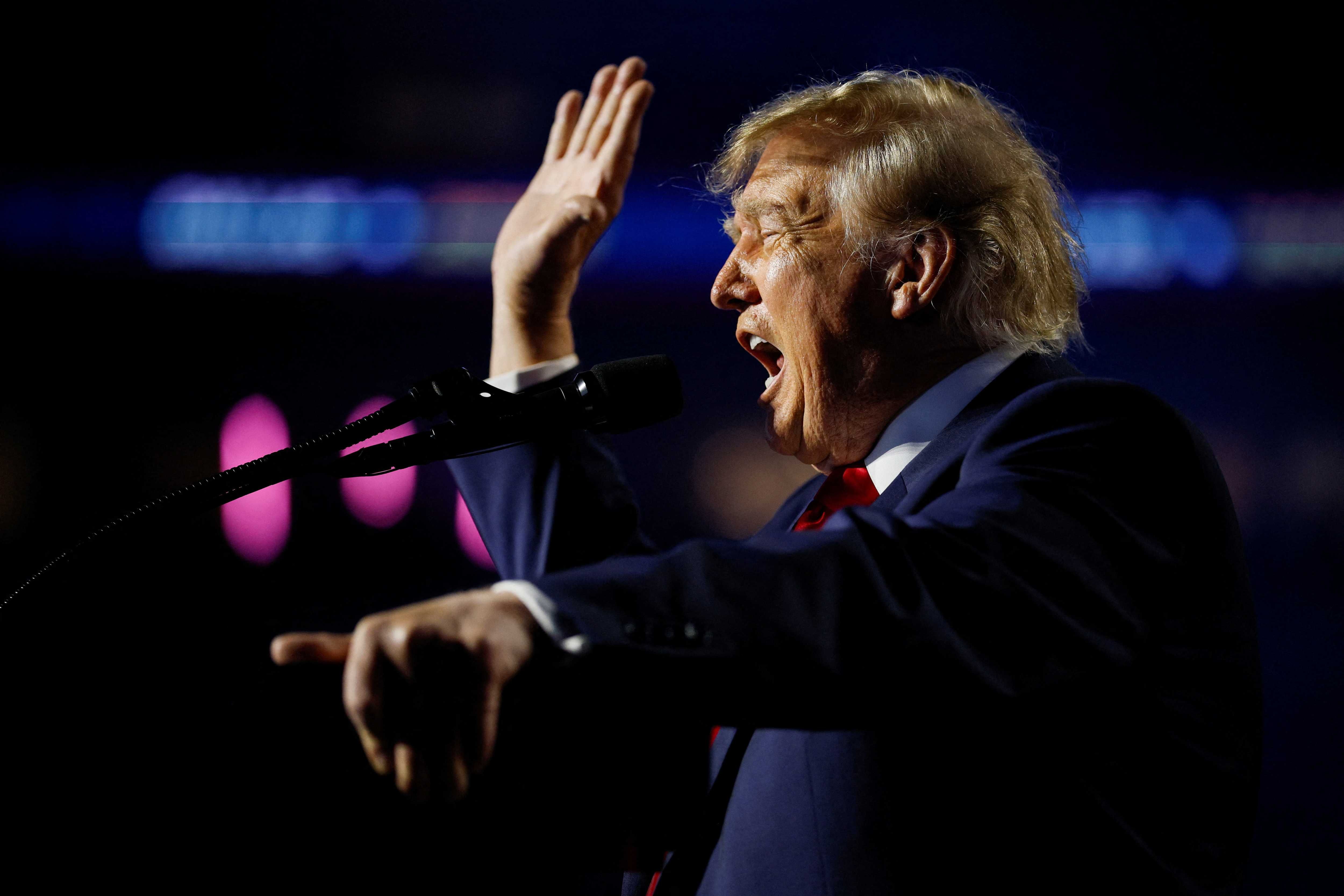
U.S. President Donald Trump delivers closing remarks at the Republican National Midterm Convention in Dallas, Texas, U.S., September 10, 2026. REUTERS/Evan Vucci
The great sleeping giant of America has awakened, taken a hard look at what’s become of the nation, and roared a thunderous “NO!”
What occurred yesterday was not — as some are saying — the inevitable mid-term swing of the pendulum against the party in power. Texas hasn’t elected a Democratic senator since 1988. The last time Kansas elected a Democratic senator was 1932.
Nor was it just the economy. Americans are unhappy with inflation, but the country is not in a depression or recession. Unemployment remains quite low.
Nor, finally, was it all due to Trump. Despite Trump’s repeated efforts to get voters to “pretend” he was on the ballot, he was not. Most Republican candidates barely mentioned him and many Democratic candidates stressed local or statewide issues rather than fixate on him.
Something much larger is responsible for what occurred: anti-establishment populism. It’s burst forth against the mammoth corporations that have scored record profits while most Americans have had to pay more. Against the mega donors and super PACs that have flooded American politics with more campaign money — legalized bribes — than ever before. And against the Big Tech billionaires who have become the most powerful force in the American economy and society -- as well as Trump’s and the Republican Party’s most visible backers.
The irony is that anti-establishment anger propelled Trump into the presidency in 2016 and again in 2024. Many Americans had found his politically-incorrect rants and “America first” nativism to reflect their own anger at being disrespected or left behind. “I am your warrior,” he told supporters when he announced his candidacy for the 2024 election.
But during his second term, Trump has morphed into the very establishment he had railed against. He’s given tax cuts and subsidies to tech billionaires in exchange for their help making him and his family billionaires, too. He’s promoted their AI, pushed their data centers, put Elon Musk in charge of “DOGE,” advocated their crypto, and went to war in the Middle East — not only causing gas prices to soar but making Big Oil billions (or, as Trump bafflingly boasts, “we’re making an absolute fortune in our country”) and enriching Big Tech weapons makers and investors, including his family.
Many who voted for Trump in 2016 and 2024 have now abandoned him because of this blatant corruption, crony capitalism, and eagerness to be on the gilded side of America’s new Gilded Age. According to CNBC’s late October poll, corruption was the top issue on voters’ minds.
Meanwhile, anti-establishment populism has finally taken firm hold in the Democratic Party. “The biggest divide in this country is not left versus right,” said the newly elected Texas Senate candidate James Talarico. “It’s top versus bottom.”
Sherrod Brown regained his Senate seat from Ohio largely due to voter anger at data centers and the Big Tech billionaires behind them.
Abdul El-Sayed never tired on the campaign trail of reminding Michigan voters that his opponent, Mike Rogers, was backed by big corporations and mega donors.
Even Kansas’s victorious Adam Hamilton — who during his run for the Senate adamantly rejected the leftist label his opponent wanted to impose on him — campaigned on making data centers pay for their own energy, banning lawmakers from trading stocks, expanding Medicare drug-price negotiations, and cracking down on price-gouging.
Hamilton also rejected money from corporate PACs, as did most Democratic candidates for the Senate.
The real question to my mind is whether, come January when they control Congress, Democrats will take advantage of the new populism to enact measures most Americans need, such as Medicare for All, and reforms most Americans want, such as tougher anti-monopoly laws and limits on campaign contributions (even if this requires a constitutional amendment).
Trump is likely to veto any such initiatives, of course, but at least they’ll lay down markers for the 2028 presidential election — which, judging from what we’ve seen in the midterms, is likely to be a populist doozie.
Meanwhile, thanks to all of you who have worked so damned hard to help bring about today’s extraordinary victory. Our democracy worked. It held.
Congratulations, all.
Robert Reich is a professor of public policy at Berkeley and former secretary of labor. His writings can be found at https://robertreich.substack.com/