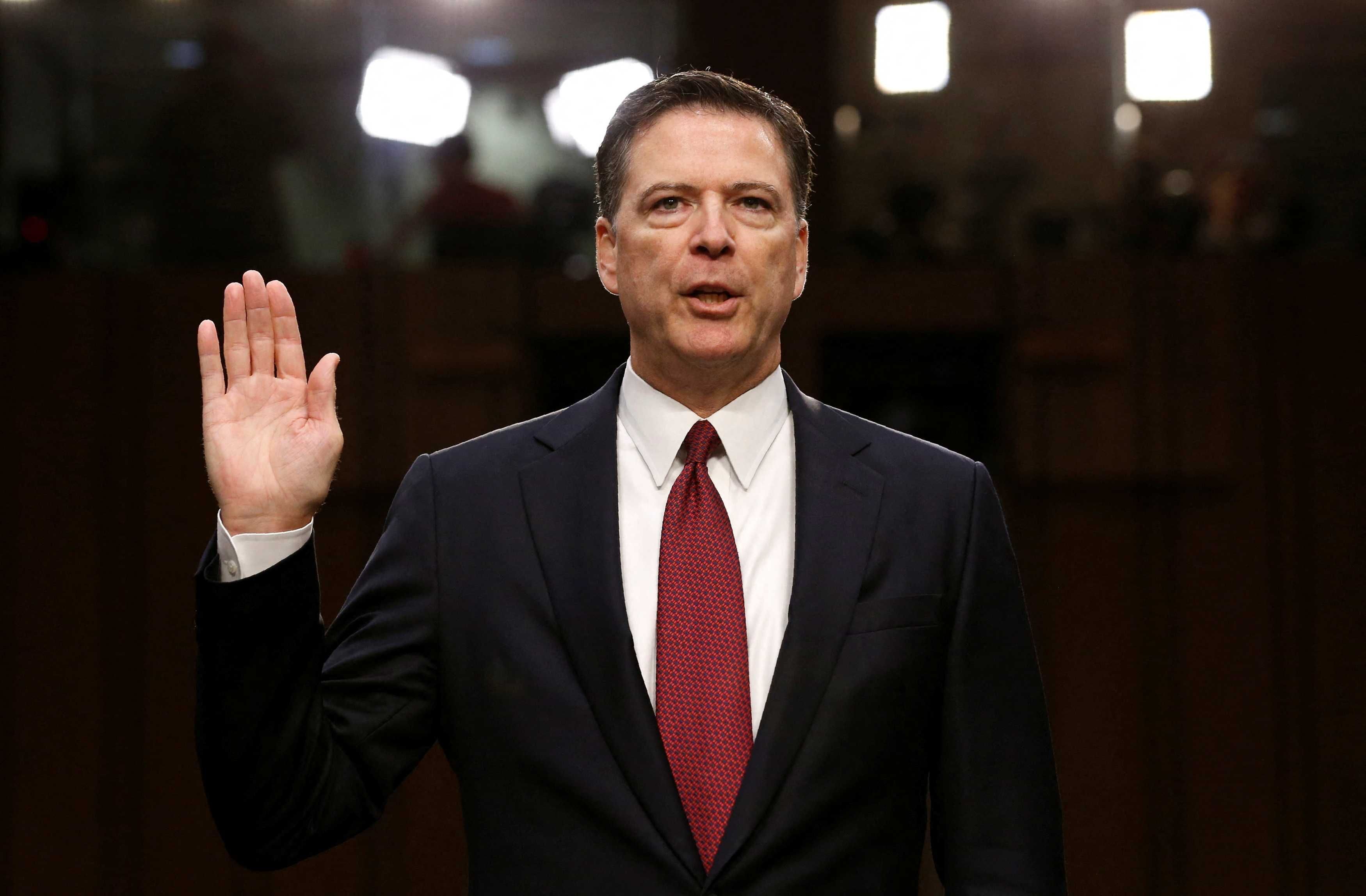
On Friday, a federal judge warned the Justice Department that he would be “unhappy” if FBI Director James Comey were suddenly arrested in a “dawn raid.” U.S. District Judge Trevor McFadden’s warning comes amid the agency’s third attempt to bring charges against Comey, who has been targeted by the White House for his role in investigating President Donald Trump’s ties to Russia.
According to Lawfare Senior Editor Roger Parloff, after a 90-minute hearing, Judge McFadden “didn’t bar govt from seeking an indictment,” “but said he’d be ‘unhappy’ if Comey was arrested in a ‘dawn raid.’” The latest charges involve allegations of mishandling classified information, but according to Parloff, the judge appears to be split on whether Comey qualifies for indictment due to some confusion about the statute of limitations. Under one interpretation of the law, Comey may be beyond a five-year limitation, in which case the defense wins. But because Congress extended the statute of limitations to 10 years under certain circumstances – and the charges were filed on the last day of that 10-year period – the judge says he’s seeking “guidance” on the matter. Apparently, the lack of clarity may have been caused by a drafting error in the Congressional rule – in other words, it was written either incorrectly or unclearly – and even the prosecution admitted they were “struggling to understand.” Comey’s counsel cited a Supreme Court case that ruled that even if Congress made a drafting error, “it’s up to Congress to correct, not courts.”
This prompted Judge McFadden – who was appointed by Trump – to wonder if he shouldn’t just let the government try to get an indictment, leaving it up to a grand jury to decide, in which case “the issue would go away.” He commented that, these days, ham sandwiches weren’t so easy to indict. This is in reference to the difficulty Trump’s Justice Department has encountered while seeking indictments of his political opponents, which have been slapped down by grand juries repeatedly. Earlier this week, for example, a grand jury declined to indict former WHite House staffer Cassidy Hutchinson – who delivered a dramatic testimony against Trump before a House committee investigating the Jan. 6, 2021, U.S. Capitol insurrection – under “unclear” charges.
Judge McFadden has yet to deliver a ruling on the DOJ’s latest attempt to prosecute Comey. Defense lawyers have asked that the charges be dismissed, but the judge suggested there was no “harm” in seeing what a grand jury decides. Comey’s attorney argued that the prosecution shouldn’t be “hanging over Mr. Comey’s head,” noting that FBI agents had been stationed outside his home.