Trump puts Supreme Court in massive bind as court threatens beloved ballroom
21 August
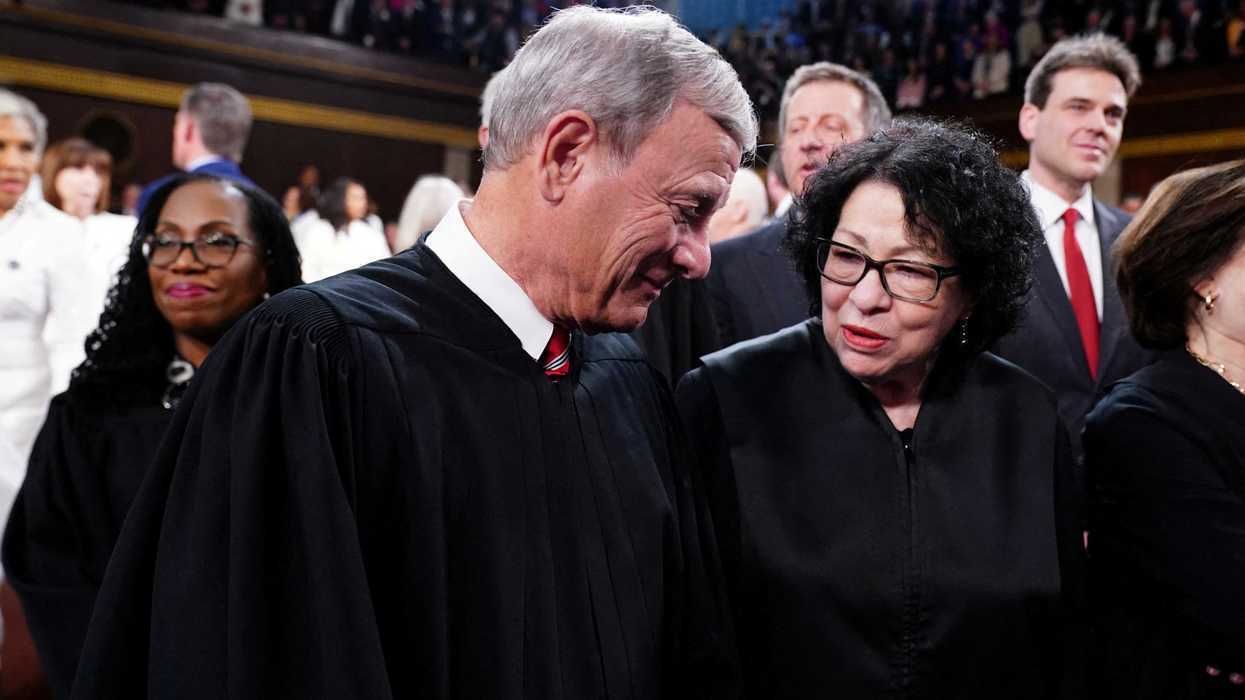
U.S. Supreme Court Justice John Roberts with Justice Sonia Sotomayor on March 7, 2024. SHAWN THEW/Pool via REUTERS
U.S. President Donald Trump's proposed White House ballroom is a key part of his plan for extensive makeovers and renovations in and around Washington DC. But Trump's legal foes are arguing that he lacks the authority to build the ballroom without the full consent of Congress — that he cannot act unilaterally in the matter. And according to the Wall Street Journal's Damion Paletta, he is putting the U.S. Supreme Court — one-third of which consists of Trump-appointed justices — in a tough position.
"If the Supreme Court doesn't rule by the end of Friday," Paletta reports in his WSJ column, "construction officials could be forced to halt the building of President Trump's 90,000 square-foot White House ballroom. That's because a two-week reprieve issued by an appeals court expires at midnight. We are nearly in uncharted waters now, all over a new building that will have chandeliers, bulletproof glass, a military hospital and a 'drone port.'"
Trump's ballroom goals, the WSJ reporter/columnist notes, "has emerged as one of the most fascinating tests of the power struggle between the executive and judicial branches this year."
"The White House is moving quickly," Paletta observes. "The legal system can't keep up. And thus, the ballroom is nearly done despite several judges telling the White House to stop. A federal judge in April ordered the White House to stop construction of the ballroom, but an appeals court allowed the construction to continue while it considered the case. That court, earlier this month — again — ordered the construction to be halted, but — again — allowed the construction to continue for two weeks so that the White House could appeal the matter to the Supreme Court."
Paletta continues, "All the while, construction has only picked up speed. The White House most recently said construction was 65 percent done and that a huge crew was working 20 hours a day, seven days a week on the project, which Trump is extremely involved in."
According to Paletta, the burning question is: "What is the Supreme Court to do?"
"Tell them to stop a building that is so far along, and just leave it as is?" Paletta writes. "Knock it down? But if they allow it to be completed because so much work is under way anyway, does that incentivize this administration, and future ones, to outpace a slower moving legal system with any range of projects, both construction or policy?"