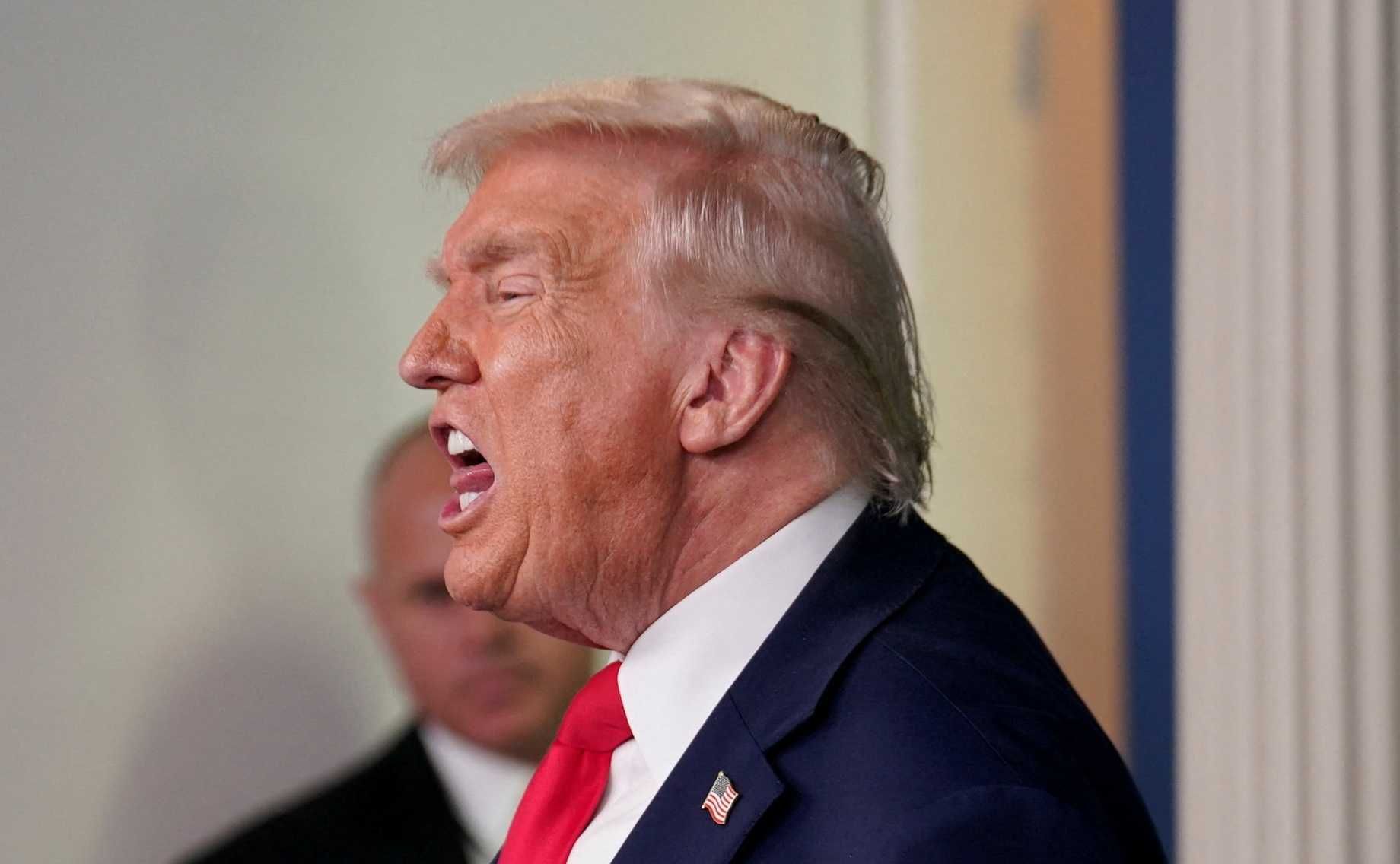
U.S. President Donald Trump speaks during a press briefing at the White House, January 20, 2026. REUTERS Nathan Howard
President Donald Trump and his administration are scrambling now that the Army Iowa chemical crisis has gone public, and sources tell CBS they are looking at who's to blame. As the fallout continues, the Trump administration is investigating how the chaotic handling of the town’s chemical detonation at an Army munitions plant led to contamination concerns and why senior officials weren't alerted sooner.
Trump and other administration officials praised the controlled detonation in the town of Middletown as having "exceeded expectations," explaining that all precautions were taken to prevent exposure to contamination. "Great job by the Army, and others, in Iowa!!! President DJT," Trump posted on Truth Social after the detonation.
Insiders in the White House are telling a different story, as it became a matter of national crisis and concern when complaints from Iowa residents made news that they were unaware of the potential dangers until the last minute, with local officials issuing evacuation warnings.
Reports surfaced that the Army knew about the issue since at least April of this year, while residents say they were not notified until last week. One source says the Army notified U.S. Secretary of War Pete Hegseth early on, but other officials contradict that claim, alleging the notification never reached Hegseth directly, other officials said.
The reason Hegseth reportedly did not receive the message was due to internal conflict, with former U.S. Secretary of the Army Daniel Driscoll leaving the administration amid heightened tensions. Acting Army Secretary Adam Telle learned of the risks in September, officials told CBS News, but didn't brief superiors.
Senior leaders were shocked by the revelation when they learned the reality of the issues today as they flew home from China after Trump's Asia trip, one U.S. official said, forcing them to scramble over how to respond. Sources now say Trump has been furious about how the Army has handled the matter. There are also internal talks about Gen. Christopher LaNeve, the Army's chief of staff, role in the matter.
Vice President JD Vance told reporters Wednesday that the administration became aware about six months ago, adding, "that it was impossible to move it — it was impossible to effectively neutralize it without causing significant danger to the surrounding community." Other U.S. officials said the decision to use a controlled detonation as the safest method for disposing of the chemicals was not reached until roughly two months ago.
The U.S. Army carried out a controlled explosion involving nearly 10,000 pounds of unstable lead azide. Preliminary air quality tests suggest the safety measures successfully contained the hazardous material, with no detectable lead particles found downwind.