Even Republicans are rebelling against 'corrosive' big money in politics: ex-GOP rep
23 July
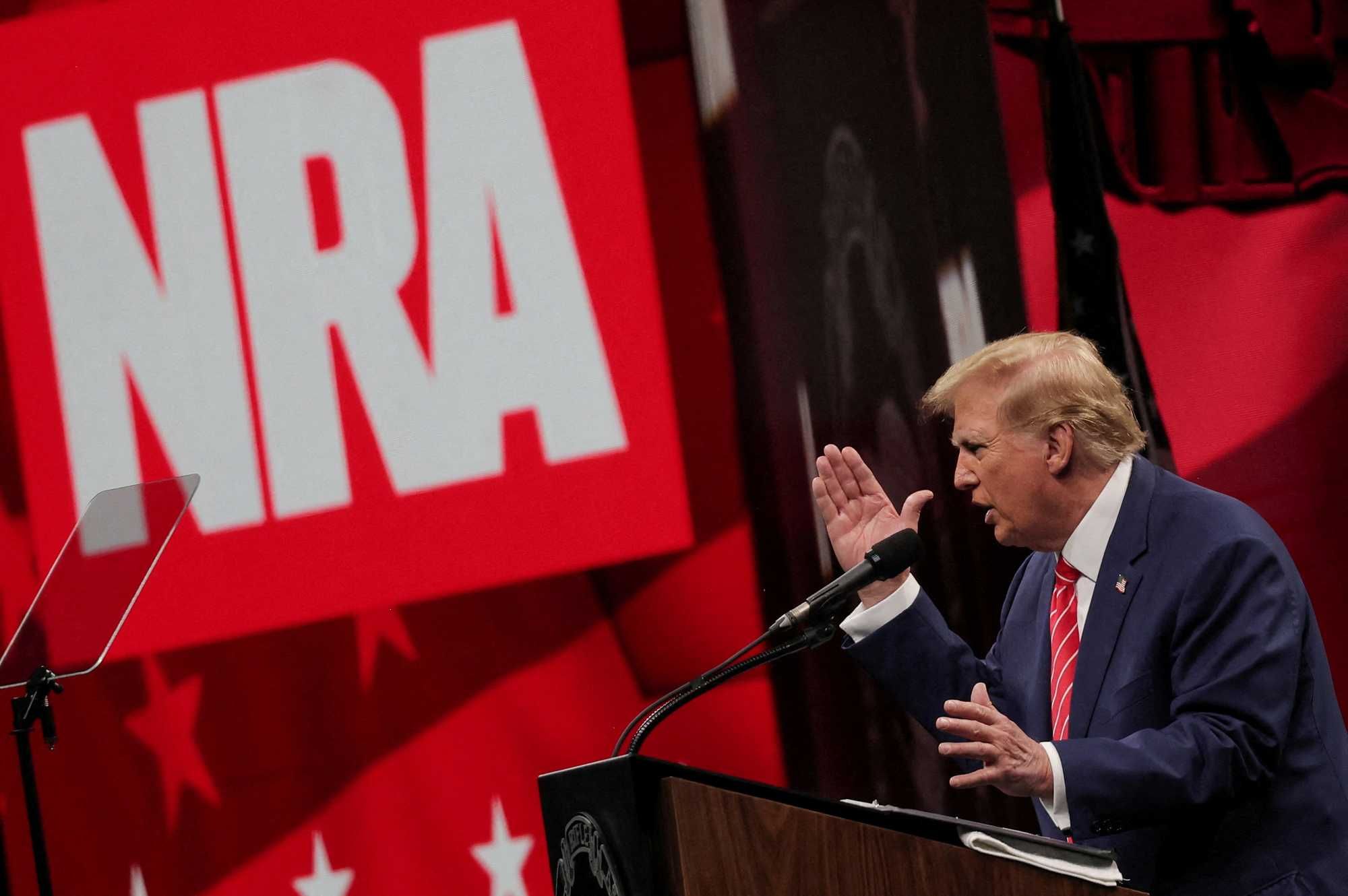
Donald Trump during the annual National Rifle Association (NRA) meeting in Dallas, Texas, U.S., May 18, 2024. REUTERS/Carlos Barria
When the U.S. Supreme Court handed down its 5-4 ruling in Citizens United v. Federal Election Commission in 2010, much of the criticism came from liberals, progressives and Democrats — who argued that the decision would make it much easier for millionaires and billionaires to buy elections. But according to conservative former U.S. Rep. Tom Campbell (R-California), even some Republicans are now rebelling against big money in U.S. politics.
In Citizens United, then-Justice Anthony Kennedy wrote the majority opinion — arguing that campaign spending is a form of "speech" and that limits on campaign contributions are a violation of the U.S. Constitution's First Amendment. Kennedy, a right-wing libertarian appointed by President Ronald Reagan, often found common ground with the High Court's liberal justices — much to the chagrin of the Religious Right — when it came to gay rights and abortion. Citizens United, however, found Kennedy drawing a great deal of criticism from the left.
But Campbell, in a July 23 op-ed for The Hill, stresses that more Republicans are now speaking out against big money in U.S. politics.
"Of all the problems I observed over the nine years I served in Congress, none were as corrosive to the functioning of our political system as the tremendous sums of cash spent to influence elections," argues Campbell, who left the GOP in 2016 and is now a law professor at Chapman University in Southern California. "Since I left Washington in 2001, the role of money in politics has only gotten worse. Outside spending in the 2022 midterms topped $2 billion, which then nearly doubled in 2024. Early projections for 2026 suggest that another record will topple."
The former congressman continues, "As spending has dramatically increased, so too has the salience of the issue among voters. Pew recently found 'the role of money in politics' to be among Americans' top concerns for the second year in a row, ranking higher than inflation and the cost of healthcare. Long assumed to be an issue exclusively of the left, it is a top issue of concern among Republican voters, according to Pew, and is the only issue that supermajorities of both Democrats and Republican voters said is a 'very big problem.'"
According to Campell, the "tough reelection campaigns" Republicans are facing in the 2026 midterms may explain why "some Republicans" are "increasingly warming up to campaign finance reform" — including Rep. Tom Barrett (R-Michigan), who "recently introduced Joint House Resolution 191, a constitutional amendment that would allow Americans to limit the sums of money spent in campaigns."
"Waiting for the Supreme Court to reverse course on 50 years of jurisprudence is not a realistic strategy," Campell cautions. "The only durable, realistic option we have to restore the ability to regulate campaign spending is to pass a constitutional amendment. The Republicans who join Barrett on the issue of money in politics will come from different places. Some will represent competitive districts where independents will decide the election. Some will represent safe seats but have watched primary fundraising spiral into something none of them quite recognize from earlier in their careers."
Campbell continues, "Some will simply believe that voters, not donors, should set the country's agenda. What unites them is the recognition that the politics of this issue have shifted — and that the voters of both parties are well ahead of Washington in noticing."