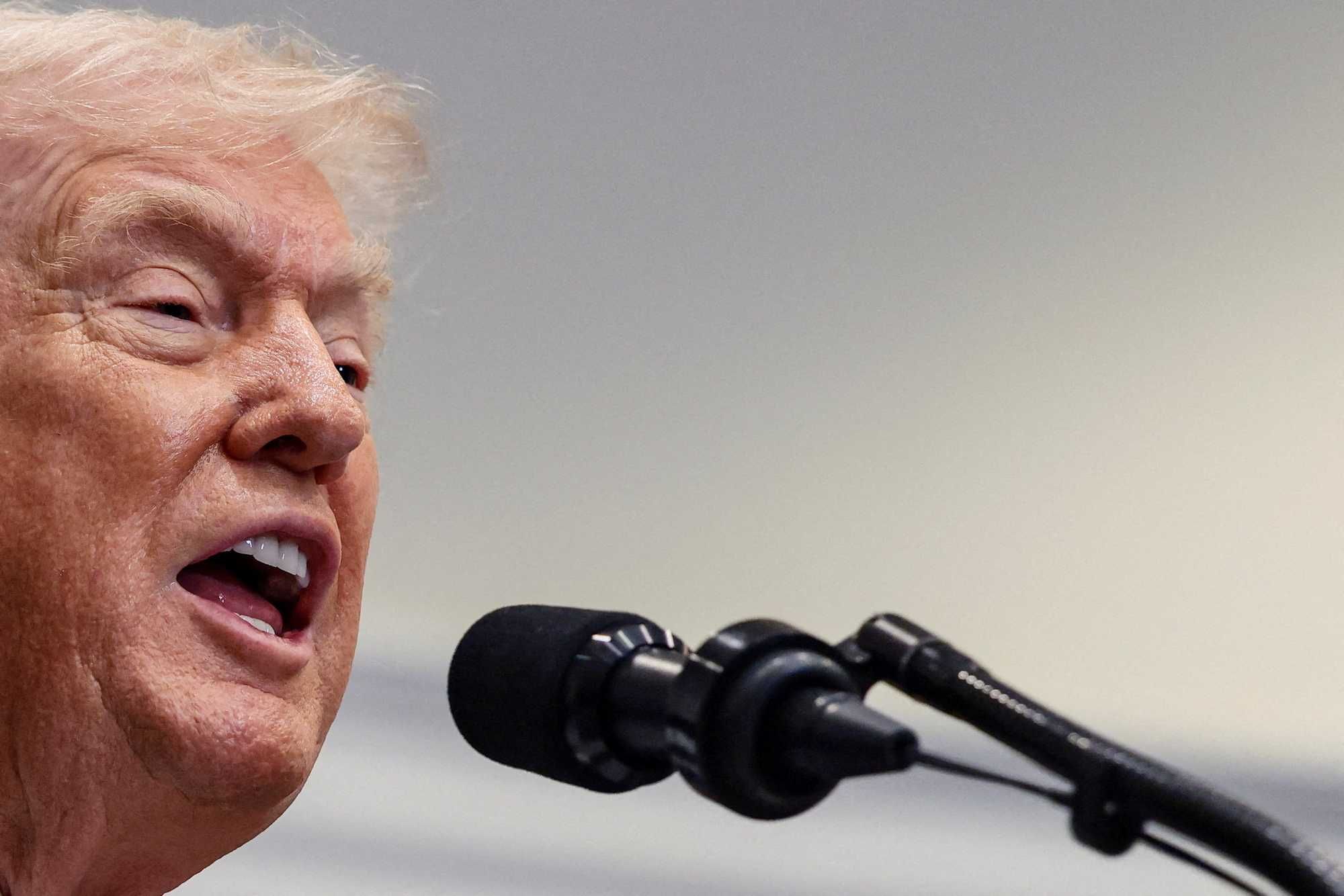
U.S. President Donald Trump makes an announcement about lowering the cost of drug prices, at the Roosevelt Room of the White House in Washington, D.C., U.S., December 19, 2025. REUTERS/Evelyn Hockstein
U.S. President Donald Trump makes an announcement about lowering the cost of drug prices, at the Roosevelt Room of the White House in Washington, D.C., U.S., December 19, 2025. REUTERS/Evelyn Hockstein
President Donald Trump signed countless executive orders after returning to the White House, one of which declared an end to birthright citizenship. But a wide range of legal experts and historians attacked that order as blatantly unconstitutional, emphasizing that birthright citizenship has been in the 14th Amendment since 1868.
Trump, according to critics, doesn't have the authority to abolish something that has been in the U.S Constitution for 157 years. However, Trump's MAGA allies are claiming that the 14th Amendment doesn't mean what opponents of his executive order say it means. And Trump, in a lawsuit, is asking the U.S. Supreme Court to restore the 14th Amendment's "original meaning." A MAGA legal brief claims that "children of temporary visitors and illegal aliens are not U.S. citizens by birth."
In an article published on December 22, however, the New York Times' Frank Bruni stresses that opponents of the Trump/MAGA lawsuit are going to the High Court with solid historic evidence.
"There are many tools for assessing the original meaning of a constitutional provision, including the congressional and public debates that surrounded its adoption," Bruni explains. "But one important tool has been overlooked in determining the meaning of this amendment: the actions that were taken — and not taken — to challenge the qualifications of members of Congress, who must be citizens, around the time the amendment was ratified. A new study to be published next month in The Georgetown Law Journal Online fills that gap."
Bruni continues, "It examined the backgrounds of the 584 members who served in Congress from 1865 to 1871 and found good reason to think that more than a dozen of them might not have been citizens under Mr. Trump's interpretation of the 14th Amendment. But no one thought to file a challenge to their qualifications."
The study, according to Bruni, "raises new questions about Mr. Trump's legal battle to narrow protections under the 14th Amendment's citizenship clause, which says: 'All persons born or naturalized in the United States, and subject to the jurisdiction thereof, are citizens of the United States and of the state wherein they reside.'"
University of Virginia law professor Amanda Frost, who authored the study, told the Times, "If the executive order reflected the original public meaning, which is what the originalists say is relevant, then somebody — a member of Congress, the opposing party, the losing candidate, a member of the public who had just listened to the ratification debates on the 14th Amendment, somebody — would have raised this."
Read Adam Liptak's full New York Times article at this link (subscription required).