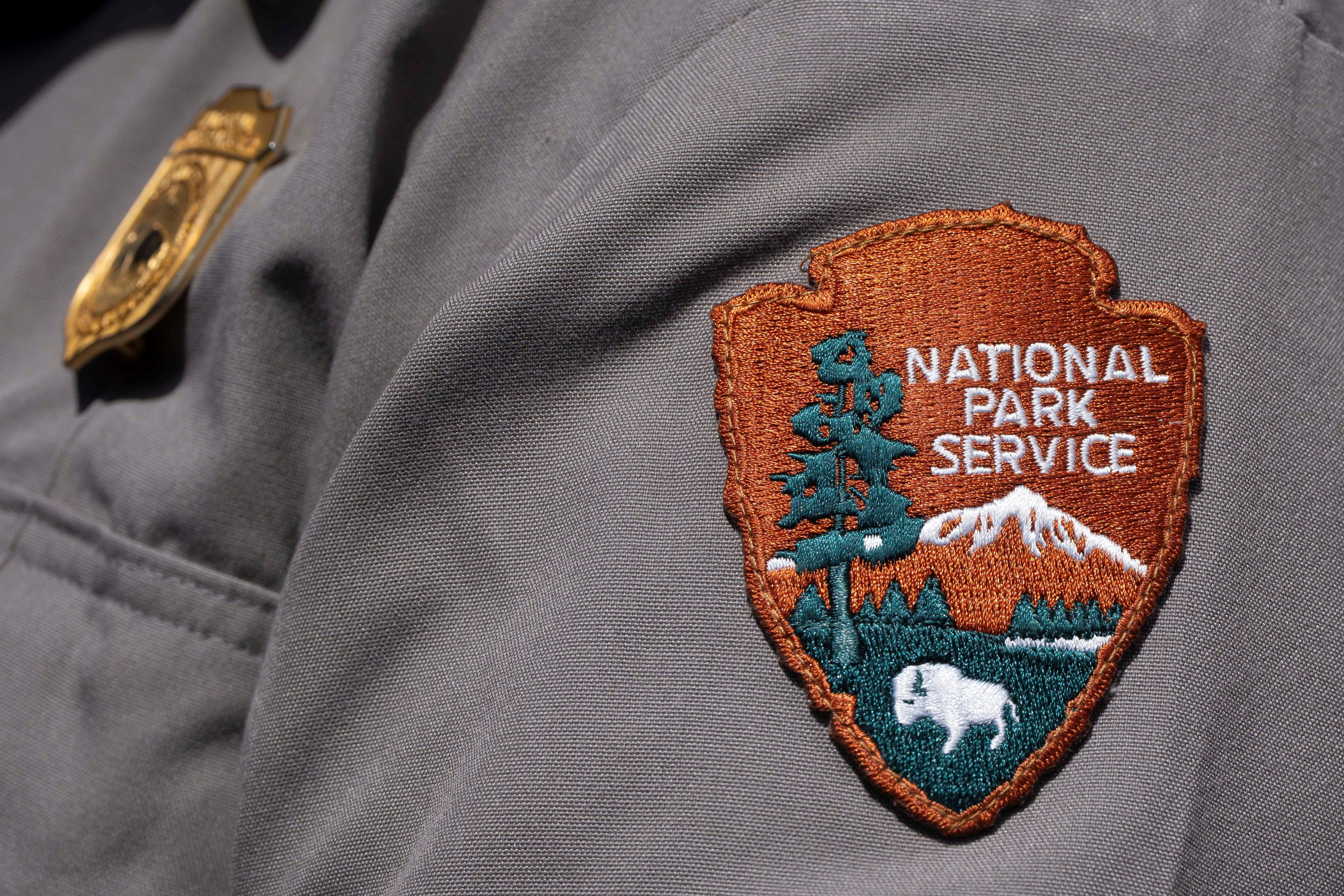
A U.S. National Park Service Ranger wears an NPS patch in Glen Canyon National Recreation Area near Page, Arizona, U.S., May 15, 2025. REUTERS/Rebecca Noble
Hundreds of signs, merchandise and presentations by the National Park Service have been flagged by President Donald Trump’s administration for possible removal as part of its war against “ideological indoctrination.”
According to a NOTUS review of the material, an evaluation reveals that "in many instances, park staff acknowledged" the material was factual.
The removal reports were recently published online by an anonymous federal government employee and first reported by the Washington Post.
The removal requests were made to national parks, monuments and other sites. The order targets content that the administration deems “partisan” or “disparaging," according to Trump's executive order. Slavery, climate change and Native American issues were among the subjects to come under scrutiny.
The National Parks Conservation Association sued the Interior Department this month over removal of such content from park sites.
Whether the Interior Department and National Park Service subsequently reviewed each of the content reports isn’t clear. It has also avoided specifics on how much content is being removed or altered.
Molly Blake, a team member at Save Our Signs, told NOTUS the group has tracked hundreds of signs, displays and other material removed since Trump issued the executive order.
“The spreadsheet shows that the message that was sent is that we can’t talk about times in American history where people in power hurt other people. We can’t talk about times in American history where people’s civil rights were violated,” Blake said. “And that’s a really killing and disturbing development.”
A National Park Service spokesperson issued a statement calling such claims false.
The executive order has already had a chilling effect in some cases.
An exhibit at the Chesapeake and Ohio Canal National Historical Park that explores how people from different backgrounds can interpret archaeology in different ways was flagged as “factually accurite [sic], but submitting for review out of an abundance of caution,” the report said.
Another report that mentioned how Native American people were removed during development of the Transcontinental Railroad was also flagged, despite also being tagged as accurate by the reporting party.
“We understand a lot of folks are responding under duress, and I think that kind of comes out of some of the comments that have been leaked,” Blake said. “What I think is also just especially insidious is there’s no clear shared understanding of what it means to be quote-unquote ‘disparaging or inappropriate.’ And so then you get into these absurd situations where you’re reporting things that are historically accurate.”