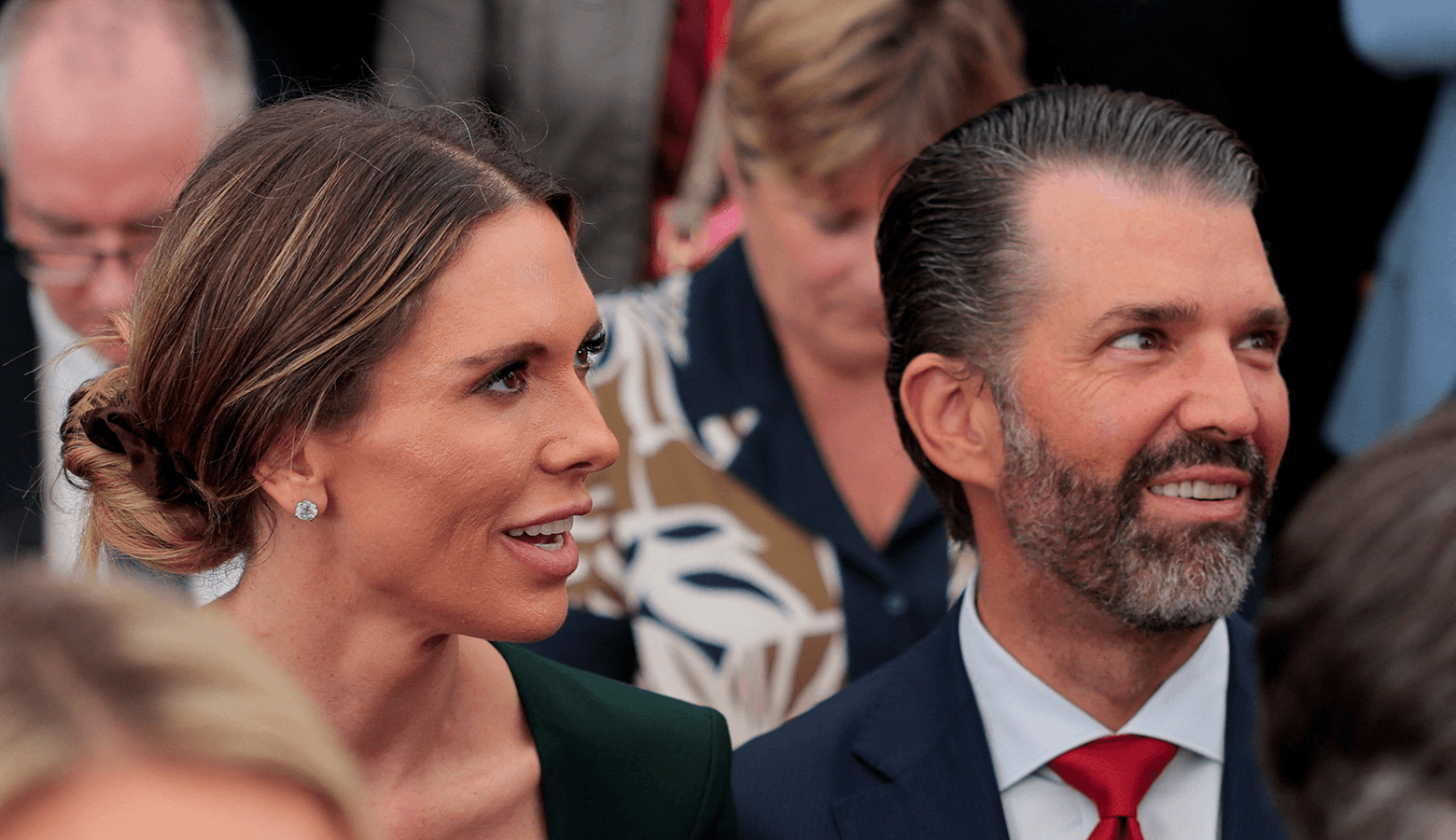
A prosecutor who worked with special counsel Robert Mueller when he investigated President Donald Trump's ties to Russia has a theory about why the president did not attend his son's wedding — namely, that he may have known it was being bankrolled by Umar Kremlev, a Russian oligarch tied to Russian President Vladimir Putin.
Speaking with Nicolle Wallace on MS NOW, lawyer Andrew Weissman responded to Wallace's question about why the same Republicans who blasted President Joe Biden's son Hunter for serving on the board of a Ukrainian company are conspicuously silent about the younger Trump's glaring conflict of interest. Weissman responded with his own opinion about why Trump refused to go to the wedding, a decision that raised eyebrows at the time.
"The father, the President of the United States, did not go to his son's wedding," Weissman began, and later added "are people looking at the connection here, which is one of the reasons he may not have gone is the optics of this — which is this group of Russians at this small wedding who paid for it — and he was not going to be a part of it given what a huge team of people I worked with in the Russia investigation looked at and his insistence on calling it a hoax."
In August Weissman argued that, despite Trump's attempts to dodge legal accountability, he will not be able to avoid facing corruption charges after he leaves the White House.
“The one thing I strongly suspect, if we get back to a normal rule of law administration, I think we’re going to learn about corruption,” Weissman said at the time. “We’re going to learn that it is off the charts, particularly regarding financial crime, and it’s going to be eye-popping.”
Financial prosecutions, Weissman added, have a very long shelf-life.
“That is the kind of thing that can be prosecuted, and it is not covered by immunity,” Weissmann explained to Washington Roundtable host Jane Mayer. “… The statute of limitations, which is the time period by which you’ve brought a case, will not have run on those things. This means it won’t be too late to prosecute. So, if Donald Trump is out of office in a couple of years and you have a normal administration, even at the shortest range it’s a five-year statute of limitations, which means you have five years to bring a case.”
Additionally, one can reset the timer on that deadline, telling Mayer that “I’m saying given the shortest amount of time is five years, but it could be much longer in effect.”