Mitt Romney offers cure for Trump's 'slash-and-burn' policies in scathing editorial
19 December 2025
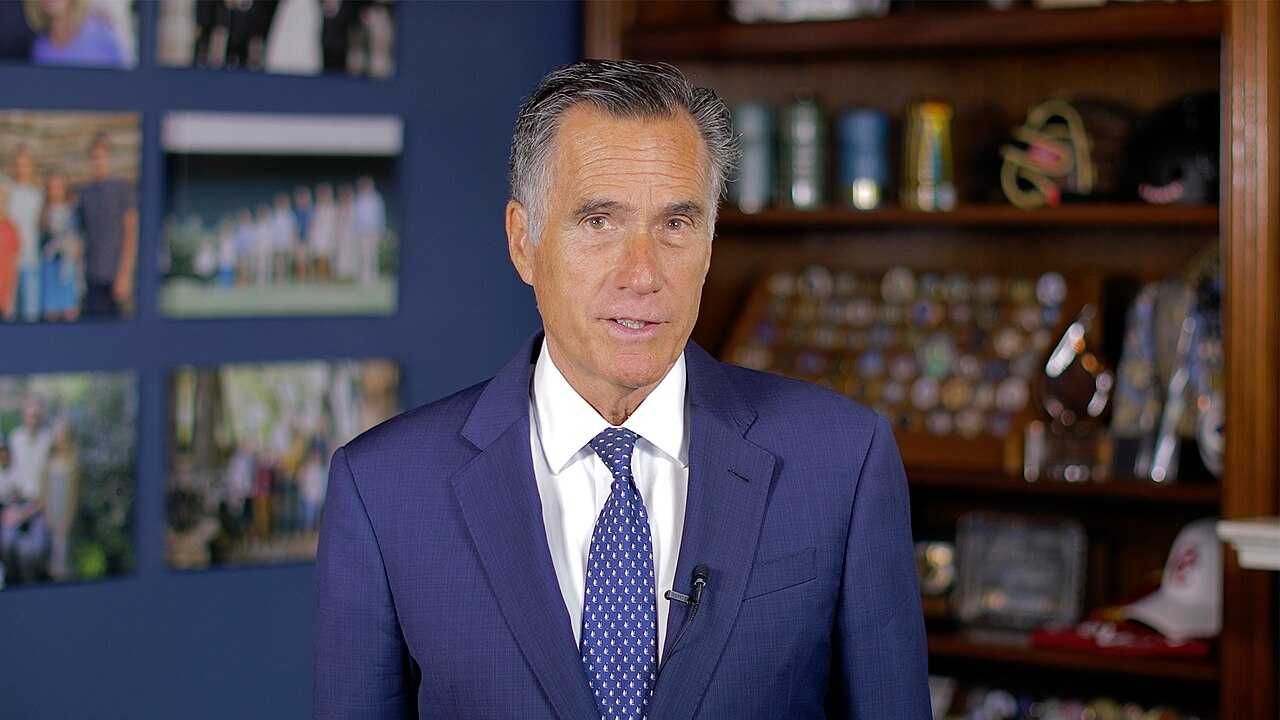
Mitt Romney on September 11, 2024 (Office Of Mitt Romney/Wikimedia Commons)
Mitt Romney on September 11, 2024 (Office Of Mitt Romney/Wikimedia Commons)
During the United States' 2012 presidential race, conservative GOP nominee Mitt Romney and incumbent Democratic President Barack Obama aggressively debated one another on economic policy. And they had more than their share of disagreements. Ultimately, voters — still feeling pain from the Great Recession — trusted Obama more on the economy, and he defeated Romney by roughly 4 percent in the popular vote while picking up 332 electoral votes compared to 206 for his Republican challenger.
But Romney, in an op-ed published by the New York Times on December 19, has a recommendation that is more likely to come from Democrats than Republicans: raise taxes on the ultra-rich.
"Social Security and Medicare benefits for future retirees should be means-tested — need-based, that is to say — and the starting age for entitlement payments should be linked to American life expectancy," argues Romney, a former U.S. senator and ex-Massachusetts governor. "And on the tax front, it's time for rich people like me to pay more. Our roughly 17 percent average tariff rate helps the revenue math. Doubling it — which seemed possible shortly after 'Liberation Day' — would further burden lower- and middle-income families, and would have severe market consequences."
Romney continues, "I long opposed increasing the income level on which FICA employment taxes are applied; this year, the cap is $176,100. No longer; the consequences of the cliff have changed my mind."
The conservative notes some "loopholes" in the U.S. tax code that enable ultra-wealthy Americans to significantly lower their tax burden. And he is critical of the Trump Administration and the Department of Government Efficiency (DOGE), saying that DOGE took a "slash-and-burn approach to budget cutting and failed spectacularly."
"I believe in free enterprise, and I believe all Americans should be able to strive for financial success," Romney argues. "But we have reached a point where any mix of solutions to our nation's economic problems is going to involve the wealthiest Americans contributing more. Of course, a much faster growing economy would save us from the debt cliff. This truism has long rationalized politicians' failure to act: Faster growth, promised with tax cuts, is always just around the corner, but that corner never arrives."
Romney adds, "Yes, taxes can slow growth. But most of the measures I propose would have a relatively small impact on economic growth. If my party wants to be the one to give working- and middle-class Americans greater opportunity — to be the party that is trying to restore some sense of confidence in our capitalist system — this would be a start."
Former U.S. Sen. Mitt Romney's (R-Utah) full op-ed for The New York Times is available at this link (subscription required).