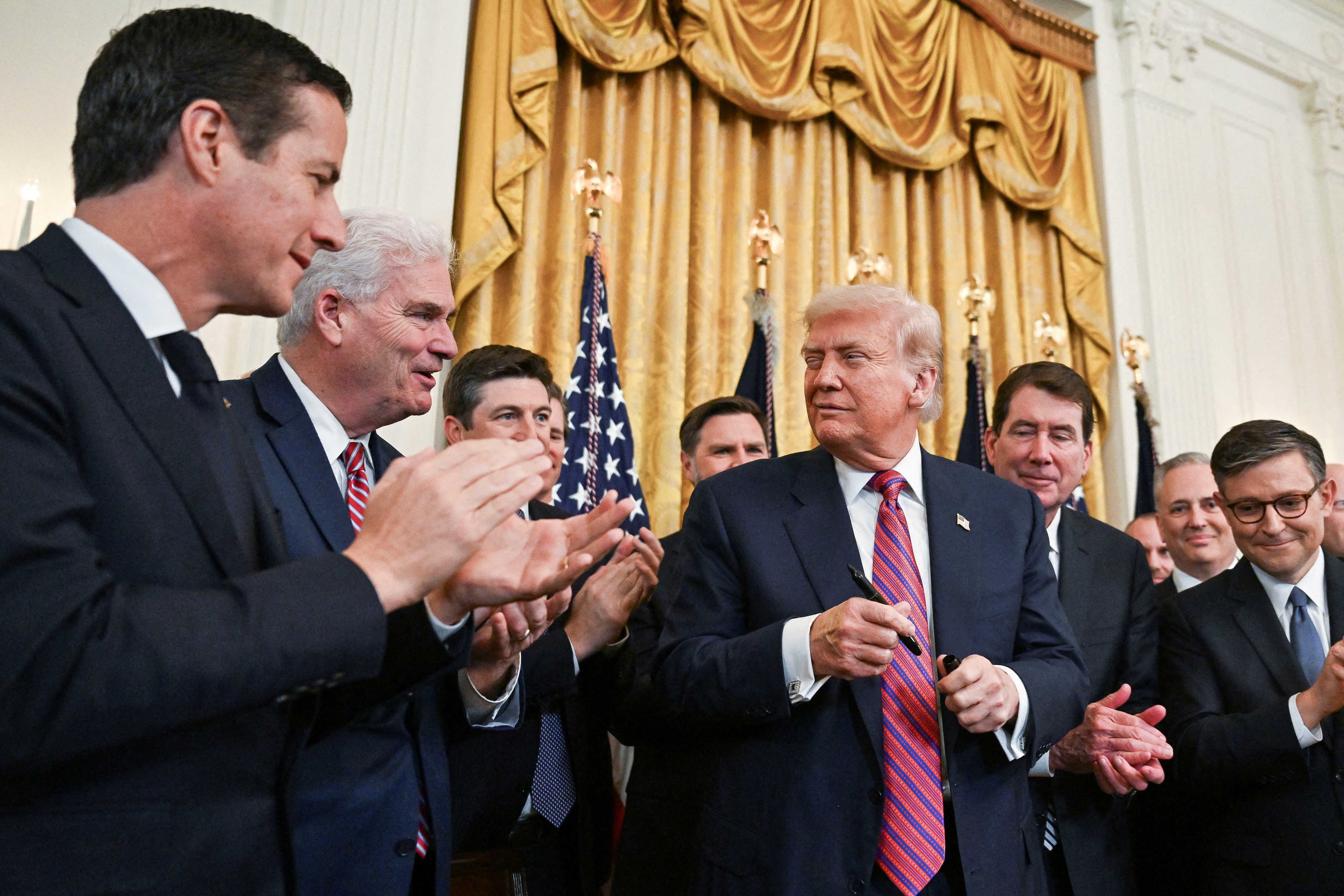
Although Democratic strategists know that trying to flip the U.S. Senate in the 2026 midterms is an uphill climb, they are feeling cautiously optimistic about the U.S. House of Representatives — where Speaker Mike Johnson (R-Louisiana) is leading a very small majority and a lot of swing districts, according to the Cook Political Report, are in play.
The GOP's House majority is so small, Punchbowl News' Jake Sherman emphasizes in an article published on January 16, that making scheduling decisions is difficult — as Johnson can't afford GOP absences during key votes.
"With less than 10 months until Election Day," Sherman reports, "many rank-and-file Republicans feel like they're free agents and are completely willing to buck their leaders to gain leverage. But the GOP leadership also has some blame here. They're still putting bills on the floor that their vulnerable members oppose. And House Republicans have a major attendance issue that they can't seem to resolve. All of this calls into question what, if anything, GOP lawmakers can get done in the next few months."
Sherman points to a recent labor policy vote as a prime example of what Johnson and his allies are up against.
"Johnson, House Majority Leader Steve Scalise and House Majority Whip Tom Emmer lost a Tuesday vote on a labor policy bill sponsored by Rep. Ashley Hinson (R-Iowa), who is running for Senate," Sherman explains. "This was a very embarrassing episode, and potentially preventable, depending on who you ask. Hinson's bill would change the definition of 'hours worked' to exclude education and training. It was approved on a party-line vote in the Education and Workforce Committee last April but had been waiting since then for floor action. The AFL-CIO opposed the bill and, believe it or not, there are still Republicans who support organized labor."
In the end, Sherman observes, Johnson and Scalise came up short on a vote where there was little wiggle room.
"Emmer's whip team did what they call a 'spot check' on the legislation," Sherman notes. "That means a pair of e-mails were sent to member offices on Friday and Monday before the vote to check if there were major concerns. Only Rep. Brian Fitzpatrick (R-Pa.) gave the GOP leadership a heads-up that he was a firm no on the legislation, according to leadership sources. Rep. Riley Moore (R-W.Va.) also gave a heads-up later that he would be voting no, the sources said."
Sherman continues, "When the bill reached the floor, Fitzpatrick, Moore, plus GOP Reps. Rob Bresnahan (Pa.), Nick LaLota (N.Y.), Chris Smith (N.J.) and Jeff Van Drew (N.J.) all voted against it. The bill failed 209-215, an outcome that caught top Republicans off guard. The House GOP leadership ended up pulling two other labor bills…. After an episode like this, it's always possible to say that some bills will fail on the floor, and that's not a problem. But it is a problem, and House GOP leaders know it. It's a sign of weakness and disarray."
Read Jake Sherman's full Punchbowl News article at this link.