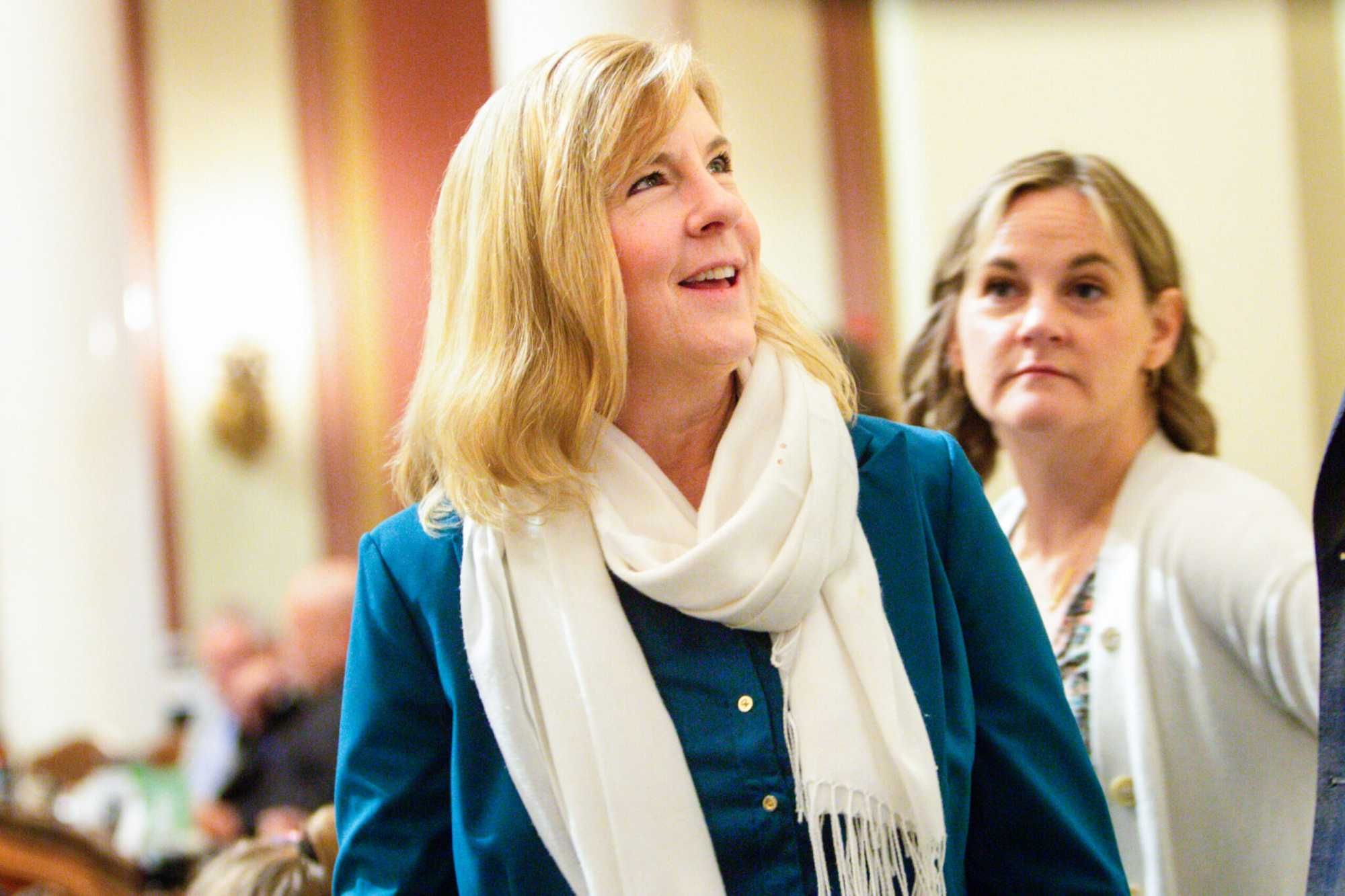
Melissa Hortman often told me things she probably shouldn’t have.
One time when I was a Capitol reporter with the Star Tribune, she expressed displeasure with a profile I’d written about a Republican operative.
“The journalistic equivalent of a b---job,” she told me with that grin of hers, which shone through her eyes.
The late speaker was a practicing Catholic who carried in her wallet a prayer of St. Frances — “Lord, make me an instrument of your peace….” — but she was raised around a junkyard and loved a saucy joke.
Another time, after I’d written that she’d been badly underestimated, she told me, “Whew, I needed a cigarette after reading that one.”
After the remarkable 2025 legislative session — when her Democratic caucus shared power with Republicans — I was hoping for some of that candor so my Reformer colleague Michelle Griffith and I agreed to an off-the-record interview.
Her family gave permission to report on the majority of that conversation, which was the last time I spoke to her before she was murdered 36 hours later.
She was mostly satisfied with her final legislative session, which ended with a two-year budget and no government shutdown despite Republicans’ shared control of the House, thereby saving jobs and stability for government workers and the people who rely on them. She had also preserved key accomplishments from the Democrats’ 2023-24 trifecta, including a paid leave program that would give new parents a chance to bond with their babies and other Minnesotans the ability to care for their sick loved ones.
The deal was not without cost, however: Hortman had to cast the deciding vote to end public health insurance for undocumented immigrants. It was not an easy vote, and she shed rare public tears when discussing it at a press conference. She was willing to do it, however, because like all great legislative leaders, she’d fall on the grenade for her members, and because she knew that the Trump administration would probably come at the program with knives out anyway.
(As we now know all too well, Trump’s Department of Homeland Security came to Minnesota with guns, and left with American blood on their hands.)
Parts of the Democratic base savaged her regardless. When Michelle and I informed her that our Bluesky account mentions were filled with harsh condemnations of her, she seemed oblivious, saying her feed only seemed to show images of her favorite breed of dog, golden retrievers.
(She fostered her golden Gilbert while he trained to be a service dog, but he failed, so the Hortmans got to keep him. For a time I thought the whole thing was a bit, but she was obsessed with that dog. He ended up being killed in the same political attack that took her life.)
I wrote a column defending her decision on the budget deal, and she texted me that the episode newly motivated her to get into 2024 election data and start prepping for the midterms: “There are some very significant differences in the 2025 environment, compared to the 2017 environment. A Democratic wave is not a forgone conclusion in the 2026 election and will have to be created.”
We shared an affinity for certain political truisms: You cannot do anything without winning, and self-deception is dangerous.
Which meant they’d be more focused on vetting candidates, she said. Former Rep. John Thompson, who had some previously unknown horrifying domestic violence allegations, had dragged down the Democratic caucus even before his 2020 election. Rep.-elect Curtis Johnson had cost them dearly in 2024-25 because he didn’t live in his district.
She said the era of community organizers like Barack Obama winning office had “run its course.” Democrats should find candidates who are “real people” with experience outside of politics, she said.
(Spicy, right?)
Hortman also acknowledged that Democrats’ messaging has gone stale and faced polling headwinds on many issues, including immigration and LGBTQ rights. She said that President Donald Trump’s infamous anti-trans campaign ad — “Kamala Harris is for they/them; President Trump is for you” — was successful and hurt Democrats, not because people are anti-trans, but because it cemented an already latent idea that Democrats are not in the corner of most people.
Don’t let her clear-eyed assessment of polling fool you into thinking she would have caved on Operation Metro Surge or to anti-trans bigotry.
She hated bullies, which, on my best days, is my entire reason for being.
If you went into a lab to create a politician for me to like, you’d come out with Hortman: Principled but willing to compromise; competitive while ethically grounded; a team player but not blind to her own side’s faults; smart but not showy; ambitious but not gross about it; funny and authentic and real as all get out.
Despite these affinities — and her willingness against the advice of her communications staff to text me back — I rarely used our relationship to journalistic advantage. I felt I needed to respect her time and her workload.
I’m also wary of growing too close or enamored with politicians, both because we need distance to judge them, and because they will invariably let you down.
The politicians come and go, but the work for a more just state, nation and world must be more enduring.
I know she would agree, and so we get up and do the work.
But I also know that when we come across people we respect and admire in this lonely world, we should embrace and hold on to them tightly.