Economist Paul Krugman: Why Trump’s 'intimidation' tactics aren’t working on Europe
29 January
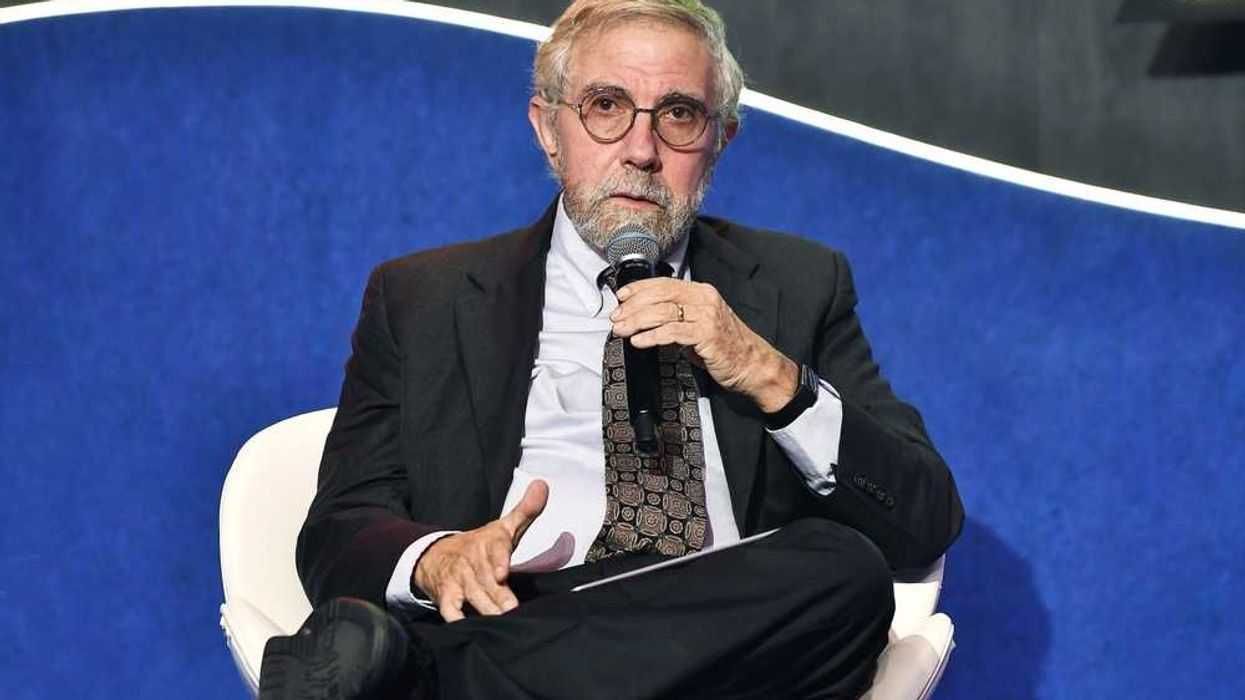
Economist Paul Krugman during FIDES 2023 in Rio de Janeiro, Brazil on September 25th, 2023 (A.PAES/ Shutterstock.com)
Economist Paul Krugman during FIDES 2023 in Rio de Janeiro, Brazil on September 25th, 2023 (A.PAES/ Shutterstock.com)
U.S. President Donald Trump was furious when Canadian Prime Minister Mark Carney, during a speech at the 2026 World Economic Forum (WEF) in Davos, Switzerland, lamented that the United States has become unreliable for longtime allies. Carney's tone was not angry or confrontational; rather, his tone was one of sadness and disappointment when he spoke of a "rupture" in the world order.
A few days later, Bloomberg News quoted Katie Koch, CEO of fund manager TCW Group, as saying that investors were "looking to diversify away from U.S. assets" —including a "quiet-quitting of U.S. bonds."
Many commentators in right-wing media outlets believe that the United States' longtime economic partners need the U.S. more than the U.S. needs them. But liberal economist Paul Krugman, in a Substack column posted on January 29, lays out some reasons why those partners aren't as reliant on the U.S. as MAGA Republicans think.
"Europeans have multiple reasons to feel aggrieved with the Trump Administration, from fake claims that the EU (European Union) has been taking advantage of the U.S. through economic trade, to bullying tactics on behalf of the tech broligarchy, to interference in Europeans' domestic politics on the side of the European fascist right, to the recent threats to seize Greenland," Krugman explains. "However, India has even more reason to pivot than the Europeans. Trump has imposed high tariffs on its exports, with an average rate of 34.5 percent — almost as high as the average rate on Chinese exports. It's a bizarre move in both economic and diplomatic terms."
The former New York Times columnist continued, "Previous American administrations deliberately cultivated a relationship with India as a counterweight to China, which is a dangerous rival. But that was when the U.S. president was sane. In fact, governments aren't the only ones pivoting away from the U.S.; foreign private companies are also shifting away."
Krugman predicts that Trump will "threaten" other countries but doesn't expect the threats to work.
"In general, we can expect Trump to threaten to put tariffs on everyone trying to pivot away from dependence on a nation whose policies are, well, driven by rage tweets," Krugman argues. "But more U.S. economic intimidation isn't going to work, because Trump doesn't have the cards. Access to the U.S. market just isn't as important to other countries as he imagines. Here's a number that I think is important: Imports by the United States from the rest of the world, measured as a percentage of the rest of the world's GDP. This measure tells us how much of other countries' output they sell to the United States. The answer, on average, is less than 5 percent, and much lower when you exclude Canada and Mexico…. Basically, the world needs access to the EU more than it needs access to the U.S. The world trading system as we knew it lasted for three generations after World War II."
Krugman continues, "It was a rules-based system, in which everyone considered the U.S. a reliable, trustworthy partner. But now, U.S. economic relations with other nations have turned abusive, and the world is moving toward divorce. And this will make Americans measurably poorer."
Paul Krugman's full Substack column is available at this link.