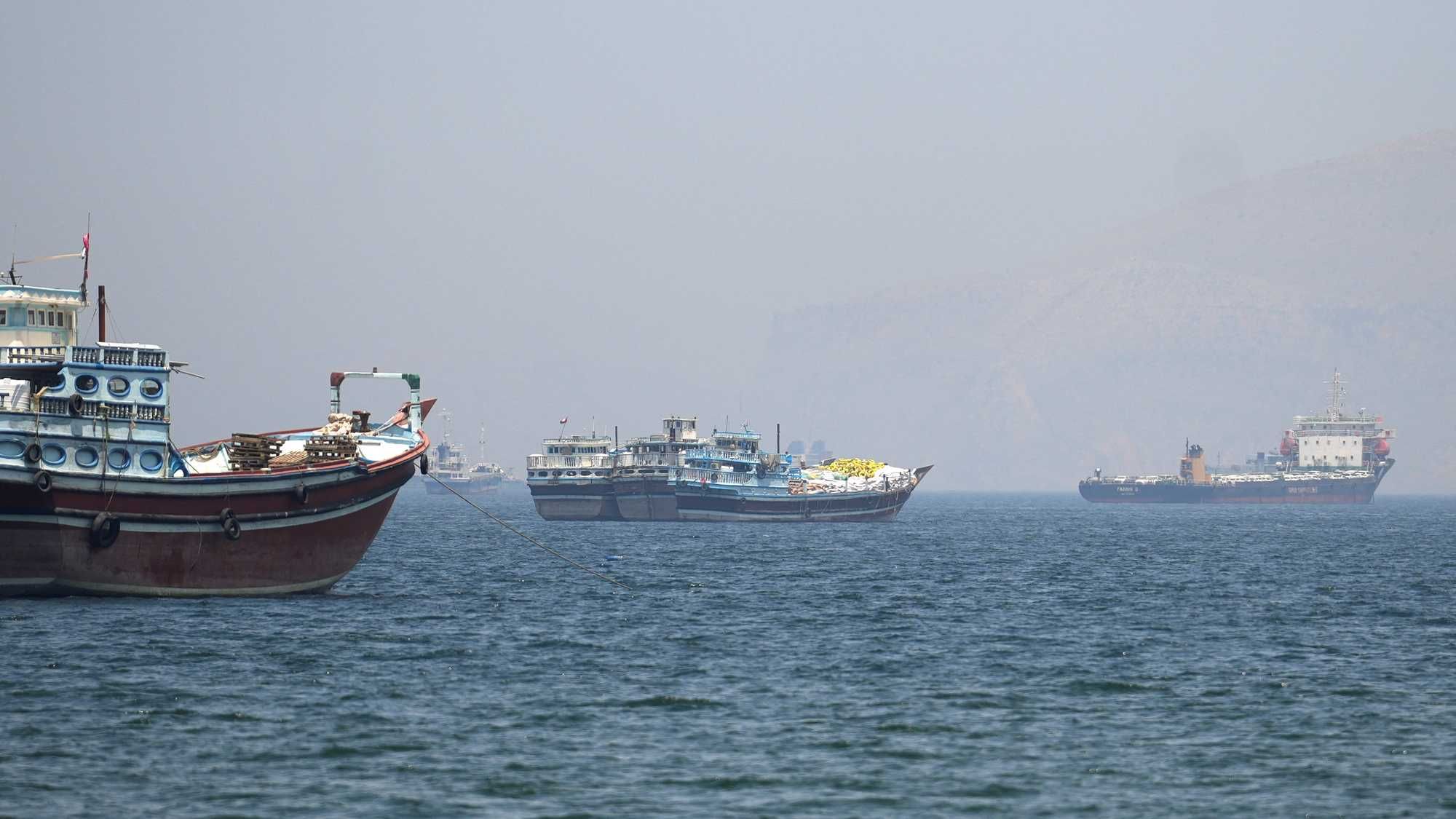
Ships and boats in the Strait of Hormuz, Musandam, Oman, April 29, 2026. REUTERS/Stringer
U.S. President Donald Trump is saying that the United States' war with Iran could be ending soon, but many critics of the war are skeptical about that claim and fear that the war could drag on for a long time. Meanwhile, the Strait of Hormuz — a waterway crucial to the flow of oil in the Middle East — remains blocked. Oil prices continue to soar, and liberal economist Paul Krugman is warning that a wide range of goods could become much more expensive in the weeks and months ahead.
The Wall Street Journal's Benoit Faucon examines the U.S./Iran impasse in the Strait of Hormuz in an article published on April 30.
"Iranian officials said Tehran could use previously unused weapons to attack U.S. warships, from submarines to mine-carrying dolphins," Faucon reports. "The Islamic Revolutionary Guard Corps has threatened to step up escalation by cutting phone cables in the Strait of Hormuz, which would disrupt internet traffic globally. The Revolutionary Guard-linked Tasnim news agency recently published a map of undersea internet cables crossing the Strait of Hormuz in a veiled warning that the region's telecommunications infrastructure could be targeted."
Faucon continues, "This past weekend, Tehran presented regional mediators with an offer to stop its attacks in the strait in exchange for a full end to the war, a lifting of the U.S. blockade of Iranian ports and postponement of nuclear talks."
The WSJ reporter notes that in the Iranian government, the "risk of a spiraling crisis" is creating a division between President Masoud Pezeshkian and "hardliners, including Saeed Jalili, a former presidential candidate who leads Iran's most conservative faction."
"The moderates believe in holding fire and negotiating a favorable deal with President Trump, whom they view as eager to get out of the messy war as soon as possible," according to Faucon. "They worry Iranians are growing tired of the conflict after an initial nationalist uptick…. A growing camp of hardliners believe Iran has to take the military initiative and start a shooting war again to send oil prices soaring higher and increase the pressure on Trump. They argue that the blockade goes beyond the sanctions Iran has faced down in the past and amounts to an act of war that must have a military response."
Saeid Golkar, an Iranian-American political scientist at the University of Tennessee, Chattanooga, told WSJ, "The regime has to do something to break this deadlock. Moderates want a deal because they think more destruction is political suicide."